Automating Inventory with Computer Vision
Introduction to Computer Vision
What is Computer Vision?
At its core, computer vision is the science of teaching computers to see. Just as our eyes and brain work together to understand the world around us, computer vision allows machines to interpret and process visual information from images and videos.
Computer vision is a branch of artificial intelligence (AI) that enables machines to interpret and analyze visual data from the world around them.
Think about how effortlessly you recognize a friend's face, read a street sign, or dodge an obstacle. These tasks are incredibly complex for a machine. Computer vision aims to bridge that gap, turning a stream of visual data into useful, actionable information. It's not just about recording an image; it's about understanding its content.
How Computers See Images
A computer doesn't see a picture of a cat the way we do. Instead, it sees a grid of tiny dots called pixels. Each pixel is a single point of color. To the machine, an entire image is just a massive collection of numbers representing the color and brightness of each pixel.
Image processing is the first step in computer vision. It involves using algorithms to manipulate these pixel values. This can be as simple as making an image brighter or as complex as detecting edges, shapes, and textures. For example, an algorithm can find an edge by looking for a sharp contrast in pixel values between one area and another.
By analyzing these patterns of pixels, a computer starts to build a mathematical representation of the image. This allows it to identify objects, classify scenes, and extract meaningful data, forming the foundation of all computer vision tasks.
Computer Vision in Action
The applications of computer vision are vast and growing every day. It's the technology that powers facial recognition on your phone, helps self-driving cars navigate roads, and allows doctors to analyze medical scans with greater accuracy.
In manufacturing, it's used for quality control, spotting defects on an assembly line that a human eye might miss. In agriculture, drones with computer vision systems can monitor crop health across huge fields. These applications all share a common goal: to extract information from visual inputs to automate a task or make a better decision.
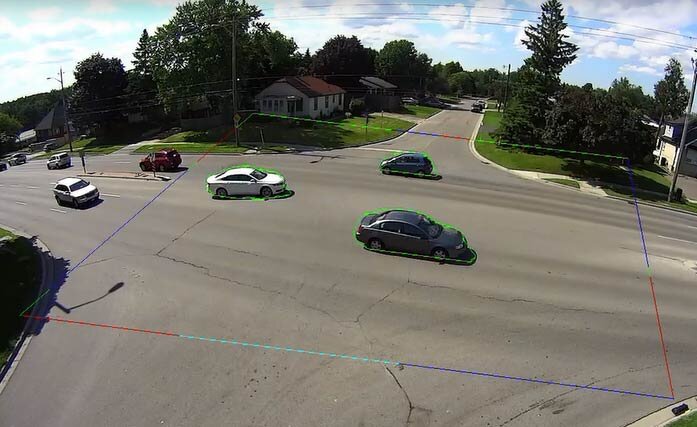
These examples show how computer vision turns a passive camera into an active observer, capable of understanding and reacting to its environment. As we'll see, this same principle is what allows us to build powerful systems for managing physical goods and spaces.
What is the primary goal of computer vision?
How does a computer perceive a digital image initially?