Automating Complex Business Processes with Advanced Inquiry
Advanced Contextual Inquiry
Beyond the Basics
You already know that watching users in their own environment is one of the best ways to understand their needs. But what happens when that environment is a busy hospital ward, a high-stakes trading floor, or a complex manufacturing plant? In these highly regulated and intricate settings, basic observation isn't enough. You need advanced techniques to gather rich, compliant insights.
The goal is to move past simply watching what people do and start understanding why they do it. This means refining your observation skills, adapting your interview style, and mastering the art of capturing data without crossing regulatory lines.
Refined Observation Techniques
Moving beyond being a simple fly on the wall requires more active and nuanced methods of observation. The aim is to uncover the user's mental model—their internal map of how a system works and why they make certain choices.
One powerful method is the Think-Aloud Protocol. Here, you ask the user to verbalize their thoughts as they perform a task. It's a direct window into their reasoning. You'll hear their assumptions, their frustrations, and the little workarounds they've created. Facilitating this requires a light touch; you need to prompt them gently without leading their actions or thoughts.
Another technique is Artifact Analysis. Pay close attention to the objects users interact with. A dog-eared manual with sticky notes, a spreadsheet covered in conditional formatting, or a cheat sheet taped to a monitor are not just objects. They are clues that reveal gaps in the current system, points of confusion, or unofficial processes that are critical to getting the job done.
Look for the workarounds. People create them to solve real problems the official process ignores. These are often the most valuable insights you'll find.
Finally, to avoid influencing the user's natural behavior, structure your sessions carefully. Start with broad, passive observation to see the typical workflow. Save your clarifying questions and think-aloud prompts for after you've established a baseline. This way, you get the best of both worlds: an authentic view of the process and a deep dive into the user's thinking.
Interviewing Under Constraints
In regulated industries like healthcare or finance, privacy rules like HIPAA or data protection laws are not suggestions—they are strict limits on what you can see and discuss. Directly asking about a specific patient's case or a client's portfolio is often forbidden.
This is where scenario-based questioning becomes essential. Instead of asking about a real, sensitive case, you create a realistic but hypothetical situation. For example, instead of asking a nurse, "Tell me about the last time you handled a difficult patient admission," you could say, "Imagine a patient is admitted with conflicting insurance information and a rare allergy. Walk me through how you would handle that in the system."
This approach allows the user to detail their process, decision points, and frustrations without revealing any protected information. It shifts the focus from specific data to the universal workflow.
Before you even speak to a user, your first meeting should be with the legal or compliance department. This is a non-negotiable step. They can outline the specific rules you must follow, define what constitutes sensitive data, and approve your research plan. Arriving prepared shows professionalism and builds the trust needed to gain access to users in the first place.
Synthesizing Complex Data
After days of observation and interviews, you'll be left with a mountain of raw notes, transcripts, and photos of artifacts. The challenge is to turn this qualitative data into actionable insights.
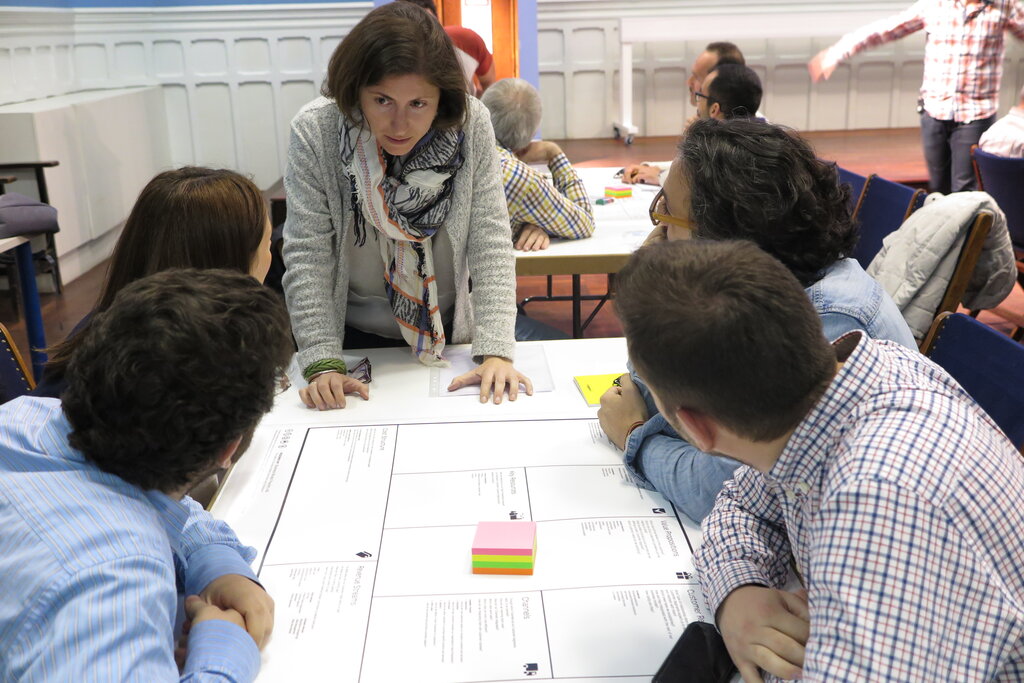
Start by creating an affinity diagram. This is a low-tech, high-impact method. Write each distinct observation, quote, or idea on a separate sticky note. Then, as a team, group the notes into related themes. Don't pre-define the categories; let them emerge naturally from the data. You might see clusters form around topics like "communication breakdowns," "system limitations," or "unofficial workarounds."
Once you have these high-level themes, you can build a journey map. This visualizes the user's process step-by-step, from beginning to end. For each step, you can map their actions, their emotional state (frustrated, confident, confused), and the pain points they encountered. This creates a powerful story that clearly highlights where the biggest opportunities for improvement lie.
These synthesis methods transform messy, qualitative observations into a clear, compelling case for change, grounded directly in user reality.
What is the primary goal of using the Think-Aloud Protocol in user research?
In a complex environment, you observe a user has a heavily annotated, dog-eared manual on their desk. What is this an example of, and what might it indicate?
By mastering these advanced techniques, you can conduct effective research in even the most challenging environments, ensuring your insights are deep, accurate, and actionable.