Automated Sales Funnel Mastery
Understanding Sales Funnels
The Customer Journey
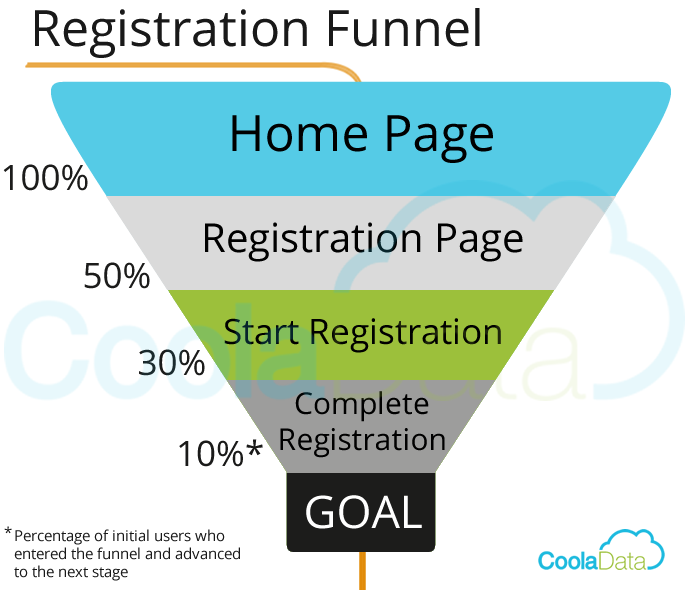
Not everyone who hears about your product will buy it. In fact, many people will drop off along the way. A sales funnel is a model for visualizing the path people take from first learning about a brand to becoming a paying customer. It’s called a funnel because at the top, you have a wide group of potential customers. As they move through the stages of a decision, that group narrows. Only a fraction of the people who enter the top of the funnel will make it all the way to the bottom and make a purchase.
A sales funnel is a visual representation of the customer journey, outlining the steps prospects take from initial awareness to final conversion.
Think of it like a real-world funnel. You pour a lot of liquid in the top, but only a concentrated stream comes out the bottom. The goal for any business is to make the funnel as efficient as possible, losing as few potential customers as possible at each step.
The Four Stages
The classic sales funnel is broken down into four distinct stages. Understanding each one helps a business know how to communicate with potential customers based on where they are in their decision-making process.
1. Awareness This is the top of the funnel. A potential customer has a problem and becomes aware that you offer a solution. They might find you through an advertisement, a blog post, a social media mention, or word of mouth. At this stage, they aren't ready to buy. They're just learning you exist.
2. Interest Once someone is aware of your brand, they move into the interest stage. They are actively looking for solutions to their problem and doing research. They might be reading product reviews, comparing prices, or signing up for a newsletter to learn more. They are evaluating whether your solution is a good fit for them.
3. Decision At this stage, the potential customer is ready to buy. They have narrowed down their options and are making a final choice. They might be looking at specific product pages, pricing tiers, or special offers. The goal here is to give them the final nudge they need to choose your product over a competitor's.
4. Action This is the final step, the narrowest part of the funnel. The customer makes a purchase. They pull out their credit card, sign the contract, or click the "buy" button. But the journey doesn't end here. The goal is to turn this one-time customer into a repeat buyer and a loyal advocate for your brand.
Why Funnels Matter
Sales funnels are more than just a theoretical model. They provide a powerful framework for marketing and sales teams. By mapping out the customer journey, businesses can pinpoint exactly where they are losing potential customers. If many people visit the website (awareness) but few sign up for a demo (interest), there might be a problem with the website's messaging or design.
Understanding the funnel allows a business to create targeted content for each stage. Someone in the awareness stage needs different information than someone in the decision stage. A blog post might be perfect for the former, while a detailed case study or a discount code is better for the latter.
A sales funnel helps you understand what your potential customers are thinking and doing at each stage of the purchasing journey. This insight allows you to invest in the right marketing activities to attract them, and then engage them at the right time with the right message.
Ultimately, a well-defined and optimized sales funnel leads to more predictable sales and a better understanding of customer behavior. It turns marketing from a guessing game into a measurable science, helping businesses grow more effectively.
Ready to check your understanding?
What is the primary purpose of a sales funnel?
A potential customer has just discovered your brand through a social media ad. Which stage of the funnel are they in?