Automated Sales Funnel Mastery
Understanding Sales Funnels
What's a Sales Funnel?
Think about the last time you bought something online. You probably didn't just land on a random website and immediately click "buy." You likely heard about the product somewhere, got curious, did a little research, and then decided to purchase. That journey has a name: a sales funnel.
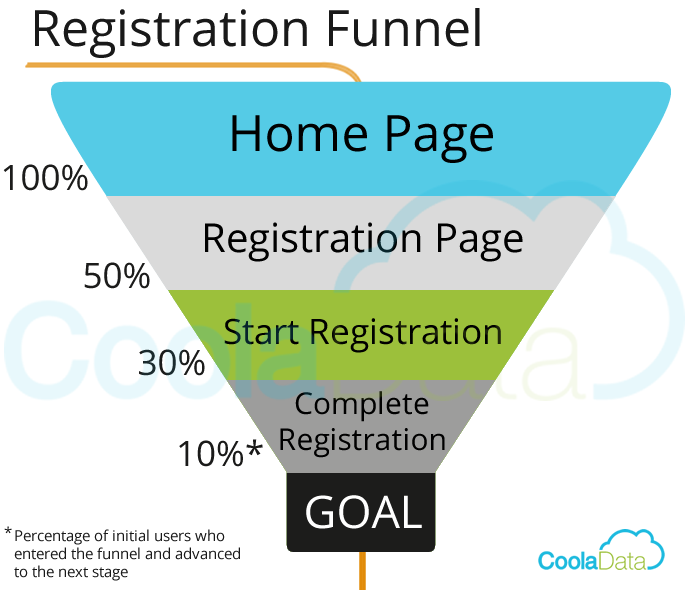
A sales funnel is a visual representation of the steps a prospect takes from discovering your brand to becoming a customer.
It’s called a funnel because at the top, you have a wide group of people who might be interested. As they move through the steps, some people drop off, and the group gets smaller. By the end, only the most interested and qualified people make it through to become customers. The purpose is to guide potential customers smoothly from a casual “hello” to a confident purchase.
The Four Stages
The classic sales funnel has four distinct stages. Understanding them helps businesses connect with people in the right way at the right time.
1. Awareness This is the top of the funnel, where potential customers first become aware of your brand. They might see an ad, find you on social media, or hear about you from a friend. At this stage, they aren't looking to buy anything yet; they've just discovered you exist.
2. Interest Now that people know who you are, the goal is to capture their interest. This is where they start actively looking for solutions to a problem they have. They might read your blog, watch your videos, or sign up for your newsletter to learn more. They are evaluating if you can help them.
3. Decision At this point, the potential customer is ready to make a choice. They're comparing your product with competitors, looking at pricing, and reading reviews. They are trying to determine the best option. Businesses often use case studies, free trials, or detailed product demos to help people in this stage.
4. Action The final step. This is when the prospect becomes a customer by making a purchase, signing a contract, or scheduling a service. The goal is to make this step as easy and frictionless as possible. The relationship doesn't end here, though. A good experience can lead to repeat business and referrals.
Why Automate the Funnel?
Guiding every single person through these stages manually would be impossible for most businesses. That’s where automation comes in. An automated sales funnel uses technology to perform repetitive tasks, like sending follow-up emails or showing targeted ads to people at different stages.
Instead of a salesperson calling every new lead, an automated system can send a welcome email and a series of helpful tips. This nurtures the relationship without any manual effort.
Automating the process has a few key benefits:
- Efficiency: It saves an enormous amount of time and resources. Your team can focus on more complex tasks instead of repetitive ones.
- Consistency: Every potential customer gets a consistent, high-quality experience. No one falls through the cracks.
- Scalability: An automated funnel works whether you have 10 leads or 10,000. It allows you to grow your business without needing to proportionally grow your team.
An automated sales funnel simplifies this process by reducing manual effort, streamlining workflows, and ensuring consistent communication at every stage of the buyer’s journey.
Let's check your understanding of these core concepts.
What are the four stages of the classic sales funnel, in order?
A potential customer watches several of your product demo videos and downloads a free case study. Which stage of the sales funnel are they most likely in?
By understanding the structure of a sales funnel, businesses can better map out their customer's journey and find ways to make it as smooth as possible.