Automated Crypto Trading with Multi-Agent Systems
Introduction to Multi-Agent Systems
When One Agent Isn't Enough
So far, we've thought about AI agents as solo actors, tackling tasks on their own. But many real-world problems are too big or complex for a single agent. Think about managing a city's traffic, coordinating a fleet of delivery drones, or even playing a team sport. These situations require teamwork.
This is where a multi-agent system (MAS) comes in. It's a system where multiple intelligent agents interact with each other in a shared environment. Each agent is an autonomous entity with its own goals and capabilities, but their collective actions and interactions lead to the overall behavior of the system. It's the difference between a single musician playing a solo and a full orchestra performing a symphony. The magic isn't just in the individual players; it's in how they work together.
A multi-agent system is a computerized system composed of multiple interacting intelligent agents. Multi-agent systems can solve problems that are difficult or impossible for an individual agent or a monolithic system to solve.
The Core Ingredients
What defines a multi-agent system? A few key characteristics are always present.
- Autonomy: Each agent has control over its own actions and internal state. It can make its own decisions without direct control from a human or another agent.
- Local Views: No single agent knows everything about the system. Each one has a limited perspective or piece of the puzzle.
- Interaction: The agents communicate and coordinate with each other. This interaction can be direct (sending messages) or indirect (observing and reacting to another agent's actions).
- Decentralization: There's typically no single point of control. The system's overall intelligence and behavior emerge from the bottom up, through the simple interactions of its many components.
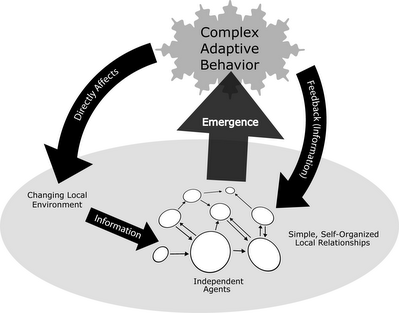
Think of a colony of ants. No single ant has the blueprint for the entire nest, and there's no "leader" ant giving orders. Each ant follows simple rules, like following pheromone trails left by others. From these simple, local interactions, the complex structure of the anthill emerges. Multi-agent systems work in a very similar way.
Agents with Different Hats
Not all agents in a system are the same. They can be classified based on their goals and relationships with other agents.
Cooperative Agents share a common goal. They succeed or fail together, so they are motivated to help each other. For example, a team of rescue robots working together to search a disaster area are cooperative.
Competitive Agents have conflicting goals. One agent's success comes at the expense of another's. Think of two agents bidding against each other in an online auction. They are in direct competition.
Self-Interested Agents are the most common type. They have their own individual goals and are not inherently cooperative or competitive. They might collaborate if it helps them achieve their objective, or compete if necessary. Most real-world scenarios, from traffic routing to supply chain management, involve self-interested agents.
Multi-agent systems are more than just a theoretical concept; they are used to solve practical problems across many industries.
- Logistics: Companies use MAS to manage fleets of delivery vehicles or drones, optimizing routes in real-time to avoid traffic and ensure timely deliveries.
- Energy Grids: Utility companies can use agents to represent individual households and power plants. These agents negotiate energy production and consumption to create a more efficient and stable smart grid.
- Telecommunications: Network routing can be managed by agents that find the best paths for data to travel, adapting to congestion and network failures automatically.
- Gaming and Film: The non-player characters (NPCs) that populate a video game world or the crowds in a blockbuster movie are often controlled by a multi-agent system to create realistic, unscripted behavior.
In all these cases, the power of the system comes from harnessing the collective intelligence of many simple, autonomous agents.
Ready to check your understanding?
Which of the following scenarios is the LEAST likely to be modeled effectively by a multi-agent system?
In a multi-agent system, the principle that no single agent has a complete picture of the entire system is known as ________.
Understanding these foundations is the first step. By breaking down complex problems and assigning roles to different agents, we can build systems that are robust, scalable, and adaptable.