Automate Your Work with Python AI No-Code
Introduction to No-Code Automation
Automate Without Code
Think about your weekly tasks. How much time do you spend copying data from an email to a spreadsheet? Or maybe you manually send a welcome message to every new customer. These small, repetitive jobs add up, eating away at time you could spend on more important work.
This is where no-code automation comes in. It's a way to connect different apps and services to create automated processes, or workflows, without writing a single line of programming code. Instead of hiring a developer or learning to code yourself, you use tools with visual, drag-and-drop interfaces to build these connections.
No-code automation is a way to automate repetitive tasks and streamline workflows without any coding knowledge.
At its heart, no-code automation is about making technology more accessible. It empowers people who understand a business problem to build the solution themselves, quickly and efficiently.
workflow
noun
A series of tasks that need to be completed in a specific order to achieve a business goal. In automation, a workflow is the automated version of this process.
The Rise of Visual Tools
Not long ago, automating tasks was strictly the domain of software developers. If you wanted two applications to talk to each other, you needed someone who could write code to build a custom integration using an API (Application Programming Interface).
Over the last decade, that has changed dramatically. A new wave of platforms emerged with a simple but powerful idea: what if anyone could build software? These tools replaced complex code with simple, visual building blocks. Building an automation became less like writing a technical manual and more like putting together a flowchart. You choose a trigger, like receiving a new email, and then add actions, like creating a task in your project management app.
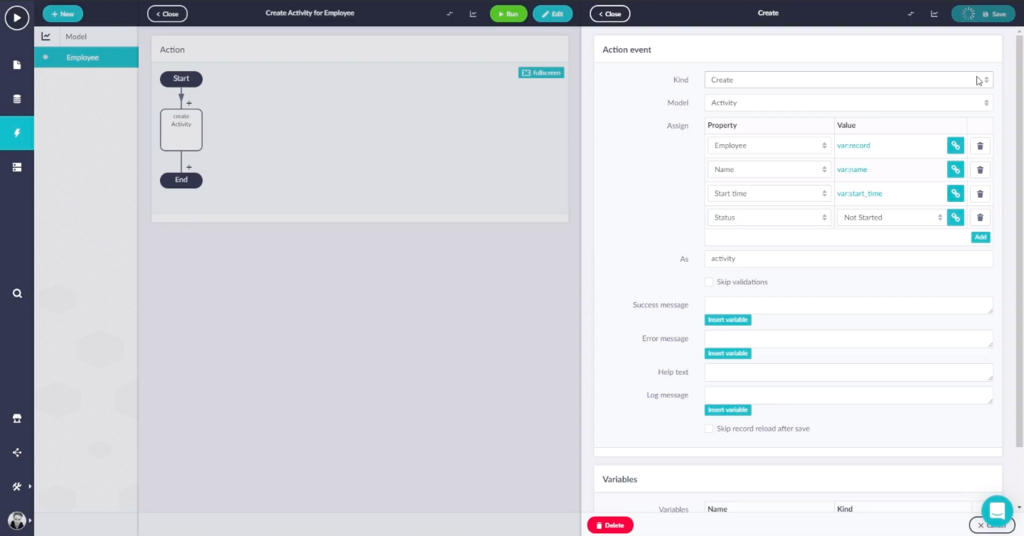
This shift democratized automation. Suddenly, marketing managers, operations specialists, and small business owners could streamline their own processes. This led to an explosion in productivity and innovation, as people closest to a problem were given the tools to solve it.
Key Benefits
Adopting no-code automation brings several powerful advantages to any team or individual.
Speed and Agility: You can build and launch a new workflow in minutes or hours, not weeks or months. This allows you to adapt quickly to changing business needs.
Lower Costs: Building custom software solutions is expensive. No-code tools are typically subscription-based and far more affordable, reducing the need for specialized developer salaries.
Empowerment: It puts the power to innovate directly into the hands of your team. When anyone can automate a tedious part of their job, they can focus on higher-value, more creative work.
Reduced Errors: Manual data entry and repetitive tasks are prone to human error. Automation ensures processes are executed consistently and accurately every time.
Ultimately, no-code automation isn't just about saving time. It's about changing how we approach problems and enabling more people to build their own solutions.
A few well-known platforms in this space include Zapier, Make (formerly Integromat), and n8n. Each allows you to connect thousands of popular apps, from Google Sheets and Slack to Salesforce and Shopify, creating a bridge for your data to flow automatically between them.
Time to review what we've covered.
Let's check your understanding.
What is the primary purpose of no-code automation?
Before the rise of no-code platforms, automating tasks between applications typically required...
Now that you understand the what and why of no-code automation, you're ready to see how these tools work in practice.