Automate Work with Python and AI No-Code
Introduction to Automation
What is Automation?
Think about the tasks you do every day, both at work and at home. You might manually copy information from an email into a spreadsheet, send the same follow-up message to different people, or sort files into folders. Many of these tasks are repetitive and follow a clear set of rules.
Automation is simply the process of using technology to perform these kinds of tasks with little or no human help. Instead of you doing the work step-by-step, you set up a system to do it for you. It’s like creating a recipe that a machine can follow on its own, over and over again.
The goal isn't to replace people. It's to free them from boring, repetitive work so they can focus on more creative and strategic challenges.
This could be as simple as an automatic email reply or as complex as a factory floor full of robots. At its core, automation follows a basic pattern: a trigger starts a process, which then carries out one or more actions. For example, a new email arriving (the trigger) could cause a system to automatically save the attachment to a specific folder (the action).
The Benefits of Automation
Automating tasks saves time, but the advantages go much further. When you take human variability out of a repetitive process, you get more consistent and accurate results. A machine doesn't get tired or distracted; it performs the task the same way every single time. This reduction in errors can have a big impact on quality.
Productivity also sees a major boost. Automation can work around the clock, processing information or completing tasks much faster than a person could. This allows teams and individuals to accomplish more without working longer hours. Instead of spending half the day on data entry, you can spend it analyzing that data to make better decisions.
By automating repetitive tasks and data analysis, No-Code AI Automation boosts productivity and minimizes the risk of human error.
Finally, automation can improve job satisfaction. Handing off tedious work to a machine frees up people to engage in more interesting, high-value activities that require critical thinking, creativity, and human interaction. It shifts the focus from 'doing the work' to 'improving the work'.
Automation in Action
Automation isn't just for tech companies or large factories. It's used across almost every industry to streamline operations. The principles are the same whether you're managing customer relationships or building a car.
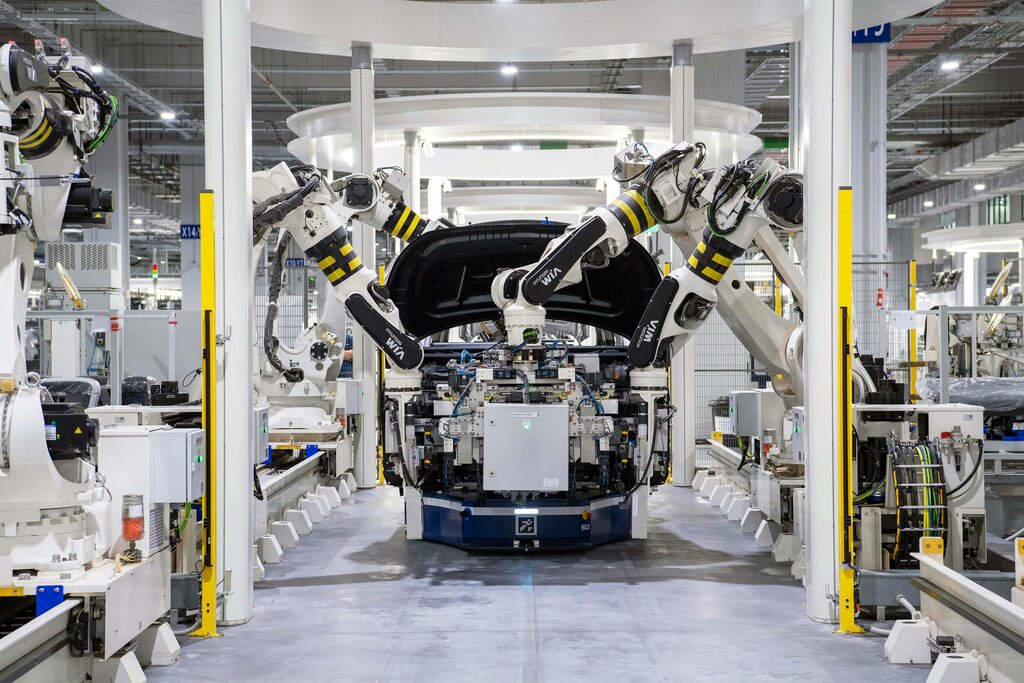
Consider these examples:
| Industry | Common Application |
|---|---|
| Marketing | Automatically sending personalized emails to new subscribers. |
| Finance | Generating monthly expense reports from transaction data. |
| Customer Support | Using chatbots to answer frequently asked questions instantly. |
| Human Resources | Onboarding new hires by automatically sending them necessary forms. |
In each case, a manual, rule-based process is handed over to technology. This frees up the marketing professional to design better campaigns, the financial analyst to spot trends, and the support agent to handle complex customer issues.
Anyone Can Automate
In the past, building automation required a team of software developers writing complex code. That's no longer the case. The rise of no-code and low-code tools has made automation accessible to everyone, regardless of their technical background.
No-code platforms use visual interfaces with drag-and-drop components, allowing you to build workflows without writing a single line of code. Low-code platforms are similar but offer the option to add custom code for more complex or specific needs. These tools connect different apps and services, letting you create powerful automations with just a few clicks.
workflow
noun
A sequence of tasks that processes a set of data. It's the path that describes how something goes from being undone to done.
This shift means that the people who best understand a problem—the marketing managers, the project coordinators, the small business owners—are now empowered to build their own solutions. You don't need to be a programmer to start saving time and improving your processes.
Ready to check your understanding? Let's see what you've learned about the fundamentals of automation.
What is the primary goal of automation?
An online store sets up a system where a customer receives a 'Thank You' email immediately after making a purchase. In this automation, what is the 'trigger'?
Understanding these core ideas is the first step. By identifying repetitive tasks in your own work, you can start to see where automation can make the biggest difference.