Automate Work with Python AI No Code
Introduction to No-Code AI Automation
Automate Work Without Code
Many daily tasks are repetitive. Think about copying data from an email to a spreadsheet, or sending a reminder for an unpaid invoice. These jobs are necessary but take time away from more important work. Workflow automation is the process of letting software handle these repetitive tasks for you.
Traditionally, building these automations required writing code. You needed a software developer to create a script that connected different applications and told them what to do. No-code platforms change this. They provide a visual, drag-and-drop interface, allowing anyone to build automated workflows without writing a single line of programming. It's like building with digital LEGO blocks instead of needing to engineer the plastic bricks from scratch.
No-code AI workflow automation tools enable users to build, deploy, and manage AI‑driven workflows through visual interfaces without coding.
A typical automation, or workflow, consists of a trigger and a series of actions. A trigger is an event that starts the workflow, like receiving a new email. An action is a task performed by the software, like adding a row to a spreadsheet.
Adding AI to the Mix
Standard automation is powerful, but it follows strict, pre-defined rules. It can't handle ambiguity. If an invoice arrives in a slightly different format, a simple automation might fail.
This is where Artificial Intelligence comes in. Integrating AI into these workflows allows them to be smarter and more flexible. AI can understand context, make decisions, and even create new content. Instead of just extracting an attachment, an AI-powered workflow can read the invoice, understand the amount due and the payment date, and then enter that specific information into your accounting software. It turns a rigid process into a dynamic one.
AI gives your automations the ability to handle tasks that normally require human judgment, like summarizing text, categorizing customer feedback, or drafting an email response.
This combination opens up a new world of possibilities. You don't need to be a data scientist to use AI. These tools package complex AI models into simple, ready-to-use blocks for your workflows.
What This Looks Like in Practice
The applications for no-code AI automation span across almost every industry and department. It helps teams work faster and focus on creative, strategic problems instead of repetitive chores.
For example, a marketing team could automate its content pipeline. A sales department could instantly qualify and route new leads. A customer support team could automatically sort and prioritize incoming tickets based on urgency.
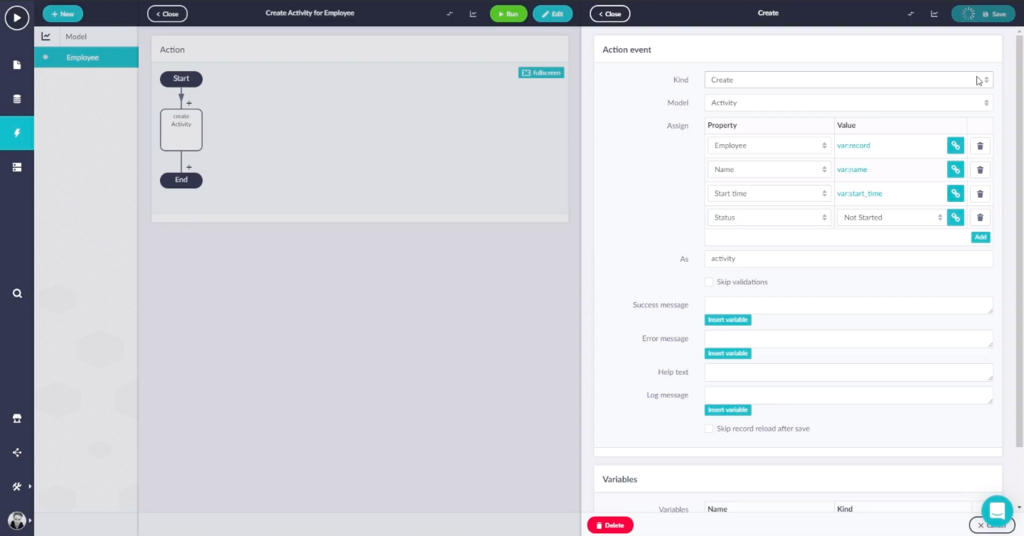
Here are a few common use cases:
| Department | Use Case | How AI Helps |
|---|---|---|
| Customer Support | Ticket Categorization | Reads incoming support emails, understands the topic (e.g., billing, technical issue), and assigns it to the right team. |
| Marketing | Social Media Management | Summarizes a new blog post and generates multiple draft tweets or LinkedIn posts with relevant hashtags. |
| Sales | Lead Enrichment | When a new lead signs up, the AI finds their company's size, industry, and other public data to help qualify them. |
| Human Resources | Resume Screening | Scans resumes for key skills and experience relevant to a job posting and flags the top candidates. |
Several platforms make this possible. Tools like Zapier and Make are popular for connecting thousands of different apps. They have built-in AI components that can perform tasks like text analysis or data extraction. Other platforms, like Nocodo, are designed specifically for building AI-powered applications without code. Even tools you already use, like Google Workspace, are adding AI features to help automate tasks within documents, spreadsheets, and emails.
With these tools, building powerful, intelligent systems is no longer limited to those with programming skills. You can now design and implement your own solutions to save time and streamline your work.