Automate Work with Python AI No Code
Introduction to Automation
What is Automation?
At its heart, automation is about getting technology to do repetitive work for you. Think of a coffee maker with a timer. You set it up once, and it brews your coffee at the same time every morning. You don't have to scoop the grounds and press the button each day. You've automated a small part of your routine.
In a business setting, automation does the same thing on a larger scale. It takes on the tedious, predictable tasks that fill up a workday. This could be anything from copying data between spreadsheets to sending out standard email responses or generating weekly reports. The goal is simple: to free up human brainpower for work that requires creativity, critical thinking, and complex problem-solving.
By handing over the boring stuff to machines, we can focus on what we do best.
A Quick Trip Through Time
Automation isn't a new idea. It began with physical machines. The assembly lines of the early 20th century were a form of automation, designed to build cars faster and more consistently than individual craftspeople could. Each station performed a specific, repetitive task, streamlining the entire manufacturing process.
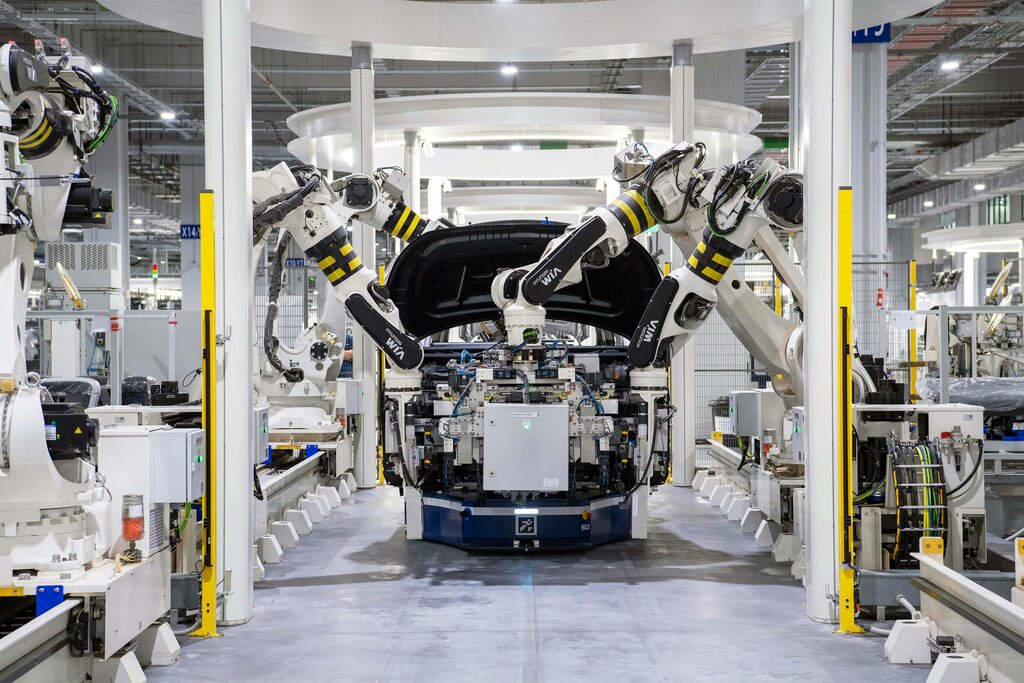
As work moved from factories to offices, automation followed. With the rise of computers, people realized they could automate digital tasks, too. For decades, this required specialized skills. If you wanted to automate a process, you had to write code—a set of instructions in a programming language that tells a computer exactly what to do. This was powerful, but it meant automation was mostly limited to developers and IT departments.
A New Way to Automate
Recently, that's all changed. A new generation of tools has emerged, making automation accessible to everyone, regardless of their technical background. These are known as low-code and no-code platforms.
No-code automation is transforming the way businesses and individuals streamline their workflows, making technology accessible to everyone, regardless of technical expertise.
Think of it like building with LEGOs. In the past, if you wanted a specific plastic shape, you had to design it and create a mold yourself. That's like traditional coding. No-code platforms are like a full box of LEGO bricks. You don't need to know how to make the bricks; you just snap them together to build what you want.
- No-code platforms use visual, drag-and-drop interfaces to build automated workflows. You connect apps and define rules without writing a single line of code.
- Low-code platforms are a middle ground. They offer the same visual building blocks but also allow you to add custom code for more complex or unique situations.
The Payoff in Business
When businesses automate repetitive tasks, the benefits are clear and immediate. Imagine an HR team member who spends hours each week onboarding new employees. They manually send the same welcome email, create accounts in five different systems, and schedule orientation meetings. It's time-consuming and prone to human error.
With automation, this entire workflow can be triggered the moment a new employee is added to the system. The welcome email sends automatically, accounts are created, and calendar invites go out. This has several key advantages:
| Benefit | Description |
|---|---|
| Increased Productivity | Employees are freed from tedious tasks to focus on higher-value work. |
| Greater Consistency | Automated processes run the same way every time, reducing errors and improving quality. |
| Faster Turnaround | Tasks that once took hours can be completed in seconds, speeding up business operations. |
| Improved Morale | Automating boring work leads to more engaging and satisfying jobs for employees. |
This foundation—understanding how to identify and streamline repetitive work—is the first step. It sets the stage for using powerful tools like Python and AI to build even more sophisticated and impactful automations.