Automate Work with AI and Python No-Code
Introduction to Automation
What Is Automation?
At its core, automation is about setting up technology to do a task for you. Think about the repetitive, predictable things you do every day, like copying data from an email into a spreadsheet or sending the same follow-up message to new clients. Automation takes over these jobs, freeing you up for more important work.
Imagine you get an email with an invoice attached. Manually, you would open the email, download the attachment, open the file, find the total amount, open your accounting software, and type in the details. An automated workflow could do all of that the moment the email arrives, without you lifting a finger.
The Benefits of Automating
Automating tasks isn't just about convenience. It brings real advantages. The most obvious is time savings. When a machine handles a task that takes you five minutes, and it does that task 20 times a day, you've just reclaimed over an hour and a half of your time.
Another major benefit is accuracy. Humans make mistakes, especially when bored or tired from doing the same thing over and over. A well-designed automation follows its instructions perfectly every time, reducing errors in data entry, file organization, and other routine processes.
More time and fewer errors lead to greater efficiency. You and your team can focus on solving complex problems and thinking creatively, which is where people excel.
Tools for Everyone
In the past, automation required programming skills. Today, anyone can build powerful workflows using no-code tools. These platforms use visual, drag-and-drop interfaces to connect different apps and services.
No-code automation is a tool that simplifies the process of implementing workflow automation and integrations without requiring any coding expertise.
Two popular examples are Zapier and Microsoft Power Automate. With tools like these, you can create a "recipe" or a "flow." For instance, you could set up a rule that says, "When someone fills out my website's contact form, automatically create a new contact in my address book and send them a welcome email." You just select the apps and tell the tool what trigger should cause what action.
Smarter Automation with AI
Artificial intelligence (AI) is taking automation to the next level. While standard automation is great for predictable, rule-based tasks, AI can handle more complex and nuanced situations. It can understand context, make decisions, and even generate new content.
For example, you could use an AI-powered automation to read customer feedback emails. The AI could determine if the tone is positive, negative, or neutral. It could then summarize the key points and route the email to the right department, a task that would be very difficult for a simple, rule-based system.
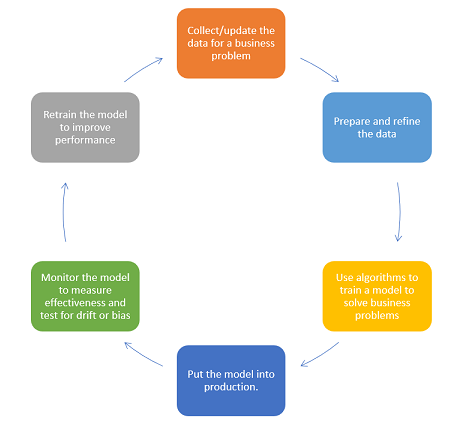
This combination of AI and automation allows businesses to streamline processes that once required human judgment, opening up new possibilities for efficiency and innovation.
Ready to check your understanding?
What is the primary goal of automation as described in the text?
Besides saving time, what is another major benefit of automation mentioned in the text?
Automation is a powerful tool for boosting productivity. By handling repetitive tasks, it saves time, reduces errors, and lets people focus on more meaningful work.