Automate Inventory with Computer Vision
Introduction to Computer Vision
What is Computer Vision?
At its core, computer vision is a field of artificial intelligence that trains computers to interpret and understand the visual world. Using digital images from cameras and videos, machines can identify and classify objects, and then react to what they “see.”
Think about how effortlessly you recognize a friend in a crowd, read a sign, or tell the difference between a cat and a dog. Our brains do this instantly. The goal of computer vision is to enable computers to perform these tasks with the same ease and accuracy. It’s not just about seeing pixels; it’s about deriving meaningful information from them.
Computer vision is the field of computer science that focuses on creating digital systems that can process, analyze, and make sense of visual data (images or videos) like humans do.
By understanding the content of images, computers can automate tasks that previously required human sight, opening up a world of possibilities across countless industries.
A Quick Look Back
The dream of giving machines sight is not new. The field began in the 1960s as an academic pursuit, with pioneers trying to connect cameras to computers to have them describe what they saw. Early projects, like the Stanford Cart, were ambitious attempts to create robots that could navigate the real world using visual input.
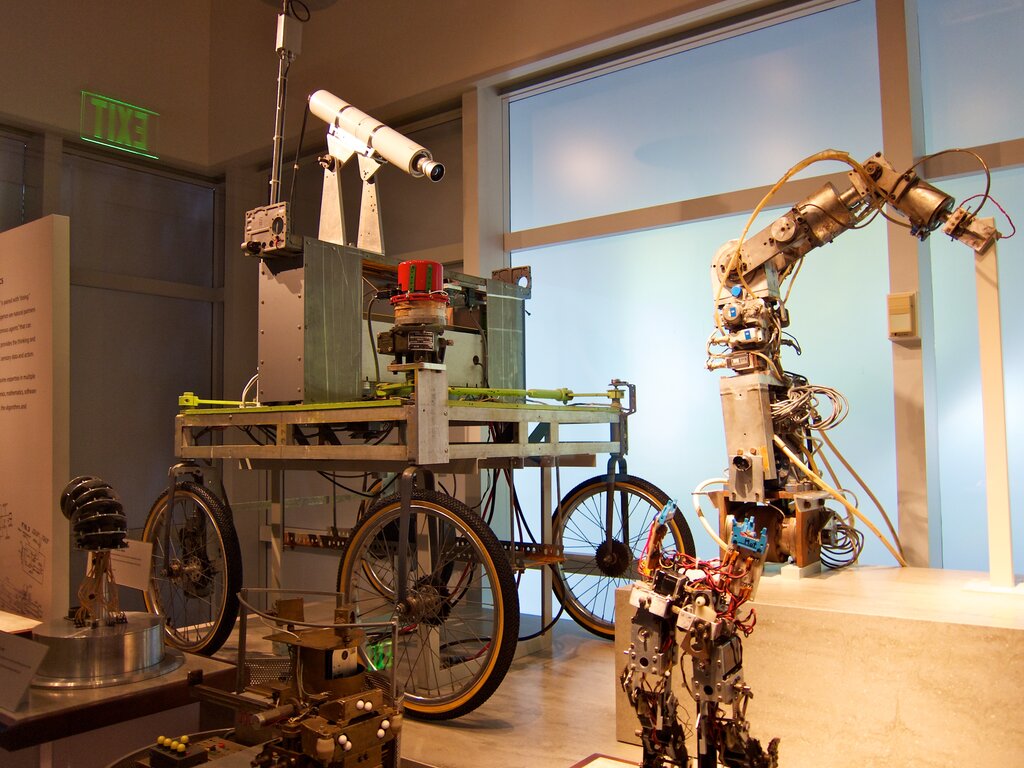
For decades, progress was slow. Computers lacked the processing power, and the algorithms weren't sophisticated enough to handle the complexity of real-world images. The major turning point came with the rise of machine learning and, more recently, deep learning. These technologies gave computers the ability to learn patterns from vast amounts of visual data, dramatically improving their ability to recognize objects with high accuracy.
How Computers Process Images
To a computer, an image isn't a single entity. It’s a grid of tiny dots called pixels, short for "picture elements." Each pixel has a numerical value that represents its color and brightness. For a simple black and white image, each pixel might be a single number representing a shade of gray. For a color image, each pixel is typically represented by three numbers for the red, green, and blue (RGB) components.
Image processing involves applying algorithms to this grid of numbers to perform operations. Early steps often involve simplifying the image, like converting it to grayscale or increasing contrast. The next crucial step is feature extraction. This is where the algorithm identifies important visual information, such as:
- Edges: Lines where there's a sharp change in brightness.
- Corners: Points where edges intersect.
- Textures: Repeating patterns in an image region.
- Shapes and Colors: Basic geometric forms and color information.
These features are the building blocks that a computer vision model uses to understand the content of an image, much like how our brain processes lines and colors to recognize a face.
Why It Matters
Computer vision has moved from the laboratory into our daily lives. Its applications are everywhere, transforming industries by automating and enhancing processes.
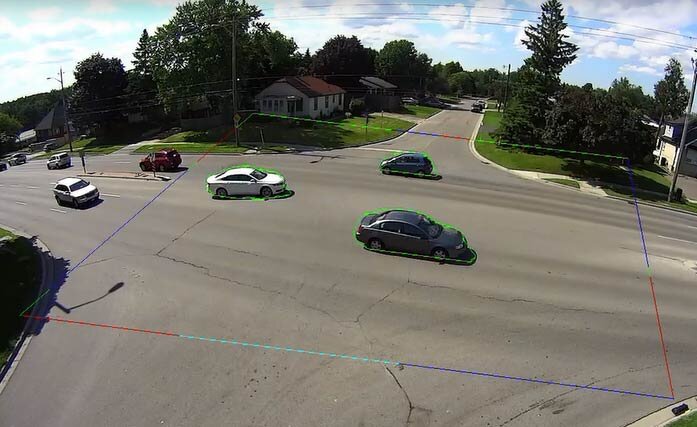
Some key applications include:
- Healthcare: Analyzing medical scans like X-rays and MRIs to help doctors detect diseases earlier and more accurately.
- Automotive: Powering self-driving cars to perceive roads, obstacles, pedestrians, and traffic signs.
- Retail: Analyzing in-store camera feeds to understand customer behavior or automating checkout processes.
- Manufacturing: Inspecting products on an assembly line to spot defects far faster and more reliably than the human eye.
- Security: Facial recognition for unlocking your phone or surveillance systems that can identify suspicious activity.
By teaching machines to see, we unlock their potential to perform a vast range of tasks, improving efficiency, safety, and our overall quality of life.
Ready to check your understanding?
What is the fundamental goal of computer vision?
What was the major technological turning point that significantly accelerated the progress of computer vision after decades of slow development?
Now that you have a solid grasp of what computer vision is and why it's so important, you're ready to explore how these principles are applied in the real world.