Authentic Vietnamese Mi Quang Cooking
Introduction to Mi Quang
The Soul of Quang Nam
Travel to Central Vietnam, and you'll find a noodle dish unlike any other. It’s not a soup, but it’s not dry. It’s served in a wide bowl, with a small, intensely flavorful layer of broth at the bottom, just enough to slick the noodles and bring all the toppings together. This is Mì Quảng, the signature dish of Quảng Nam Province.
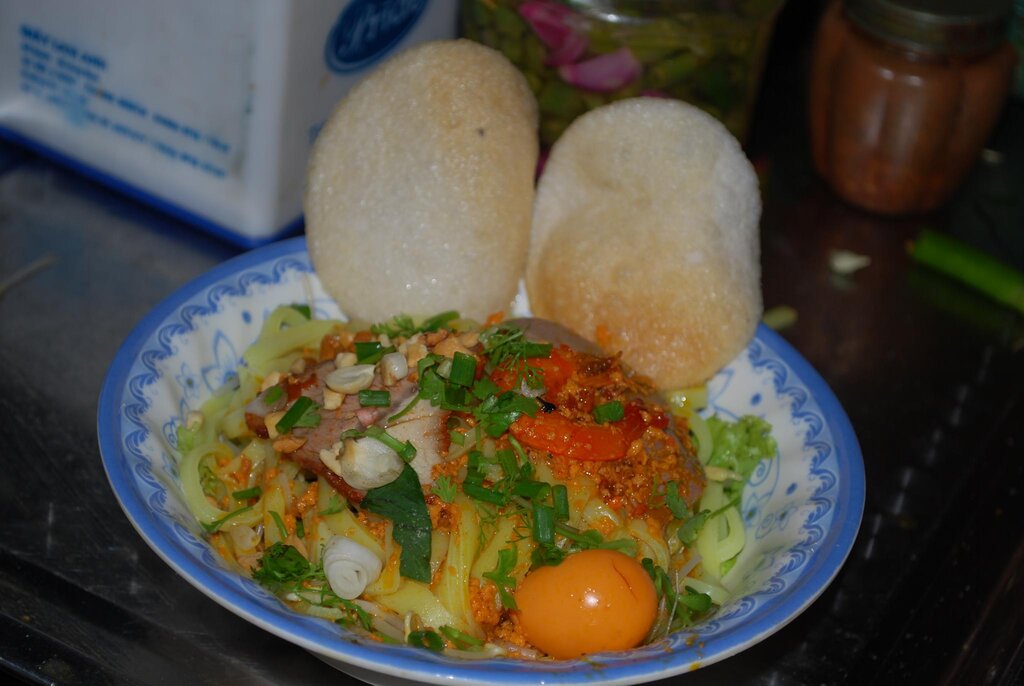
While its exact origins are a topic of friendly debate, the story of Mì Quảng is inseparable from the land it comes from. Many believe the dish has roots stretching back centuries, influenced by the bustling trade port of Hội An, a cultural melting pot in Quảng Nam. Chinese merchants may have introduced the flat rice noodles, but the dish was transformed by local ingredients and tastes into something uniquely Vietnamese.
Historically, Mì Quảng was a humble, hearty meal for farmers and workers. It was made with whatever was fresh and available: river shrimp, pork from the family farm, chicken from the yard, and herbs from the garden. This adaptability is key to its character. The dish tells the story of the region’s agricultural life.
More Than a Meal
In Quảng Nam, Mì Quảng is woven into the fabric of daily life. It’s a go-to breakfast, a quick lunch, and a comforting dinner. But it's also a dish of celebration and ceremony. Families gather to share bowls of Mì Quảng during Tết, the Lunar New Year, and it’s a staple at weddings, ancestral anniversaries, and community gatherings.
Each family often has its own slightly different recipe, a treasured secret passed down through generations. Sharing a bowl is an act of community and a way of preserving family history. It's a taste of home, connecting people to their roots no matter where they are.
To eat Mì Quảng is to experience the history, culture, and spirit of the Quảng Nam people.
This profound cultural importance hasn't gone unnoticed. In 2022, the craft of making Mì Quảng was officially recognized by Vietnam's Ministry of Culture, Sports, and Tourism as a National Intangible Cultural Heritage. This honor celebrates not just the dish itself, but the traditional knowledge, skills, and cultural practices associated with it. It ensures that the legacy of this beloved noodle dish will be protected and passed on to future generations.
Quang-style noodles
So, while it may look like a simple bowl of noodles, Mì Quảng is a proud emblem of Central Vietnamese identity. It's a culinary masterpiece born from resourcefulness and a deep connection to the land.