Austrian Economics Explained
Introduction to Austrian Economics
A Different View from Vienna
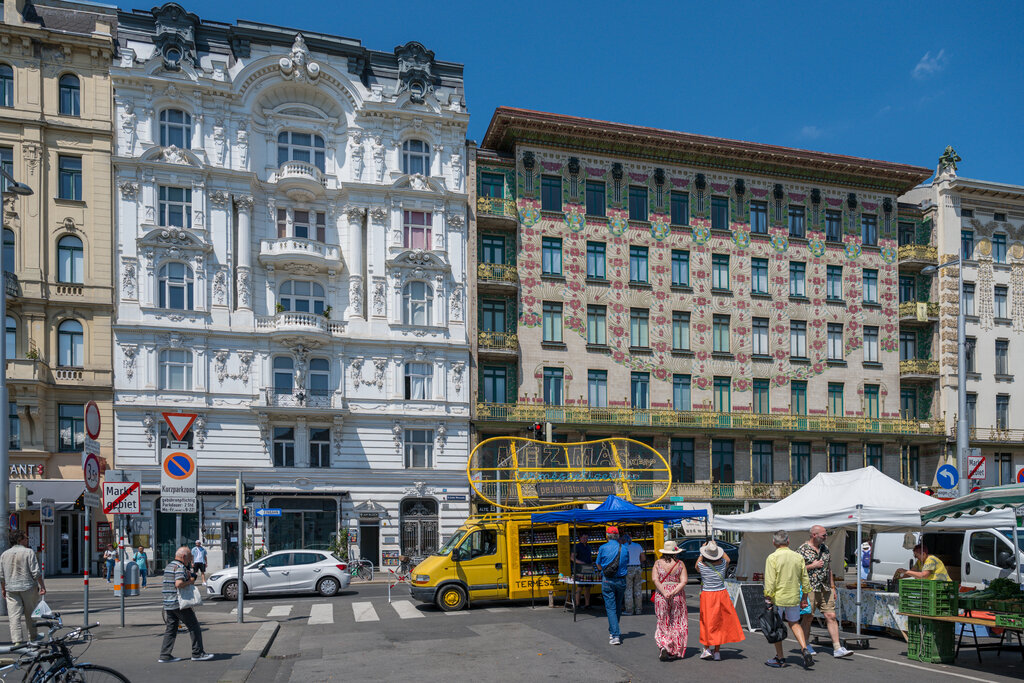
In the late 19th century, Vienna was a hub of intellectual and artistic ferment. While artists like Klimt and composers like Mahler were redefining their fields, a quiet revolution was also brewing in the world of economics. This movement, which became known as the Austrian School of Economics, didn't start in a grand hall but in the minds of a few thinkers who dared to look at the economy from a completely new angle.
The story begins with Carl Menger. A professor at the University of Vienna, Menger published a book in 1871 called Principles of Economics. In it, he challenged a long-held belief. At the time, most economists thought the value of a good was based on the amount of labor it took to produce it. Menger disagreed.
He argued that value isn't inherent in a product. Instead, value is subjective. It exists only in the mind of the individual who wants the good.
Think about a glass of water. To someone dying of thirst in a desert, that water is incredibly valuable. To someone standing next to a pristine lake, it's worth far less. The water itself hasn't changed, but the individual's circumstances and needs have. This simple but powerful idea—that economic value stems from individual human minds and their unique priorities—became the cornerstone of the Austrian School.
Menger's Circle
Menger's ideas attracted a following. Two of his most brilliant disciples were Friedrich von Wieser and Eugen von Böhm-Bawerk. They took Menger's foundational concepts and expanded on them, solidifying the school's unique approach. They were not just followers; they were architects who helped build the intellectual structure of Austrian economics.
Wieser, for instance, coined the term "marginal utility," a concept you'll explore later that refines the idea of subjective value. Böhm-Bawerk, who later became the Austrian Minister of Finance, applied these ideas to complex topics like interest rates and capital.
Together, these three men formed the first generation of the Austrian School. Their focus was always on the individual. They believed that to understand broad economic phenomena like prices or business cycles, you first had to understand why a single person makes a choice. It's a bottom-up view of the economy, starting with the person, not the system.
This early focus on individual decision-making and subjective value set the Austrian School on a distinct path, one that would later be championed by figures like Ludwig von Mises and F.A. Hayek.