Australian Federal Politics A Decade in Review
Australian Political System
Australia's Governing Blueprint
Australia's system of government is a federal parliamentary constitutional monarchy. That sounds complicated, but we can break it down. 'Federal' means that power is divided between a central, national government and six state governments. Think of it as a set of shared responsibilities.
The rulebook for this entire system is the Australian Constitution. It's the foundational legal document that came into effect on January 1, 1901. The Constitution lays out how the federal government is structured and what powers it holds. It establishes a stable, predictable framework for governing the country.
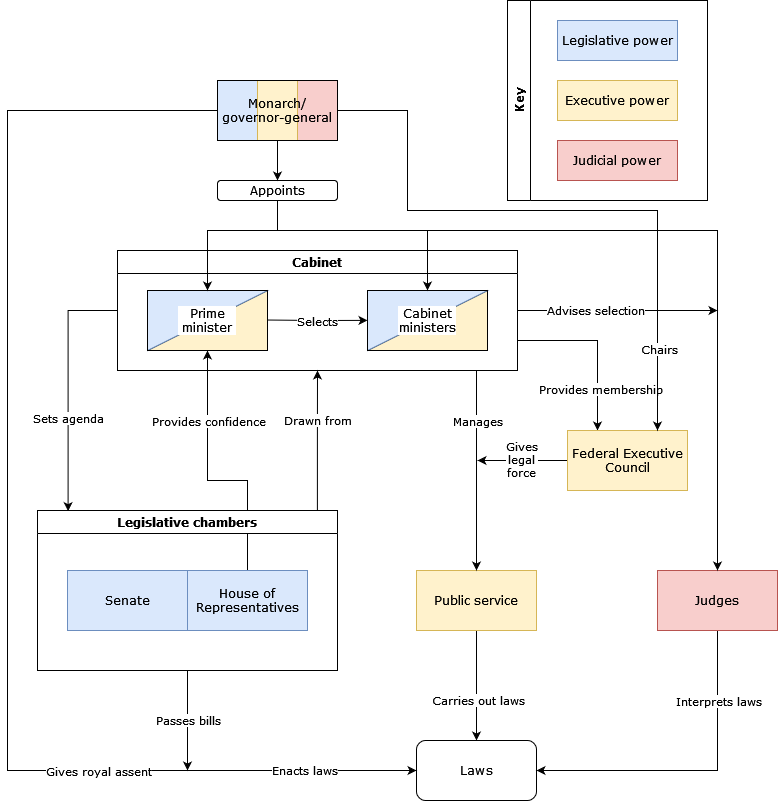
At the heart of this structure is a core principle: the separation of powers. To prevent any single group from having too much control, the Constitution divides the government's functions into three distinct branches.
The Three Branches of Government
The first branch is the Legislature, also known as the Parliament of Australia. Its main job is to make and amend laws. The Parliament is bicameral, meaning it consists of two houses: the House of Representatives and the Senate.
The House of Representatives, often called the lower house, has 151 members who each represent a specific geographic area, or electorate. The political party (or coalition of parties) with the majority of members in this house forms the government.
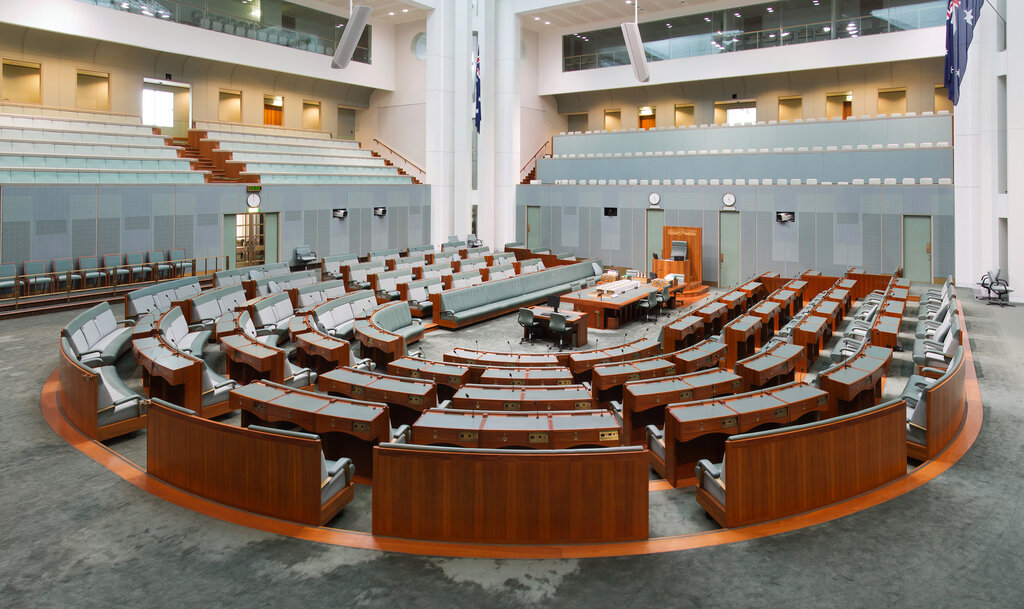
The Senate is the upper house. It consists of 76 senators, with 12 from each of the six states and two from each of the mainland territories. The Senate's role is often described as a house of review, scrutinizing bills passed by the lower house.
The second branch is the Executive. This branch is responsible for putting the laws made by Parliament into action. It's in charge of the day-to-day administration of the country.
The Executive is led by the Governor-General, who is the King's representative in Australia. However, in practice, the real political power lies with the Prime Minister and the Cabinet. The Cabinet is a group of senior ministers who are responsible for different government departments, like health, defense, and treasury. A key feature of Australia's system is that the Prime Minister and all other ministers must also be members of Parliament. This means the executive branch is drawn directly from the legislative branch.
The third branch is the Judiciary. This is the legal arm of the government, made up of the High Court of Australia and other federal courts. The Judiciary's role is to interpret the law and apply it to specific cases. It makes judgments about what the law means and whether it has been broken.
Crucially, the judiciary is independent of the other two branches. This independence ensures that courts can make decisions based on the law, free from political pressure. The High Court has the ultimate authority to interpret the Constitution, making it a powerful check on the powers of the Parliament and the Executive.
The Constitution in Action
The Constitution does more than just outline the three branches. It also divides law-making powers between the federal and state governments. Some powers, like defense and currency, are exclusive to the federal government. Others, like health and education, are shared. And some are left primarily to the states.
This division of power is a cornerstone of Australia's federation. It allows states to make laws that suit their specific populations while ensuring the national government can manage issues that affect the whole country.
Because the Constitution is the supreme law, it can't be changed easily. Altering it requires a special vote called a referendum, where a majority of voters nationwide, plus a majority of voters in a majority of states (at least four out of six), must agree to the proposed change. This high bar ensures the fundamental rules of government remain stable.
What is the primary role of the Judiciary branch in Australia's government?
The fact that the Prime Minister and Cabinet ministers must also be members of Parliament demonstrates a direct link between which two branches of government?
Understanding this structure of Parliament, Government, and the Courts, all guided by the Constitution, is the first step to making sense of Australian politics.