Australia Beyond the Basics
Indigenous Land Sovereignty
The Fiction of Empty Land
When the British arrived in Australia, they operated under a legal principle called terra nullius, Latin for “nobody’s land.” This wasn't a claim that the continent was literally uninhabited. Instead, it was a legal fiction asserting that the land's inhabitants, the Aboriginal and Torres Strait Islander peoples, had no system of law or land ownership that European legal systems could recognize. Under this doctrine, the British Crown could claim absolute ownership of the entire continent.
This had profound consequences. It meant that, in the eyes of the colonizers' law, First Nations peoples had no legal rights to the lands they had occupied for millennia. Their deep spiritual, cultural, and economic connections to Country were rendered invisible. This single legal concept justified the dispossession of Indigenous Australians from their ancestral territories without treaty or compensation, forming the bedrock of Australian land law for two centuries.
A Landmark Challenge
This legal foundation remained largely unchallenged until the late 20th century. The pivotal moment came from a Meriam man from the island of Mer (Murray Island) in the Torres Strait named Eddie Mabo. He and several other Meriam people initiated a legal case against the state of Queensland, arguing that their people had continuously lived on their lands and seas with their own traditional laws and customs, long before British colonization.
Their fight culminated in the 1992 High Court decision, . The court was asked to rule on whether the Meriam people's traditional rights had survived the Crown's claim to sovereignty. The case didn't question that the British Crown had acquired sovereignty, but rather what that sovereignty meant for the land rights of the original inhabitants.
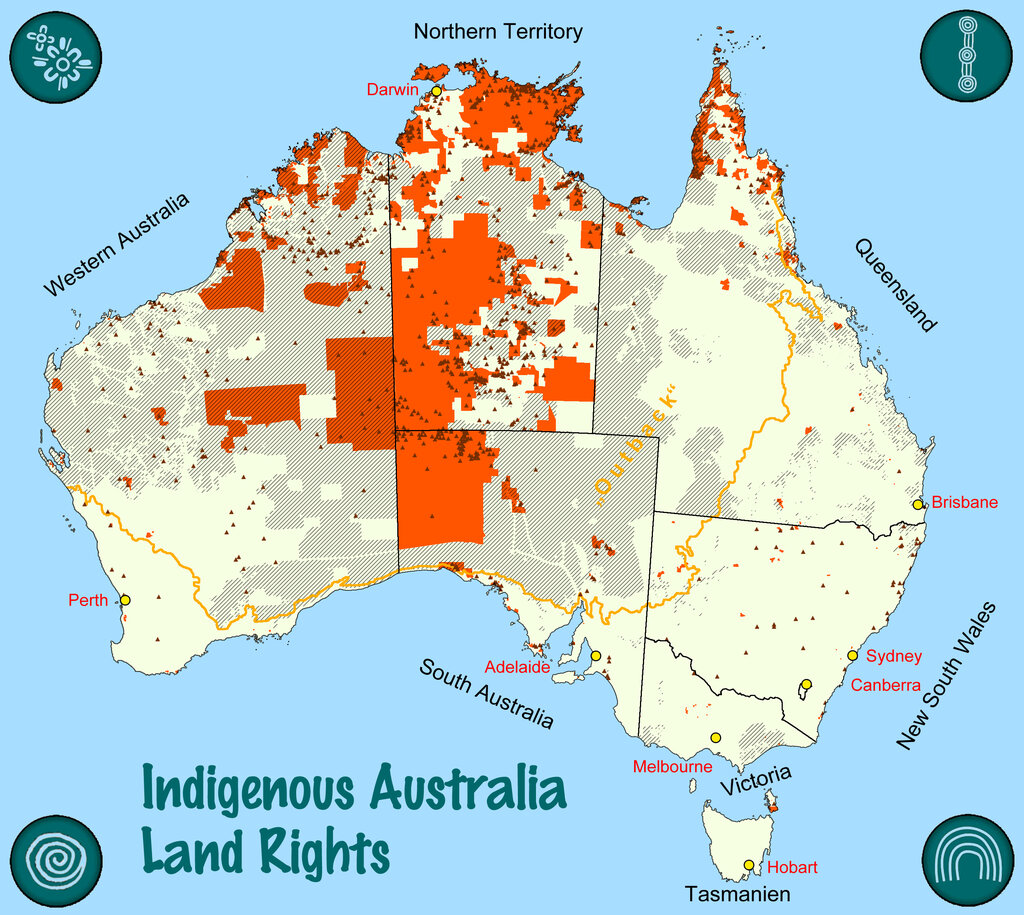
The High Court's ruling was revolutionary. By a 6-1 majority, it overturned the doctrine of terra nullius, calling it a discriminatory legal fiction that had no place in contemporary Australian law. The decision recognized for the first time that a form of native title exists under Australian law. This title stemmed from the traditional laws and customs of Indigenous peoples, pre-dating and surviving British colonization. It acknowledged that the Crown's sovereignty did not automatically wipe out these pre-existing rights.
A New Legal Framework
The Mabo decision was a court ruling, not a comprehensive land rights system. In response, the Australian Parliament passed the to create a formal legal process for Indigenous groups to make claims and have their native title recognized and protected.
The Act established the National Native Title Tribunal to mediate claims. It also set out the conditions under which native title could be claimed and what it meant. Crucially, the Act confirmed that native title could be extinguished—or permanently wiped out—by certain government acts, such as granting freehold title for a home or farm. This created a new area of legal complexity: where did native title still exist, and what could extinguish it?
Native Title is not created by the government. It is the legal recognition of rights and interests in land and waters that come from traditional laws and customs.
Coexistence and Conflict
A major unresolved question after Mabo and the Native Title Act was how native title interacted with other forms of land tenure, particularly —vast tracts of Crown land leased for grazing livestock. Did the granting of a pastoral lease extinguish native title completely?
This question was at the heart of another landmark High Court case, Wik Peoples v Queensland, decided in 1996. The Wik and Thayorre peoples of Cape York Peninsula argued that their native title rights had survived the granting of pastoral leases over their traditional lands.
In a narrow 4-3 decision, the High Court found that pastoral leases did not necessarily extinguish all native title rights. Instead, the two sets of rights could coexist. Where there was a conflict between the rights of the pastoralist and the rights of native title holders, the pastoralist's rights would prevail. For example, a pastoralist’s right to graze cattle would take precedence over a native title right to perform a ceremony in the same paddock at the same time.
This concept of 'coexistence' was a significant development. It meant that even on land leased for farming, traditional owners might still retain rights to access the land for hunting, fishing, and ceremonial purposes, as long as it didn't interfere with the pastoralist's activities.
| Legal Decision | Core Principle | Key Outcome |
|---|---|---|
| Mabo v QLD (1992) | Overturned terra nullius. | Recognized the existence of Native Title based on traditional law. |
| Wik v QLD (1996) | Native Title and pastoral leases can coexist. | Established that pastoral leases don't automatically extinguish Native Title. |
The Wik decision was politically controversial, leading to significant debate and legislative changes that amended the Native Title Act. While these legal frameworks have provided a path for recognition, the process remains slow and arduous for many First Nations groups. More recently, some states like Victoria have introduced alternative pathways like the Traditional Owner Settlement Act 2010, which allows for out-of-court agreements that provide a broader recognition of rights beyond the specific confines of the Native Title Act.
What does the legal principle of terra nullius mean in the context of British colonization of Australia?
Which landmark High Court case overturned the doctrine of terra nullius in Australia?