Aurora Workforce Strategy Interview Preparation
Autonomous Business Models
Driver as a Service, Not Software
Aurora Innovation's core offering isn't SaaS; it's Driver as a Service (DaaS). The distinction is critical. While both are subscription-based, DaaS integrates a complex hardware stack—sensors, compute, and the vehicle itself—with the autonomous driving software. The 'service' is the physical act of piloting a truck or car, not just providing access to a cloud-based application. This model fundamentally alters the operational and financial DNA compared to traditional software ventures.
In a typical SaaS model, marginal cost approaches zero as the user base scales. For Aurora, each deployed 'driver' carries significant capital cost and ongoing physical maintenance liabilities. The value isn't delivered via an API call but through the safe, efficient movement of goods or people in the real world. This blurs the line between a tech company and a logistics operator, creating unique challenges in unit economics, service-level agreements, and workforce management.
Segmenting the Autonomous Market
Aurora attacks two distinct markets with tailored DaaS products: freight logistics with Aurora Horizon and ride-hailing with Aurora Connect. Each vertical presents different operational constraints and workforce requirements.
Aurora Horizon targets the $1 trillion long-haul trucking industry. The model focuses exclusively on terminal-to-terminal routes. An autonomous truck handles the long, predictable highway miles, with human drivers managing the complex 'first-mile' pickup and 'last-mile' delivery in urban environments. This approach simplifies the operational design domain (ODD) by avoiding dense city streets, which are exponentially harder for an AV to navigate.
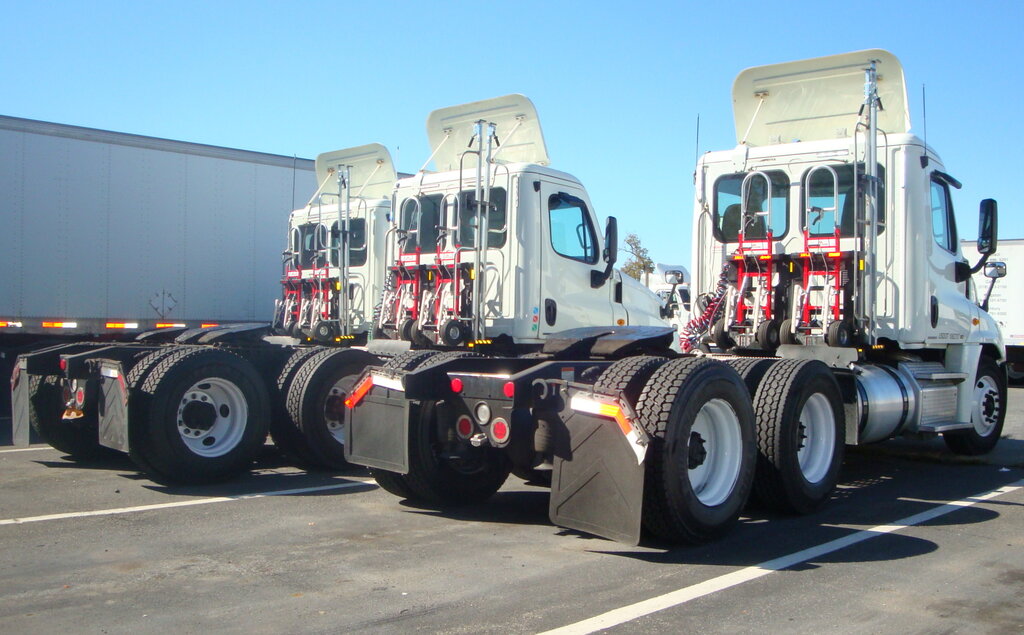
The workforce for Horizon is not composed of drivers but of logistics specialists. Roles shift to remote fleet monitoring, dispatch optimization, and on-site terminal management responsible for the handoff between autonomous and manual legs of the journey. The key economic driver is achieving near-continuous asset utilization—running trucks 24/7 without being constrained by human hours-of-service regulations.
Aurora Connect, on the other hand, is designed for urban ride-hailing networks. While the core technology is similar, the ODD is far more complex, involving unpredictable pedestrians, dense intersections, and frequent passenger interactions. The workforce here revolves around fleet management in a city, including vehicle charging, cleaning, and rapid-response maintenance to maximize uptime during peak demand hours. The human-in-the-loop role is less about remote piloting and more about customer support and exception handling.
The Capital-Intensive to Asset-Light Pivot
Aurora's path to scale follows a deliberate two-phase strategy. The initial phase is necessarily capital-intensive and vertically integrated. By owning and operating its own fleet, Aurora can accelerate its development loop, gathering high-fidelity sensor data and rapidly iterating on its Aurora Driver platform without external dependencies. This phase requires a workforce heavy on vehicle technicians, hardware engineers, and safety drivers to manage the physical assets.
The second phase, designed for scale, is a transition to an asset-light, partner-owned model. Aurora has established deep integrations with major truck OEMs like PACCAR and Volvo. These partners will manufacture trucks with the Aurora Driver integrated directly on the assembly line. Aurora's customers—large carriers and logistics firms—will then purchase these autonomous-ready trucks and subscribe to the DaaS offering.
This pivot dramatically shifts the business model and workforce. Aurora sheds the burden of vehicle ownership and maintenance, allowing it to focus on its core competency: the autonomous driving system. Headcount requirements evolve from hands-on vehicle operations to higher-level roles in partner integration, network operations, and data analysis to ensure the health and performance of the entire partner fleet.
From Dallas to Profitability
Aurora's commercialization strategy is geographically focused, starting with the Dallas-Houston freight corridor. This high-volume lane provides a concentrated environment to prove the model's reliability and economic viability. By saturating a single corridor, Aurora can build a dense support network of terminals and maintenance depots, ensuring high uptime and efficient operations before expanding nationally.
The company's primary target is not just autonomy, but profitable autonomy. The stated objective is to achieve positive gross profit on a per-truck basis by late 2026. This hinges on removing the cost of the safety driver and maximizing revenue through 24/7 asset utilization.
The unit economics of DaaS are straightforward but challenging. The subscription fee must cover the amortized cost of the Aurora Driver hardware, cloud computing expenses, and operational support, while delivering clear ROI to the customer by eliminating driver wages and fuel costs from idling. The entire business model rests on the ability to prove that an autonomous truck isn't just safer, but fundamentally more productive than its human-driven counterpart.
What is the primary difference between Aurora's Driver as a Service (DaaS) model and a traditional Software as a Service (SaaS) model?
Aurora Horizon targets the long-haul trucking industry by focusing on which specific type of route to simplify the operational design domain (ODD)?
Aurora's approach represents a significant evolution in how technology is sold and operated, blending the recurring revenue of software with the operational complexity of physical logistics.