Aurora Workforce Strategy Interview Preparation
AV Fleet Mechanics
Driver-as-a-Service Operational Mechanics
The core of Aurora's commercial strategy is a (DaaS) model. Unlike vertically integrated players who design and build the entire vehicle, Aurora focuses solely on the 'brain'—the Aurora Driver system. This package of sensors, software, and compute is then integrated into vehicle platforms built by OEM partners like PACCAR, Volvo, and Toyota. This creates an asset-light framework for Aurora, offloading the immense capital expenditure of vehicle manufacturing and physical service infrastructure onto established players.
The trade-off is a symbiotic dependency. Aurora's success is tied to the production schedules, service networks, and platform-specific engineering constraints of its partners. This isn't a simple software license; it's a deep co-engineering partnership where the 'brain' and 'body' must be meticulously integrated for power management, thermal dissipation, and data communication. Fleet operators, in turn, don't just buy a truck; they subscribe to a service level agreement (SLA) for autonomous operation uptime, which is a function of both hardware reliability and software performance.
The model decouples the autonomous system's lifecycle from the vehicle's lifecycle, allowing for independent upgrades and creating distinct maintenance streams for the chassis and the AV stack.
Integration and Maintenance Cycles
Integrating the Aurora Driver is not a uniform, plug-and-play process. The physical and operational demands on a Class 8 truck are vastly different from those on a Toyota Sienna passenger minivan. A PACCAR truck's duty cycle involves long-haul routes, immense vibration, and exposure to extreme weather, requiring ruggedized hardware and robust thermal management. A Sienna, used for ride-hailing, operates in dense urban environments with different shock profiles and power requirements.
These differences create divergent maintenance schedules that fleet managers must reconcile. A standard diesel engine overhaul for a Class 8 truck is a known quantity with established labor pools and part supply chains. However, servicing the Aurora Driver's sensor suite or compute modules introduces novel tasks that require specialized technicians and diagnostic tools. The result is a dual-stream maintenance workflow: one for the vehicle chassis and another for the autonomous system.
| Vehicle Platform | Traditional Maintenance | Aurora Driver Maintenance | Key Operational Constraint |
|---|---|---|---|
| Class 8 Truck | Engine overhauls, tire rotation, brake service (predictable, long intervals) | Sensor calibration, compute module diagnostics, power system checks | Maximizing uptime for long-haul logistics; minimizing downtime at hubs. |
| Toyota Sienna | Oil changes, fluid checks, suspension work (frequent, short-duration tasks) | Lidar cleaning, camera alignment, software patch validation | High availability in a specific geographic zone for ride-hailing demand. |
The Demands of Perception
At the heart of the Aurora Driver's perception stack is , a proprietary FMCW (Frequency Modulated Continuous Wave) sensor. Unlike traditional time-of-flight lidar, FirstLight can measure both range and instantaneous velocity for every point, a crucial advantage for detecting and predicting the motion of objects at high speeds on a highway. This performance, however, comes with stringent operational requirements.
The sensor suite requires precise calibration to maintain a coherent, unified view of the world. The constant vibration of a Class 8 truck, thermal expansion and contraction, and even minor road debris can slowly degrade this calibration. This is not a catastrophic failure but a gradual drift that can shrink the system's operational design domain (ODD). Consequently, periodic recalibration is a non-negotiable maintenance task. This creates predictable but inflexible labor demand spikes. Specialized technician teams must be available at logistics hubs or service depots to perform these calibrations, a demand profile that doesn't align with traditional mechanic staffing models.
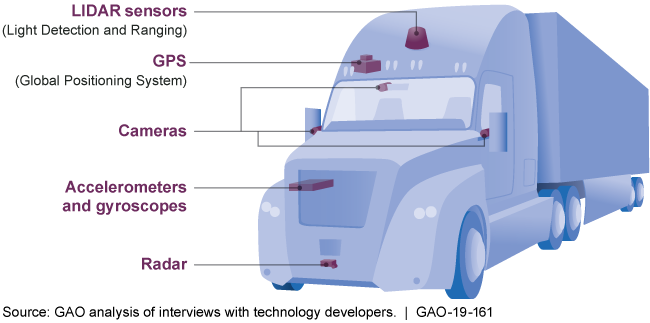
The uptime of the entire autonomous fleet is therefore gated by the throughput of these specialized calibration bays and the availability of trained technicians. It represents a significant operational bottleneck that must be modeled and managed to meet SLAs.
What is the core of Aurora's commercial strategy?
The integration of the Aurora Driver into different vehicle platforms like a PACCAR truck and a Toyota Sienna is a uniform, plug-and-play process.