AuDHD Executive Optimization Protocol
Dopaminergic System Architecture
The Dopamine Transfer Deficit
In the context of AuDHD, executive dysfunction transcends simple inattention. It is often rooted in a specific neurobiological pattern known as the Dopamine Transfer Deficit (DTD). This model posits that the core issue is not a lack of dopamine itself, but an inefficient transfer and utilisation of it, particularly between the midbrain and the prefrontal cortex (PFC). This inefficiency profoundly affects the initiation and sustaining of non-preferred, high-effort tasks common in professional settings. The result is a state of inertia where the perceived activation energy for a task becomes insurmountably high, despite a clear understanding of its importance.
This deficit leads to a dysregulation in the cost-benefit analysis of effort. For a neurotypical brain, the anticipated reward of completing a task generates sufficient dopaminergic activity to overcome the initial resistance. In AuDHD, this anticipatory signal is weak or delayed. The brain fails to adequately price the future reward, making the immediate cost of cognitive effort feel disproportionately large. This explains the paradox of being able to hyperfocus on a high-interest activity while being unable to start a simple, mandatory report.
Tonic vs. Phasic Dysregulation
The DTD is underpinned by an imbalance between tonic and phasic dopamine signalling. Tonic dopamine refers to the baseline, ambient level of dopamine in the synapse, crucial for signal stability and cognitive flexibility. Phasic dopamine consists of the sharp, transient spikes released in response to rewarding or salient stimuli, driving motivation and learning. In AuDHD, tonic levels are often suboptimal, creating a 'noisy' neural environment. To compensate, the system becomes reliant on intense phasic bursts, leading to a boom-or-bust cycle of motivation. This low tonic state compromises the PFC's ability to maintain goal representations over time, causing frequent attentional shifts unless a stimulus is potent enough to trigger a strong phasic response.
The plays a critical role in this dynamic, particularly within the PFC. Unlike other brain regions that primarily use the dopamine transporter (DAT) for reuptake, the PFC relies heavily on the COMT enzyme to clear synaptic dopamine. Variations in the COMT gene, such as the Val158Met polymorphism, dictate the enzyme's efficiency. The 'Met' allele results in a slower-acting enzyme, leading to higher tonic dopamine levels but reduced phasic signalling capacity. Conversely, the 'Val' allele creates a highly efficient enzyme that rapidly clears dopamine, resulting in lower tonic levels but a greater capacity for phasic firing. Individuals with the Val/Val genotype may be more susceptible to the executive collapse seen in AuDHD under pressure, as their baseline PFC dopamine is cleared too quickly to sustain focus on complex, delay-discounted tasks.
Reward, Time, and Reinforcement
The tonic/phasic imbalance directly sabotages the brain's (RPE) mechanism. RPE is the discrepancy between an expected reward and the actual reward received, a crucial signal for learning and motivation encoded by phasic dopamine. In AuDHD, a weak tonic background means a larger-than-normal phasic signal is required to register a positive RPE. Consequently, small, incremental progress often fails to generate a motivating dopamine response, leading to the perception that the effort is fruitless. The brain doesn't learn to associate the behaviour with a future reward, so task initiation remains difficult.
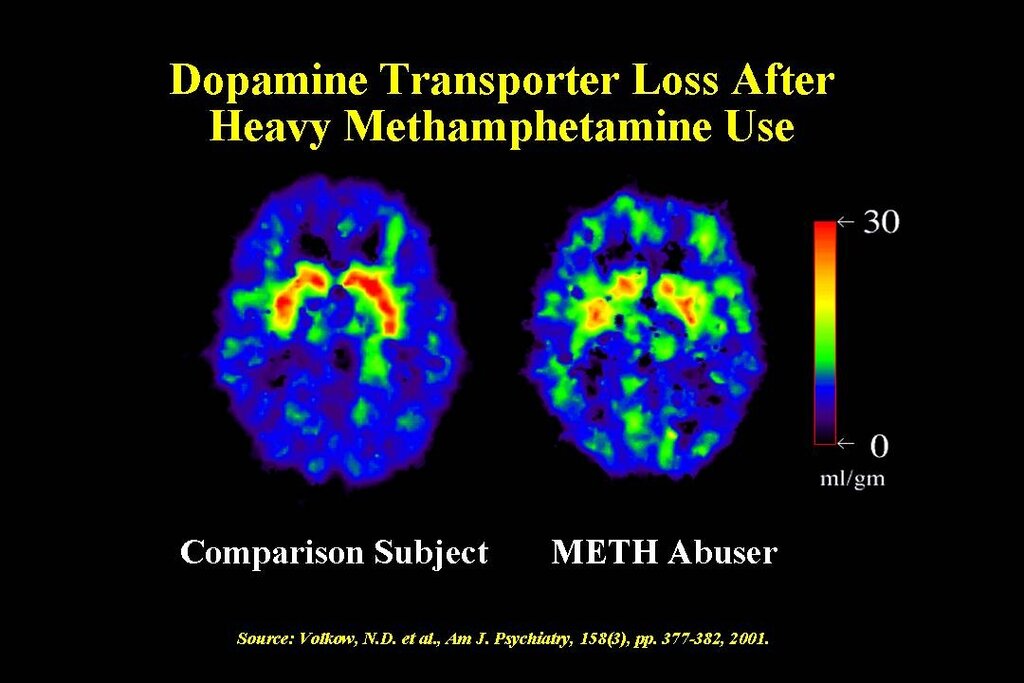
This dopaminergic dysregulation also distorts the perception of time. The encoding of temporal information, particularly the valuation of delayed rewards, is dependent on stable dopamine signalling. Reduced dopamine transporter (DAT) density and inefficient PFC clearance impair the brain's ability to accurately encode these delay-related signals. As a result, future rewards are heavily discounted, and the present moment's discomfort (the effort of the task) dominates the decision-making process. This is the neurobiological basis for what is often mislabelled as 'procrastination' or 'laziness.'
To overcome this, the AuDHD brain seeks immediate feedback loops and intermittent reinforcement. The unpredictable nature of a variable reward schedule—like refreshing a social media feed—can trigger potent phasic dopamine releases that temporarily normalise the system. While this can be a maladaptive coping mechanism, it highlights a key principle for intervention: breaking down large, delayed-reward tasks into smaller micro-tasks with immediate, tangible, and frequent feedback can artificially create the RPE signals needed to sustain executive control and facilitate task completion.
What is the core issue described by the Dopamine Transfer Deficit (DTD) model in the context of AuDHD?
According to the provided text, the difficulty in starting a mandatory, low-interest task is primarily due to:
Ultimately, understanding the Dopamine Transfer Deficit reframes AuDHD-related executive dysfunction from a behavioural issue to a neurobiological one, demanding strategies that work with, not against, the underlying brain architecture.