Atlas App: Privacy, Utility, and Policy Impact
Data Aggregation Architecture
Architecting the Ingestion Layer
The core architectural challenge for an application like Atlas lies in its data ingestion layer. The platform must integrate disparate, high-sensitivity data streams: real-time location telemetry, static but jurisdictionally variable legislative data, historical insurance risk profiles, and user-provided Personally Identifiable Information (PII). This requires an architecture that is not only robust and scalable but also meticulously designed for security, privacy, and regulatory compliance from the ground up.
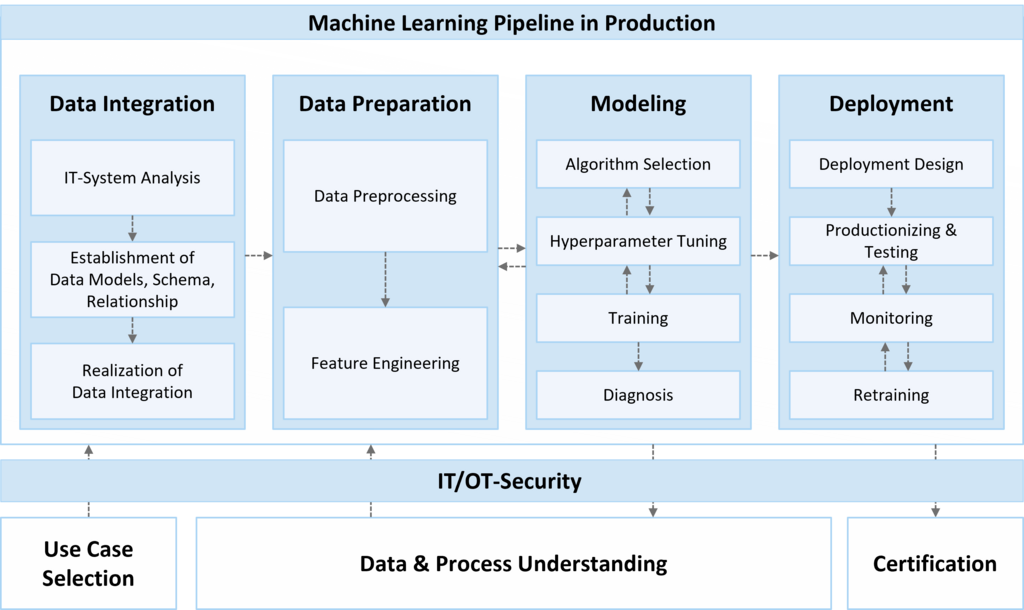
The initial point of convergence is the integration of PII with continuous location telemetry. This is the highest-risk junction in the data flow. A zero-trust security model is insufficient; the architecture must be designed for privacy by default. Raw location data is immediately processed through a sanitization service upon receipt. This service applies spatial and temporal aggregation to reduce granularity. For instance, instead of storing a precise coordinate every five seconds, the system might store a geohashed region for a given five-minute window. This process of intentional data coarsening is a prerequisite before the data can be joined with any PII-linked datasets. Further protection is achieved by implementing techniques like to ensure that any individual's data cannot be easily singled out from a larger group.
Ingestion Pipelines and Schema Design
The data pipelines for Insurtech and Civic Tech present contrasting requirements. Insurtech data, often sourced from legacy systems via batch ETL processes, consists of structured historical risk data. Civic tech data, such as zoning laws or municipal codes, is typically static but highly fragmented across jurisdictions. The Atlas platform must reconcile these with the dynamic, high-velocity stream of user telemetry.
A key decision is the normalization strategy. For legislative data, we employ a canonical data model. Each piece of jurisdictional data is transformed into a standardized schema upon ingestion. This simplifies downstream processing, as models can be trained on a unified data structure. User-generated data, however, retains more flexibility. We leverage a hybrid schema approach, using structured fields for core identifiers and semi-structured formats (like JSONB in PostgreSQL) for dynamic attributes. This allows the platform to evolve its user-centric features without requiring constant, disruptive schema migrations.
This hybrid model extends to the architecture. Tenant isolation is paramount. While some aggregated, anonymized data might be used for global model training, a tenant's raw or sensitive data must be logically and, where possible, physically segregated. This is often achieved through row-level security policies and tenant-specific encryption keys managed by a service like HashiCorp Vault. Each API request is authenticated with a JWT that contains the tenant ID, which is then used by the data access layer to scope all queries.
Normalization and Data Reconciliation
The final stage of ingestion is reconciliation. This is where the normalized static data and the user-generated dynamic data are joined to create a unified risk profile. This process is not a simple SQL join; it's an event-driven workflow orchestrated by a tool like Apache Airflow or Prefect. When a user's location telemetry is updated, a DAG (Directed Acyclic Graph) is triggered. This DAG fetches the relevant legislative data for the user's current geohashed region and the user's own historical data to compute a real-time, personalized risk score.
The data model must treat static legislative data not as a fixed table, but as one dimension of a time-series event stream, joined with user telemetry at query time.
This architecture ensures that downstream services, such as the personalized modeling engine, consume a clean, consistent, and privacy-preserving data product. The complexity is front-loaded into the ingestion layer, abstracting it away from the application and machine learning logic.
Now that we've seen how the data comes together, let's test your understanding of these architectural concepts.
What is the primary architectural measure taken immediately upon receiving raw location data to protect user privacy in the Atlas platform?
How does the Atlas architecture handle data from different sources like legislative codes and user information?
By managing the intricacies of PII, multi-tenancy, and data reconciliation at the ingestion stage, the platform can deliver powerful, personalized insights while upholding stringent privacy and security standards.