Asynchronous Multi-Agent AI Collaboration
Introduction to Multi-Agent Systems
What Are Multi-Agent Systems?
Imagine trying to build a house all by yourself. You'd have to be a plumber, an electrician, a carpenter, and a painter all at once. It would be slow and incredibly difficult. A better approach is to hire a team of specialists who can work together. This is the core idea behind a multi-agent system (MAS).
A multi-agent system is a collection of autonomous agents that interact with each other and their environment to solve a problem that is beyond their individual capabilities. Each agent is a self-contained program that can perceive its surroundings and make its own decisions.
The key characteristics of a MAS are:
- Autonomy: Each agent has its own internal state and control over its actions.
- Decentralization: There is no single point of control. Decisions are distributed among the agents.
- Interaction: Agents communicate and coordinate with each other to achieve a common goal.
Why Use Multiple Agents?
Using a team of agents offers several advantages over relying on a single, monolithic system. For one, it makes complex problems more manageable. By breaking a large task into smaller, specialized sub-tasks, each agent can focus on what it does best. This is a classic "divide and conquer" strategy.
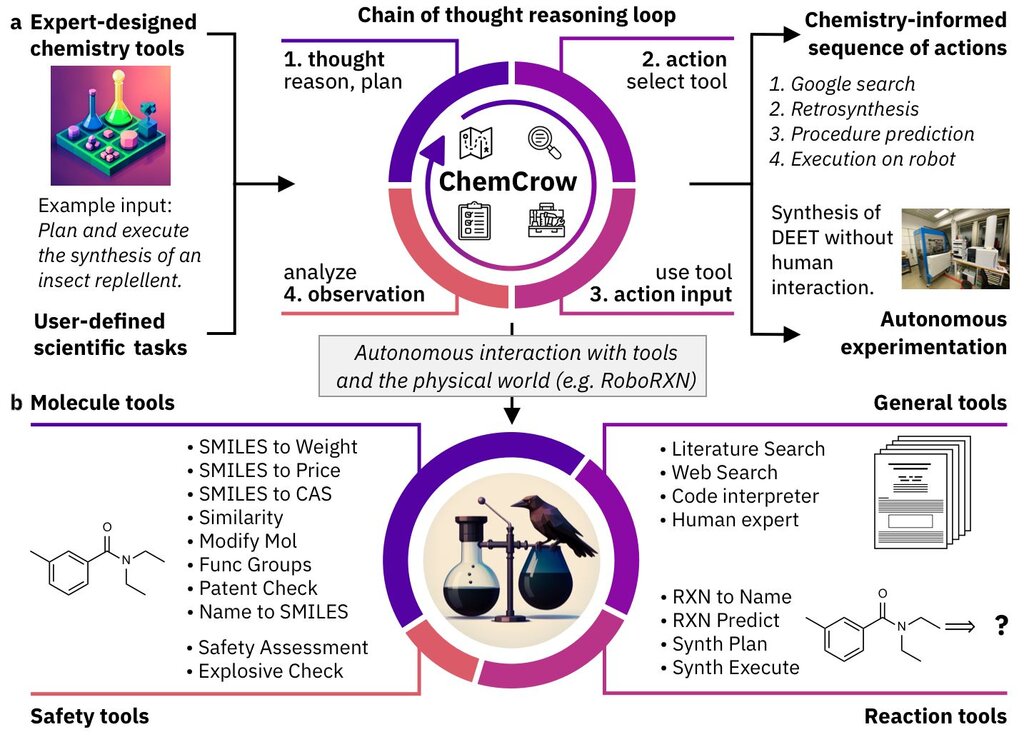
Multi-agent systems are also more robust. If one agent fails, the others can often adapt and continue working, picking up the slack. A single-agent system, on the other hand, has a single point of failure; if it goes down, the entire task grinds to a halt.
Finally, MAS are inherently scalable and parallel. Need more processing power? Just add more agents to the team. Since agents can work on their tasks simultaneously, the system can solve problems faster than a single agent working sequentially.
How Agents Work Together
Getting a group of autonomous agents to collaborate effectively is a major design challenge. How do they know what to do and how to coordinate with others? There are several common strategies for orchestrating this digital teamwork.
Collaboration
noun
The action of working with someone to produce or create something.
One of the simplest methods is rule-based collaboration. In this approach, agents follow a set of predefined if-then rules. For example, in a system managing a warehouse, an agent might follow a rule like, "If an item's stock is below 10 units, then send a request to the procurement agent."
Another strategy is role-based collaboration. Here, each agent is assigned a specific role with clear responsibilities, much like players on a soccer team. You might have a "Researcher" agent that gathers data, a "Planner" agent that creates a strategy based on that data, and an "Executor" agent that carries out the plan. Each sticks to its job, and their interactions are defined by their roles.
When multiple agents can communicate, share knowledge, and coordinate tasks, they become more than the sum of their parts.
The most sophisticated approach is model-based collaboration. Agents in these systems maintain an internal model of their environment and of other agents. They use these models to predict how their actions will affect the system and what other agents are likely to do. This allows for more flexible and intelligent coordination, as agents can adapt their behavior based on their understanding of the current situation.
| Strategy | Description | Best For |
|---|---|---|
| Rule-Based | Agents follow simple if-then instructions. | Predictable environments with clear-cut logic. |
| Role-Based | Agents have specialized jobs and responsibilities. | Complex tasks that can be broken into distinct functions. |
| Model-Based | Agents use internal models to predict and plan. | Dynamic environments requiring adaptive behavior. |
Now, let's test your understanding of these core concepts.
What is the primary concept behind a multi-agent system (MAS)?
Which of the following is NOT an advantage of using a multi-agent system over a single-agent system?
By enabling decentralized cooperation, multi-agent systems provide a powerful framework for tackling complex, real-world problems that a single agent would struggle to solve alone.