Asynchronous BCI Control
Introduction to Brain-Computer Interfaces
What Is a Brain-Computer Interface?
A brain-computer interface, or BCI, is a direct communication pathway between the brain's electrical activity and an external device, like a computer or a robotic limb. It's a bridge that allows a person to control technology using only their thoughts, bypassing the body's normal pathways of nerves and muscles.
Think of it this way: when you decide to move your hand, your brain sends electrical signals through your nervous system to your muscles. A BCI intercepts these signals—or the intention behind them—and translates them into commands a machine can understand. This opens up incredible possibilities for people with paralysis or other motor impairments.
The core purpose is to restore, replace, or enhance human functions. Whether it's helping someone who has lost the ability to speak form sentences on a screen or allowing a pilot to control a drone with their mind, the goal is the same: to turn thought into action.
Types of BCIs
BCIs are generally categorized by how they acquire brain signals. The main distinction is whether the device is placed inside or outside the skull. This choice creates a fundamental trade-off between signal quality and surgical risk.
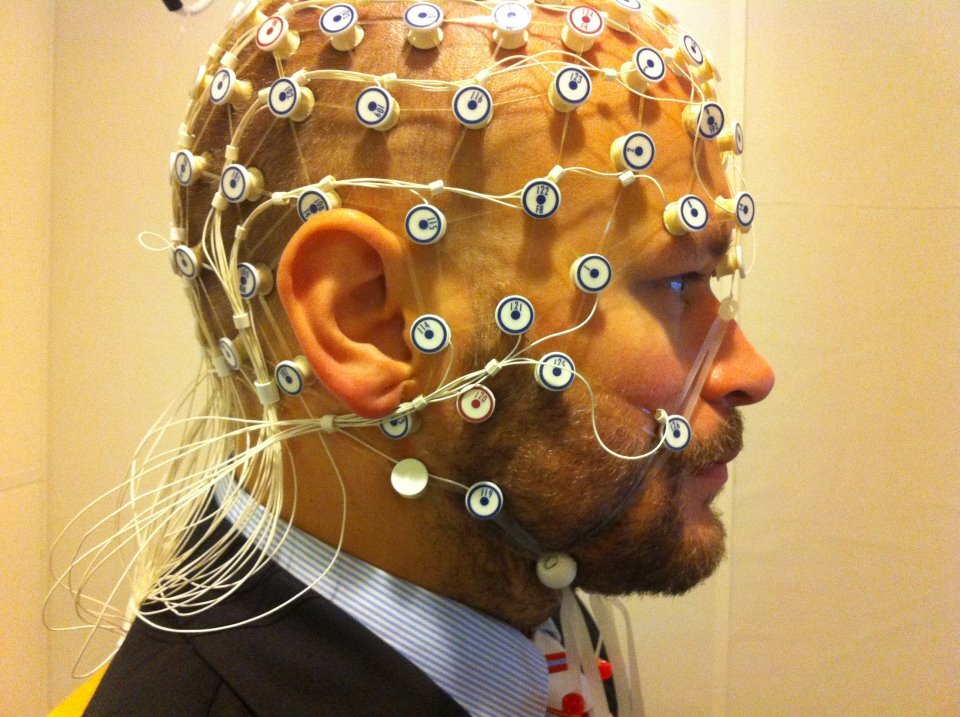
Non-Invasive BCIs are the most common and safest type. They use sensors placed on the scalp to measure brain waves. The most well-known method is electroencephalography (EEG), which uses a cap fitted with electrodes.
Because the skull naturally weakens and distorts electrical signals, non-invasive BCIs have a harder time picking up clear data. It's like trying to listen to a conversation in another room through a thick wall. You can get the gist, but details are lost.
Invasive BCIs are the opposite. They are surgically implanted directly into the brain tissue. This provides the highest quality and most precise signal because the electrodes are right next to the neurons they're recording.
This method allows for very fine control of complex devices, like advanced prosthetic hands. However, it carries significant risks, including infection, tissue damage, and the potential for the device to degrade over time.
There's also a middle ground: semi-invasive BCIs. These devices are placed inside the skull but rest on the surface of the brain without penetrating it. An example is electrocorticography (ECoG), which uses a grid of electrodes. This approach offers better signal quality than EEG with less risk than fully invasive methods.
From Brainwave to Action
Regardless of the type, every BCI follows a similar fundamental process to turn thought into a command.
-
Signal Acquisition: First, sensors detect the electrical signals produced by brain cells (neurons). In non-invasive systems, this is brainwave activity. In invasive systems, it can be the firing of individual neurons.
-
Signal Processing: Raw brain signals are complex and noisy. The next step is for a computer to clean them up, filtering out irrelevant activity and identifying the important patterns. This is where machine learning algorithms often come into play, learning to recognize the user's specific neural signatures for different intentions (e.g., "move left" vs. "move right").
-
Command Translation: Once the pattern is identified, it's translated into a command that an external device can execute. The system might decode a pattern of brain activity as the command to move a cursor up, type the letter 'A', or close a robotic hand.
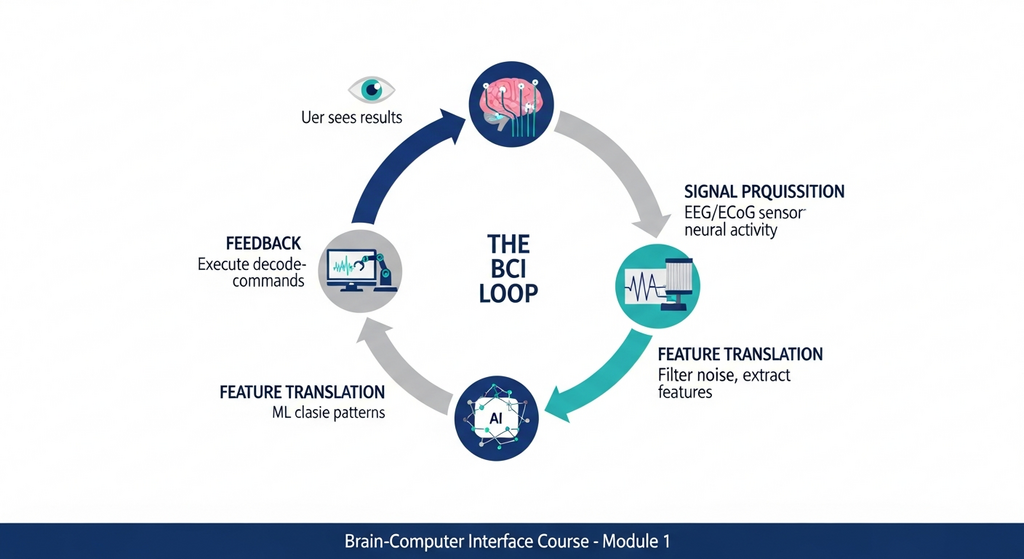
A crucial part of this process is feedback. The user sees the result of their thought—the cursor moves, the letter appears—which allows them to adjust their thinking to improve their control. It’s a learning process for both the human and the machine.
Applications of BCIs
The potential uses for BCIs are vast, though many are still in the research and development phase. The most advanced applications today are in medicine.
Restoring Movement and Communication: BCIs have helped people with paralysis control prosthetic limbs, move a cursor to type messages, and even regain some control over their own paralyzed muscles.
Neurorehabilitation: For stroke survivors, BCIs can help retrain the brain. By detecting the intention to move a limb and providing feedback, the system can encourage the brain to form new neural pathways, helping to restore function.
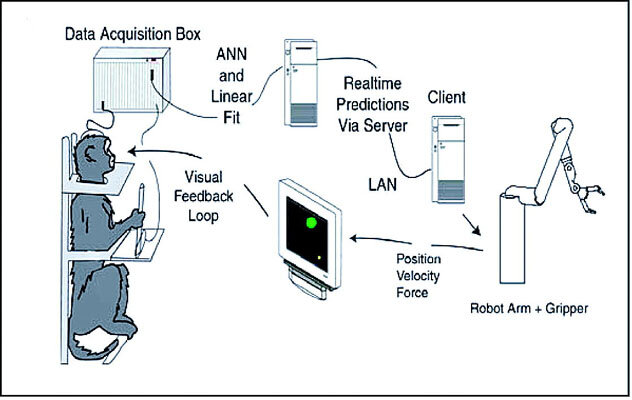
Beyond medicine, BCIs are being explored for controlling complex systems, like vehicles or industrial machinery, and for creating new forms of entertainment, like video games controlled by the mind.
The field has come a long way since its early days, evolving from simple switches to sophisticated systems that can decode complex intentions. As technology improves, BCIs promise to further blur the line between mind and machine.
Let's check your understanding of these core concepts.
What is the primary function of a Brain-Computer Interface (BCI)?
What is the fundamental trade-off when choosing between an invasive and a non-invasive BCI?
And now a quick review of key terms.
You've now covered the basics of what BCIs are, how they work, and what they're used for. This foundation will be essential as we explore the more intricate aspects of this technology.