Assistant Engineering Manager Essentials
Introduction to Engineering Management
What Is Engineering Management?
Engineering management is the art of leading technical teams to solve complex problems. It's a discipline that blends deep engineering knowledge with the principles of management. Think of an engineering manager like the conductor of an orchestra. The conductor doesn't play every instrument, but they understand how each one works and how they should sound together. Their job is to guide the musicians, set the tempo, and ensure everyone is working in harmony to create a beautiful piece of music.
Similarly, an engineering manager guides a team of engineers. They coordinate efforts, manage resources, and steer projects toward their goals, ensuring that the final product is functional, reliable, and delivered on time. They bridge the gap between the hands-on technical work and the strategic goals of the business.
They balance technical responsibilities with people management, acting as a bridge between engineers and upper management.
From Engineer to Manager
The path from an engineer to a manager is a significant career shift. As an engineer, your success is measured by your individual contributions: the code you write, the designs you create, or the problems you solve directly. Your focus is on the technical details and the quality of your own work.
Transitioning into management means your focus changes from doing the work to enabling others to do their best work. Success is no longer about your personal output. It's about the team's output. This requires a new set of skills and a different mindset. You move from being a top player on the field to being the coach on the sideline, calling the plays and developing the team's talent.
This transition is less about technical mastery and more about learning to lead, delegate, and multiply your impact through others.
The Assistant Manager Role
The Assistant Engineering Manager (AEM) is often a first step into that leadership world. An AEM works directly under a senior manager, helping to guide the team's daily operations. This role is a hybrid, combining technical oversight with growing management duties.
Key responsibilities typically include:
- Project Coordination: You'll help track project timelines, identify potential roadblocks, and ensure tasks are progressing smoothly. You act as a vital link, keeping the senior manager informed and the team on track.
- Technical Guidance: While you may not be writing code or drafting designs all day, you use your technical expertise to review work, mentor junior engineers, and help the team make sound technical decisions.
- Team Support: You're often the first person the team turns to with questions or challenges. Part of your job is to foster a collaborative environment and help resolve minor conflicts before they grow.
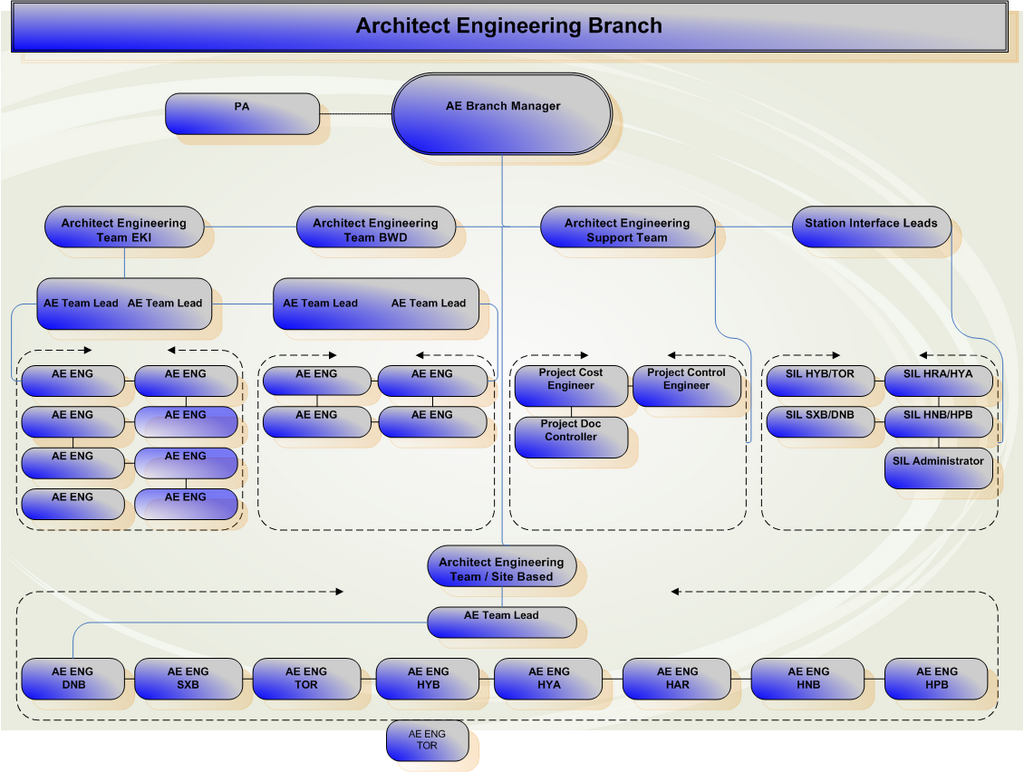
In many organizations, the AEM is part of a clear structure. They report to a manager who, in turn, might oversee several teams or a whole branch of the engineering department.
Organizational Structures
Engineering firms use various structures to organize their teams. Understanding them helps clarify where a manager fits in. A common approach is the functional structure, where engineers are grouped by specialty, like mechanical, electrical, or software. An AEM might help manage one of these specialized teams.
Another popular model is the matrix structure, where engineers from different functional groups are assigned to specific projects. In this setup, an engineer might report to both a functional manager (for career development and skill-building) and a project manager (for daily tasks). An AEM in a matrix organization might assist either of these managers, helping to coordinate resources and communication between the project and the functional department.
Regardless of the structure, the AEM's role is to facilitate the work within it, ensuring that engineers have what they need to succeed and that their efforts align with the broader goals of their projects and the company.
What is the primary shift in focus when an individual transitions from an engineering role to an engineering management role?
The provided text uses an analogy to describe the role of an engineering manager. In this analogy, the manager is compared to a(n)...
Becoming an effective engineering manager is a journey of continuous learning, but understanding these fundamental concepts is the perfect place to start.