Asbestos Mineralogy and Health Impacts
Mineralogical Classification
Structure Defines Risk
Not all asbestos is the same. The term refers to six naturally occurring silicate minerals, but they fall into two distinct families: serpentine and amphibole. This division isn't just a geological curiosity; it's the key to understanding why some asbestos types are more hazardous than others. The mineral's atomic structure dictates its physical shape, and its shape dictates how it behaves in the human body.
Chrysotile The Serpentine
Over 90% of the asbestos ever used commercially is chrysotile, the only member of the serpentine group. Its chemical formula is . At the atomic level, chrysotile is a sheet silicate, or . It's formed from a layer of magnesium hydroxide bonded to a layer of silica tetrahedra.
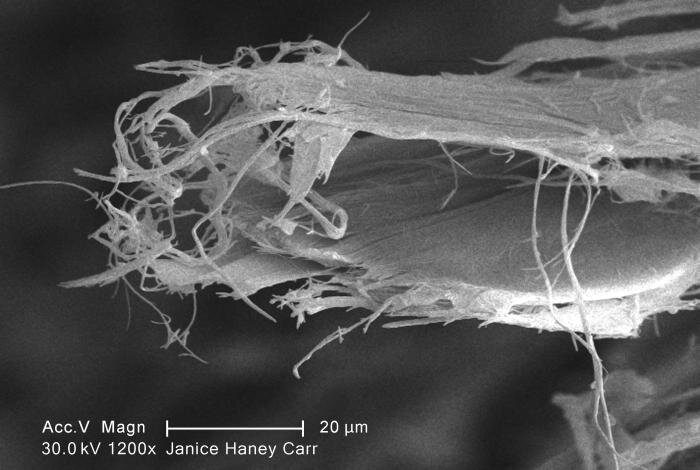
Because the magnesium layer is slightly larger than the silica layer, the sheet curls into a hollow tube, like a rolled-up scroll. This tubular crystal structure is what gives chrysotile its signature characteristics: long, curly, and flexible fibers. These fibers are soft and can be woven into textiles, which made them incredibly versatile for industrial applications.
The Amphibole Group
The other five asbestos minerals—amosite, crocidolite, tremolite, actinolite, and anthophyllite—belong to the amphibole group. Unlike the sheet-like structure of chrysotile, amphiboles are built from , or inosilicates. Their basic building block is a pair of silica chains linked together, forming a sturdy I-beam-like structure at the atomic level.
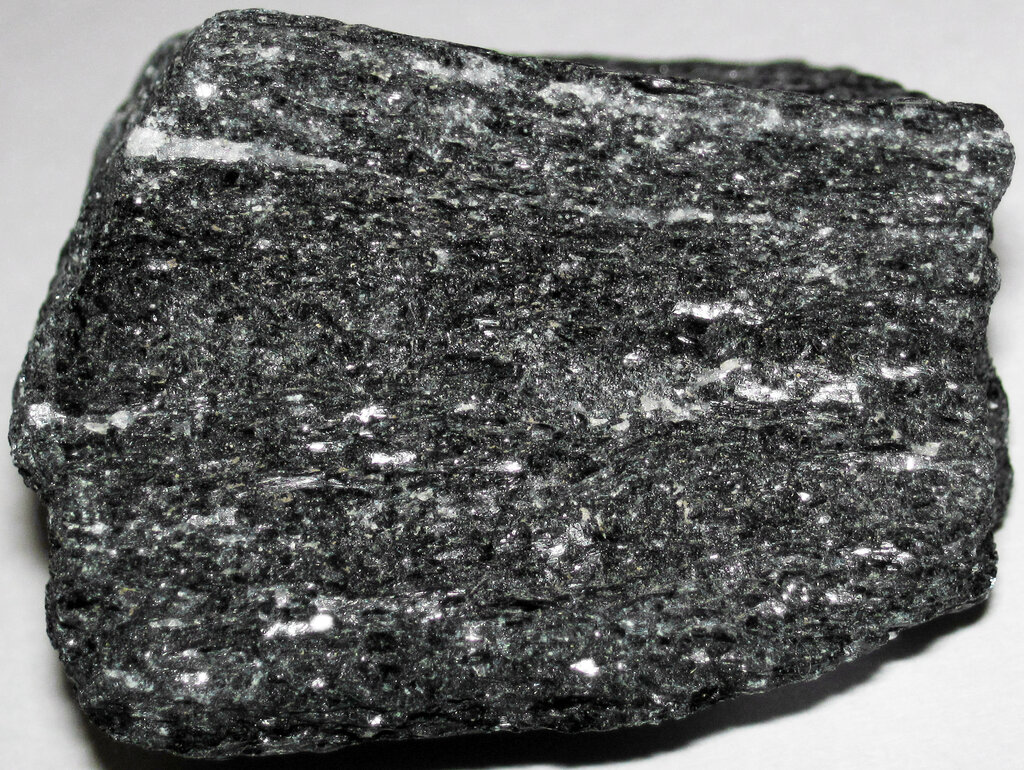
This internal architecture results in very different physical properties. Amphibole asbestos fibers are straight, stiff, and brittle. When they break, they tend to cleave along their length, forming smaller, needle-like particles that are sharp and rigid.
The chemical composition of amphiboles is also more complex. They contain iron, sodium, and calcium in addition to magnesium and silicon. This variation in composition is achieved through , where different positively charged ions can swap places within the crystal lattice, slightly altering the mineral's properties like color and density.
| Feature | Chrysotile (Serpentine) | Amphiboles |
|---|---|---|
| Structure | Sheet silicate (Phyllosilicate) | Double-chain silicate (Inosilicate) |
| Fiber Shape | Curly, soft, flexible | Straight, stiff, needle-like |
| Chemical Makeup | Magnesium silicate | Complex silicates with Fe, Na, Ca, Mg |
| Breakdown | Splits into finer bundles | Cleaves into shorter, sharp fibers |
| Examples | Chrysotile | Amosite, Crocidolite, Tremolite |
From Structure to Health Risk
These mineralogical differences have profound biological consequences. The shape, size, and chemical durability of the fibers determine how they interact with the human respiratory system.
A fiber's aerodynamic diameter—how it behaves as a particle suspended in air—is crucial. Curly chrysotile fibers are aerodynamically larger and get caught more easily in the upper airways, where they can be expelled. The needle-like amphiboles have a very small aerodynamic diameter, allowing them to bypass the body's defenses and penetrate deep into the lungs.
Once lodged in the lungs, durability becomes the next critical factor. The body's immune cells, called macrophages, attempt to engulf and break down foreign particles. Chrysotile, with its high magnesium content, is relatively soluble in the acidic environment inside these cells. It breaks down and is cleared from the lungs over months.
Amphibole fibers are a different story. Their iron-rich, double-chain structure is highly resistant to acid and dissolution. Macrophages cannot effectively break them down. The fibers persist in the lung tissue for years, even decades, causing chronic inflammation and genetic damage that can lead to diseases like asbestosis and mesothelioma.
While both asbestos types have high tensile strength and heat resistance, their different mineralogical properties lead to a clear hierarchy of risk. The straight, durable, and deeply penetrating amphibole fibers are significantly more potent carcinogens than the curly, less persistent chrysotile fibers.
Let's test your understanding of these critical distinctions.
What is the fundamental structural difference between chrysotile (serpentine) and amphibole asbestos at the atomic level?
Why are amphibole fibers considered significantly more hazardous to human health than chrysotile fibers?
Understanding the atomic-level differences between mineral groups is the foundation for assessing their real-world impact on health.