Artistic Revolutions From Steam to Silicon
Photography and Industrial Disruption
The Machine That Captured Reality
In 1839, Paris was buzzing. A new invention, the , was revealed to the public, and it could capture a perfect image of reality onto a silver-plated copper sheet. Upon seeing it, the celebrated French painter is said to have declared, "From today, painting is dead."
He wasn't entirely wrong. For centuries, a key function of painting was representation, especially for portraits. A skilled painter could capture a likeness, but it took time, money, and artistic interpretation. Suddenly, a machine could do it faster, cheaper, and with what seemed like perfect, unbiased accuracy. Portrait painters who specialized in realistic depictions faced an existential threat. Why pay a premium for a handmade likeness when a chemical process could deliver a flawless one in minutes?
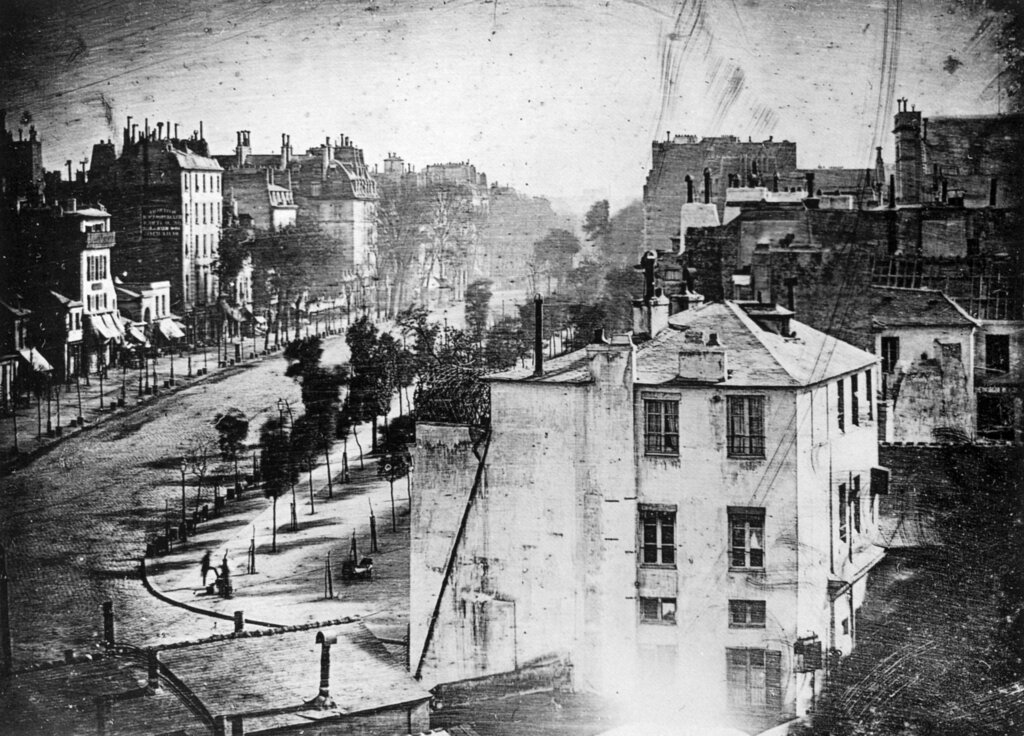
A Mechanical Soul
The disruption wasn't just economic. It was philosophical. Many in the art establishment refused to accept photography as a legitimate art form. The influential poet and critic argued that photography was merely a servant to the sciences and arts, a tool for documentation, not a creative endeavor. He saw it as a mindless, mechanical process devoid of the artist's soul and imagination. For him, art came from the human mind and hand, not from a lens and a chemical bath.
This debate of 'mechanical versus soulful' is a recurring theme whenever a new technology enters the creative space. The criticism that photography was a 'soulless' chemical process echoes today's complaints that AI-generated art is just 'algorithmic' or falls into the 'uncanny valley.'
Early photographs, like early generative AI outputs, had their limitations. They were monochrome, often stiff, and required technical expertise to produce. Yet, they represented a fundamental shift from manual representation to mechanical capture. This was the core of the anxiety: a machine could now perform a task once considered uniquely human.
Photography was a product of the Industrial Revolution and subject to the forces of mass production and consumption.
The story of photography's reception in the 19th century provides a clear historical blueprint for understanding our current moment. Initial declarations of an art form's death, followed by economic anxiety, philosophical debates about authenticity and soul, and finally, a slow acceptance and integration. Photography didn't kill painting. It freed it from the burden of pure representation, pushing painters toward movements like Impressionism and abstraction. It carved out its own identity, evolving from a scientific tool into a powerful artistic medium in its own right.
What was the name of the new invention revealed in Paris in 1839 that could capture an image onto a silver-plated copper sheet?
Which French painter is said to have declared, "From today, painting is dead," upon seeing the new invention?
This historical pattern suggests that new technologies often create new possibilities rather than simply destroying old ones.