Artificial Neural Networks Explained
Introduction to Artificial Neural Networks
The Brain as a Blueprint
At its heart, an Artificial Neural Network (ANN) is a computational model inspired by the human brain. It's a way of teaching computers to process information in a way that’s similar to how we do. Instead of following a rigid set of instructions, ANNs learn by example, just like we do when we first learn to recognize a cat or a dog.
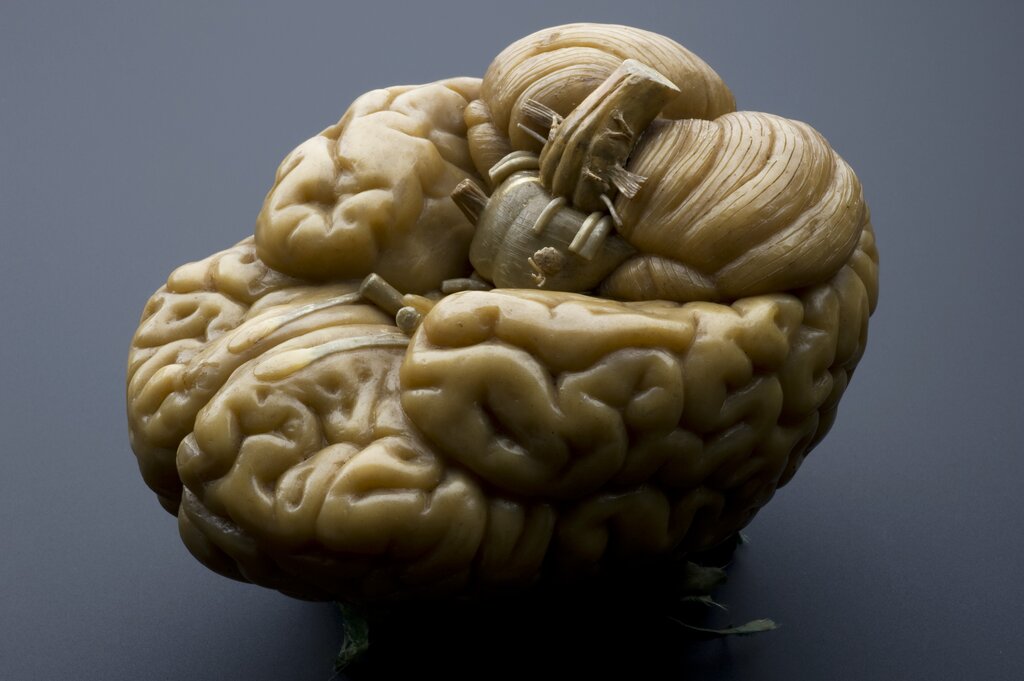
Our brains are made of billions of tiny cells called neurons, all connected in a vast network. They pass signals to each other to help us think, learn, and act. ANNs try to mimic this structure. They aren't biological, of course, but they use the same core principles of interconnected nodes that pass information around.
Neural networks, also known as ANNs, are computer models inspired by the human brain.
The goal isn't to create a perfect replica of the brain. It's to build a tool that can recognize patterns and solve problems that are easy for humans but difficult for traditional computers, like identifying faces in photos or understanding spoken language.
Building Blocks of a Digital Brain
An ANN is built from simple components that work together to create complex behavior. The most basic unit is the artificial neuron, sometimes called a node. Think of it as a tiny decision-maker.
Let's break down its parts:
-
Neurons (Nodes): These are the core processing units. Each neuron receives one or more inputs, performs a simple calculation, and produces an output.
-
Weights: Every input connection has a weight. The weight determines the importance of that input. A high weight means the input has a strong influence on the neuron's output, while a low weight means it has a weak influence. During the learning process, the network adjusts these weights.
-
Bias: A bias is an extra input to the neuron that is always 1, and it has its own weight. Think of it as a knob that helps fine-tune the neuron's output, making it easier for the network to learn. It allows the neuron to activate even when all other inputs are zero.
-
Activation Function: After the neuron adds up all its weighted inputs and the bias, the result is passed through an activation function. This function decides whether the neuron should "fire" (activate) and what its output signal should be. It introduces non-linearity, allowing the network to learn complex patterns.
In short: A neuron takes in weighted inputs, adds a bias, and uses an activation function to produce an output. A network is just a collection of these neurons working together.
A Brief History
The idea of artificial neurons isn't new. The concept has been around since the 1940s, evolving through periods of excitement and skepticism.
| Year | Milestone |
|---|---|
| 1943 | Warren McCulloch and Walter Pitts propose the first mathematical model of a neuron. |
| 1958 | Frank Rosenblatt creates the Perceptron, one of the first ANNs, which could learn to recognize simple patterns. |
| 1980s | The concept of backpropagation is popularized, allowing for the training of more complex, multi-layered networks. This sparked a resurgence in neural network research. |
| 2010s | Advances in computing power (especially GPUs) and access to massive datasets lead to the deep learning revolution, making ANNs a dominant force in AI. |
These milestones show a gradual journey from simple theoretical models to the powerful, complex networks that drive modern AI applications. The core ideas from the early days still form the foundation of today's most advanced systems.
Why Neural Networks Matter
Artificial Neural Networks are fundamental to machine learning and AI because they excel at tasks that are difficult to program with explicit rules. It's much easier to show a network thousands of pictures of cats and let it learn the features of a cat than it is to write a program that defines a cat based on rules about fur, whiskers, and ear shape.
They are the technology behind many of the AI tools we use daily, including voice assistants, recommendation engines, and language translation apps. Their ability to learn from data makes them incredibly versatile and powerful, forming the backbone of modern artificial intelligence.
Let's test your understanding of these core concepts.
What is the primary inspiration for the structure and function of an Artificial Neural Network (ANN)?
In the context of a single artificial neuron, what is the purpose of the 'bias'?
By understanding these basic building blocks, you're ready to explore how these networks are trained and applied to solve real-world problems.