Artificial Intelligence in Industrial Automation
Industrial Data Integration
From Raw Signals to AI-Ready Data
Your expertise in robotics and welding gives you a ground-truth understanding of the manufacturing process. You can see when a weld is good or bad, or when a robot's motion is slightly off. The challenge is teaching a machine to see the same thing. This starts with translating the raw, chaotic language of industrial machines into a clean, structured format that an AI model can understand.
We're not just collecting data; we're creating a cohesive story. Each piece of data, from a robot's joint angle to the amperage of a welding torch, is a word in that story. Our goal is to assemble these words into coherent sentences that describe the process with high fidelity. This integrated dataset is the foundation for everything that follows, from predictive maintenance to automated quality control.
Tapping into the Machine's Mind
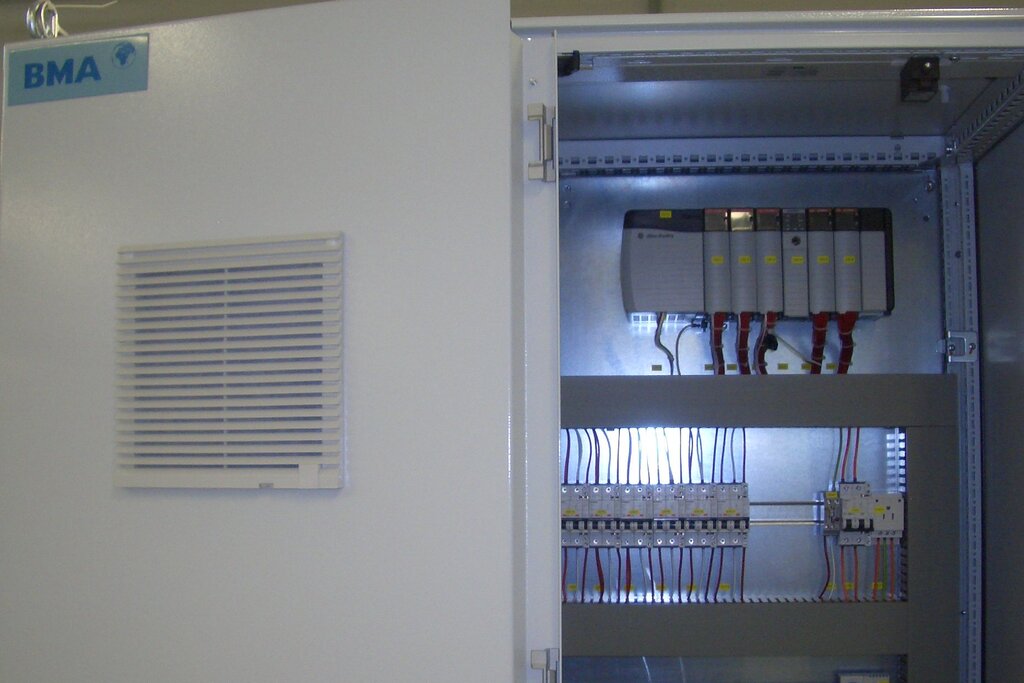
Programmable Logic Controllers (PLCs) and SCADA systems are the central nervous system of your production line. They orchestrate the actions of every machine. To build intelligent systems, we first need to listen in on this conversation. The primary challenge is extracting high-frequency data from these systems without disrupting operations.
Modern systems often use standardized protocols like OPC-UA to expose data in a structured way. This allows us to query the PLC for specific data points, such as motor temperatures or valve states, at a regular interval. We can poll for data, requesting updates every few milliseconds, or set up a subscription that pushes data to us whenever a value changes. Polling gives us consistent timing, while subscriptions are more efficient for monitoring values that change infrequently.
A robotic welding cell is a symphony of sensors. The robot arm reports joint positions, speeds, and motor torques. The welding power source streams data on voltage, current, and wire feed speed. A vision system might provide data on seam tracking. By themselves, these are just isolated streams of numbers. The real insight comes from sensor fusion: the process of combining these separate data streams into a single, unified dataset that represents the complete state of the cell at any given instant.
Think of sensor fusion as creating a master timeline where you can see that at precisely 14:32:01.152, joint 4 of the robot was at a 45.7° angle while the welding current was 180.2 amps.
Getting the Timing Right
When you're dealing with data streams sampled hundreds or thousands of times per second, timing is everything. The internal clocks on a robot controller and a welding power source will never be perfectly aligned. They will drift. This means a timestamp from the robot might not correspond exactly to a timestamp from the welder, even if they refer to the same moment in reality.
To solve this, we rely on time synchronization protocols like NTP (Network Time Protocol) to get all devices on the network to agree on the current time. Once the clocks are synchronized, we can confidently merge the data. If data points don't align perfectly on a timestamp, we can use techniques like linear interpolation to estimate the value of a sensor at a specific point in time, creating a perfectly aligned dataset.
Cleaning Up Noisy Signals
Welding is an electrically violent process. The high-energy arc generates significant electromagnetic interference (EMI), which can corrupt sensor readings. This appears as noise—random spikes and fluctuations that obscure the true signal. Feeding noisy data to a machine learning model is like trying to have a conversation in a loud factory; the message gets lost.
Signal denoising involves applying mathematical filters to clean up the data. A common first step is a moving average filter, which smooths the data by averaging each point with its neighbors. This reduces random noise but can also blur sharp, legitimate changes in the signal.
For more targeted cleaning, we can use frequency-domain filters. Since EMI from a welding arc is often high-frequency noise, we can apply a low-pass filter. This filter allows the lower-frequency, true signal to pass through while blocking the high-frequency noise. The key is to set the cutoff frequency correctly—high enough to keep the important signal details, but low enough to eliminate the noise.
The final step before feeding data to a model is preparing the features. Feature engineering is the art of selecting, transforming, and creating new data columns (features) from the raw telemetry to make the patterns more obvious to a machine learning algorithm. For example, instead of just using raw motor torque, we could calculate the rate of change of torque, which might be a better indicator of an impending mechanical failure. From the welding data, we could calculate the average voltage fluctuation over a 100-millisecond window, which might correlate to weld porosity.
Effective feature engineering is what separates a mediocre AI model from a highly effective one. It requires combining domain expertise (your knowledge of welding and robotics) with data science principles.
With a clean, synchronized, and well-engineered dataset, you are no longer just looking at numbers. You have a high-resolution digital twin of your manufacturing process, ready to be used to train models that can optimize, predict, and ultimately transform your operations.