Artificial Intelligence Fundamentals
Introduction to Artificial Intelligence
What Is Artificial Intelligence?
Artificial Intelligence, or AI, is about creating machines that can think, learn, and solve problems like humans. Think of it less like a single invention and more like a whole field of science, similar to biology or physics. The goal is to build systems that can perform tasks that would normally require human intelligence.
This introduction to this special issue discusses artificial intelligence (AI), commonly defined as “a system’s ability to interpret external data correctly, to learn from such data, and to use those learnings to achieve specific goals and tasks through flexible adaptation.”
This could be anything from recognizing a cat in a photo to understanding spoken commands or even composing music. AI isn't one single thing, but a collection of different technologies working together to simulate intelligent behavior.
A Quick Trip Through Time
The idea of intelligent machines has been around for centuries, but the modern field of AI officially began in the summer of 1956 at a conference at Dartmouth College. Early researchers were incredibly optimistic, believing that a machine as intelligent as a human being was only a generation away.
Of course, it turned out to be much harder than they thought. The field went through periods of high excitement followed by 'AI winters,' where funding and interest dried up because progress was slower than expected. But the core ideas never went away.
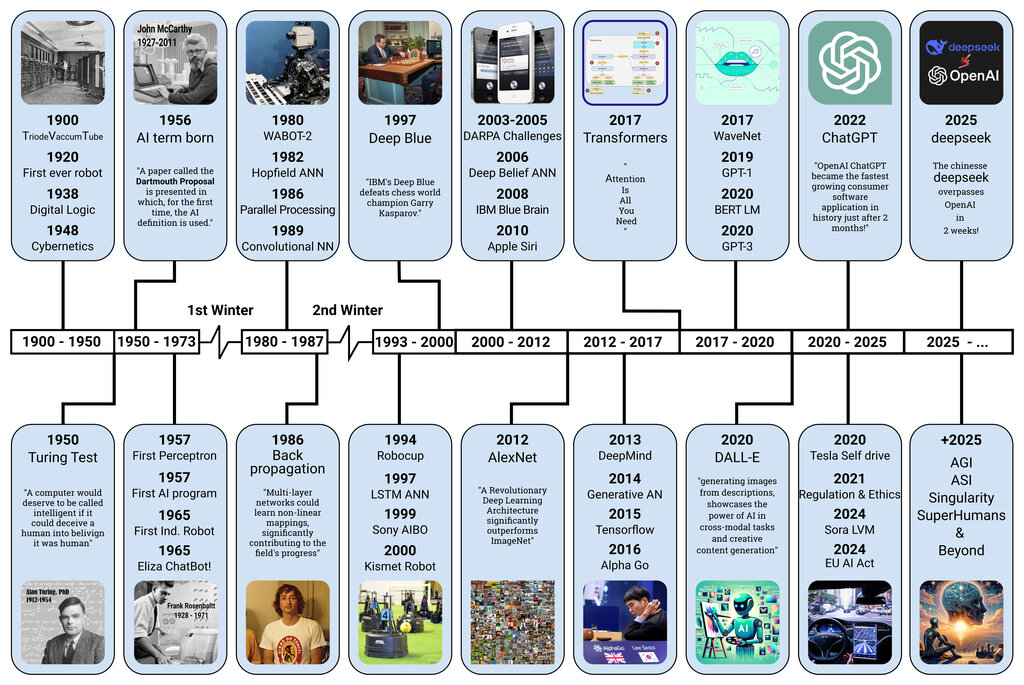
In recent decades, things have changed dramatically. Two key ingredients became widely available: massive amounts of data (thanks to the internet) and powerful computers. These ingredients fueled a revolution, particularly in a subfield of AI called machine learning, and brought AI out of the lab and into our daily lives.
The Different Flavors of AI
AI is a broad category, like 'sports.' Just as sports include everything from swimming to basketball, AI includes several specialized subfields. Understanding these branches is key to understanding AI.
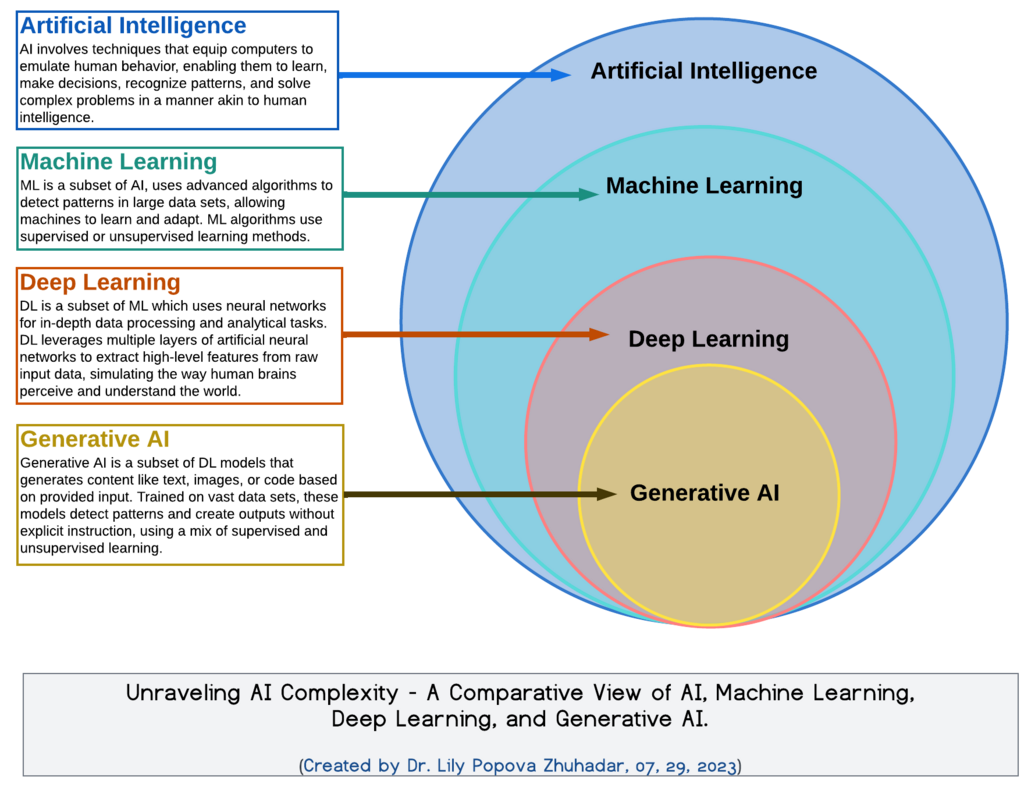
The most prominent subfield is Machine Learning (ML). Instead of programming a computer with explicit rules for a task, you give it lots of examples. The machine 'learns' the patterns from the data and can then make predictions or decisions about new, unseen data.
Another major area is Natural Language Processing (NLP). This focuses on the interaction between computers and human language. When you ask a virtual assistant for the weather or use a translation app, you're using NLP. The goal is to enable computers to understand, interpret, and generate human language in a way that is both meaningful and useful.
Then there's Computer Vision, which aims to give machines the ability to 'see.' This field works on enabling computers to identify and process images and videos in the same way a human can. It’s the technology behind facial recognition on your phone, self-driving cars navigating roads, and systems that can spot diseases in medical scans.
| Subfield | Goal | Example |
|---|---|---|
| Machine Learning | Learning patterns from data | A spam filter that learns to identify junk email |
| Natural Language Processing | Understanding human language | A chatbot that answers customer questions |
| Computer Vision | Interpreting the visual world | A security camera that recognizes faces |
AI in the Real World
AI isn't just a futuristic concept; it's already integrated into many industries. In healthcare, it helps doctors diagnose diseases earlier and more accurately. In finance, it detects fraudulent transactions and powers automated trading systems. Retail companies use AI to recommend products you might like, and streaming services use it to suggest your next favorite show.
In transportation, AI is the brain behind navigation apps that find the fastest route and is the driving force for self-driving vehicles. From farming to entertainment, AI is becoming a powerful tool for making processes more efficient, accurate, and personalized.
Let's check your understanding of these core concepts.
What is the primary goal of Artificial Intelligence?
The modern field of AI began with researchers who were very optimistic, believing a machine as intelligent as a human was only about a generation away.
This is just the beginning of the journey into artificial intelligence. By understanding its definition, history, and main branches, you have a solid foundation for exploring this transformative technology.