Artificial Intelligence Explained
Introduction to Artificial Intelligence
What Is Artificial Intelligence?
Artificial intelligence, or AI, is the science of making machines that can think like humans. It’s about creating systems that can learn, reason, solve problems, and understand language. Think of it like teaching a computer to be smart, not just to follow instructions.
At its core, AI gives a computer a mind of its own, allowing it to perform tasks that would normally require human intelligence.
Imagine you're teaching a toddler to recognize a cat. You don't write a long list of rules like "if it has pointy ears, four legs, and a tail, it's a cat." Instead, you show them pictures and point out real cats. Over time, the toddler learns the general pattern of what a cat looks like. AI works in a similar way, learning from vast amounts of data to recognize patterns and make decisions.
A Brief History
The idea of artificial minds isn't new. It has roots in ancient myths about automated beings. But the modern field of AI officially began in the summer of 1956 at a conference at Dartmouth College. There, a group of scientists gathered to explore the idea that every aspect of learning or intelligence could, in principle, be so precisely described that a machine could be made to simulate it.
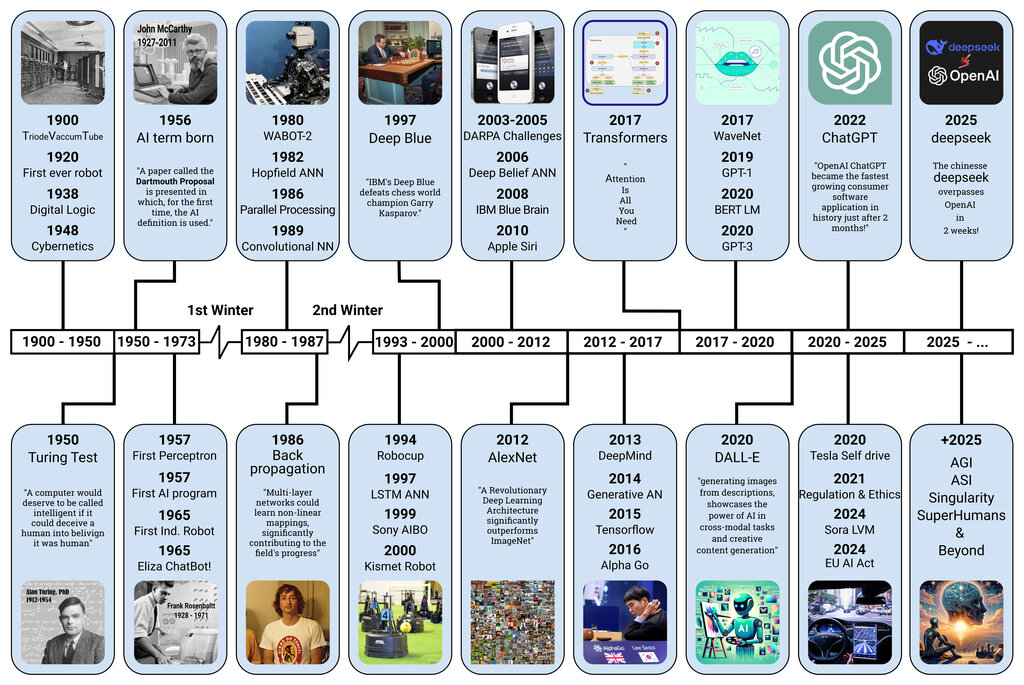
The journey wasn't always smooth. There were periods of great excitement followed by "AI winters," when funding dried up and progress stalled. But breakthroughs in computing power and the availability of massive datasets have since fueled a new era of rapid advancement, bringing AI out of the research labs and into our daily lives.
The Building Blocks of AI
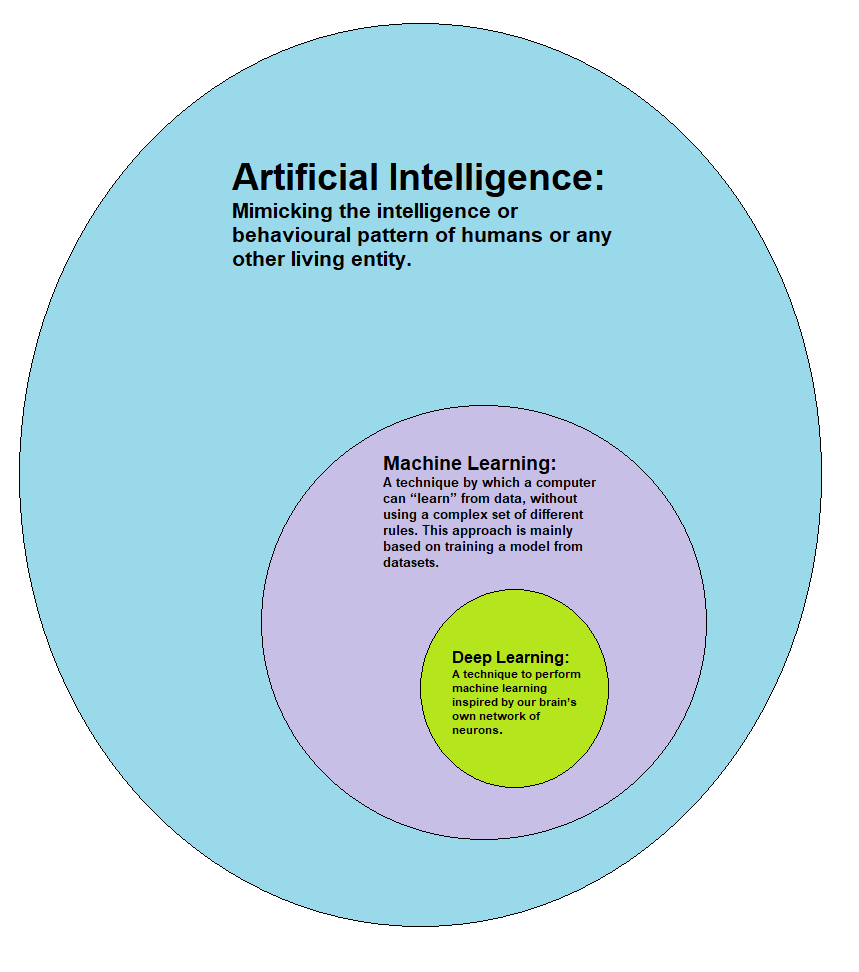
AI is a broad field with many sub-disciplines. Three of the most important concepts to understand are machine learning, neural networks, and natural language processing. They fit together like Russian nesting dolls, with each concept being a specialized part of the one before it.
Machine Learning
noun
A subset of AI where systems learn and improve from experience without being explicitly programmed.
Instead of being given a set of rules, a machine learning model is fed a huge amount of data. It learns the patterns within that data to make predictions about new, unseen data. For example, a machine learning model for a streaming service learns what movies you like based on your viewing history, then recommends others you might enjoy.
A key technique within machine learning is the use of neural networks.
Neural networks are computing systems loosely inspired by the biological neural networks that constitute animal brains. They consist of interconnected nodes, or neurons, that process information.
These networks are particularly good at finding complex patterns in data, making them the power behind many modern AI applications, like image recognition and self-driving cars. Deep learning, a term you might have heard, simply refers to neural networks with many layers, allowing them to learn even more complex patterns.
Finally, we have natural language processing, or NLP. This is a branch of AI that focuses on helping computers understand, interpret, and generate human language. Whenever you talk to a voice assistant, use a translation app, or see a chatbot pop up on a website, you're interacting with NLP.
AI in the World Today
AI is no longer just science fiction. It's a powerful tool that's transforming nearly every industry. From making medical diagnoses more accurate to personalizing your shopping experience, AI is working behind the scenes in countless ways.
| Industry | Application | How AI Helps |
|---|---|---|
| Healthcare | Medical Imaging Analysis | Detects diseases like cancer in scans with high accuracy. |
| Finance | Fraud Detection | Analyzes transaction patterns to flag suspicious activity. |
| Entertainment | Content Recommendation | Suggests movies, music, and shows based on user tastes. |
| Transportation | Self-Driving Cars | Uses sensors and cameras to navigate roads safely. |
| Customer Service | Chatbots & Virtual Assistants | Provides 24/7 support and answers common questions. |
This is just a small sample of AI's impact. As the technology continues to evolve, it will unlock new possibilities and create solutions to problems we haven't even thought of yet.
Ready to check your understanding? Let's see what you've learned.
What is the fundamental goal of Artificial Intelligence?
The analogy of teaching a toddler to recognize a cat is used to explain how AI learns. What concept does this illustrate?
You now have a solid foundation in what AI is, where it came from, and how it works. This is the first step into a much larger, fascinating world.