Artificial Intelligence Explained
Introduction to Artificial Intelligence
What Is Artificial Intelligence?
Artificial intelligence, or AI, is a field of computer science focused on creating machines that can perform tasks that typically require human intelligence. This includes abilities like learning from experience, solving problems, understanding language, and recognizing patterns.
Think of it as the science of making machines smart.
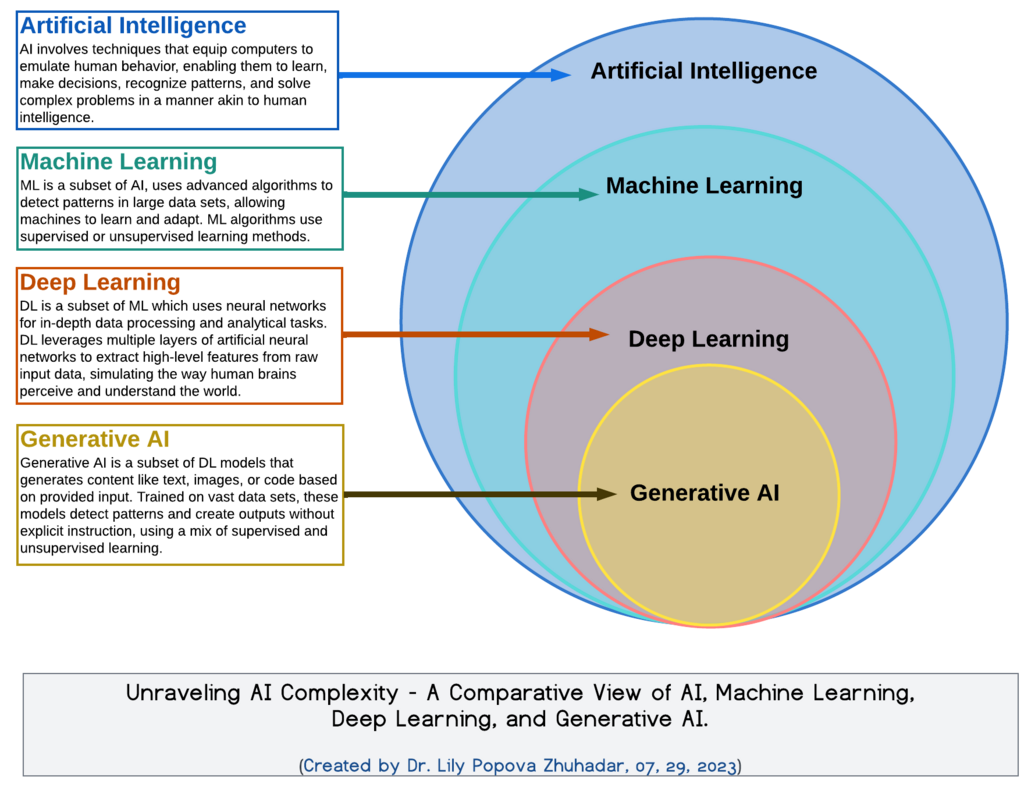
AI isn't a single technology. It's a broad field that contains many subfields. Two of the most important are machine learning and deep learning. Machine learning gives computers the ability to learn without being explicitly programmed. Deep learning is a more advanced subset of machine learning that uses structures inspired by the human brain, called neural networks, to learn from vast amounts of data.
A Brief History
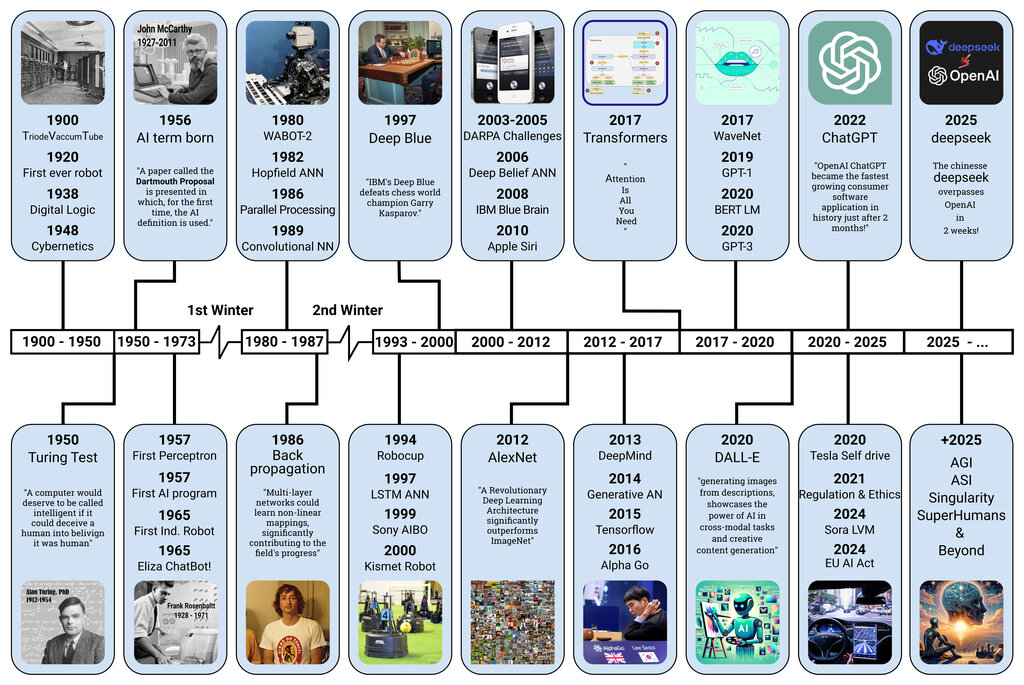
The idea of intelligent machines has been around for centuries, but the modern field of AI began in the mid-20th century. The official birth of AI as an academic discipline can be traced back to a workshop at Dartmouth College in 1956.
This was the first time the term "artificial intelligence" was used as the group spent almost two months discussing how machines might simulate learning and intelligence.
The early years were filled with excitement and bold predictions. However, progress was slower than expected. Limited computing power and data led to periods known as "AI winters," when funding and interest dwindled.
In recent decades, the tide has turned. The explosion of big data and massive increases in computing power have fueled breakthroughs, especially in machine learning and deep learning, bringing AI out of the lab and into our daily lives.
Types of AI
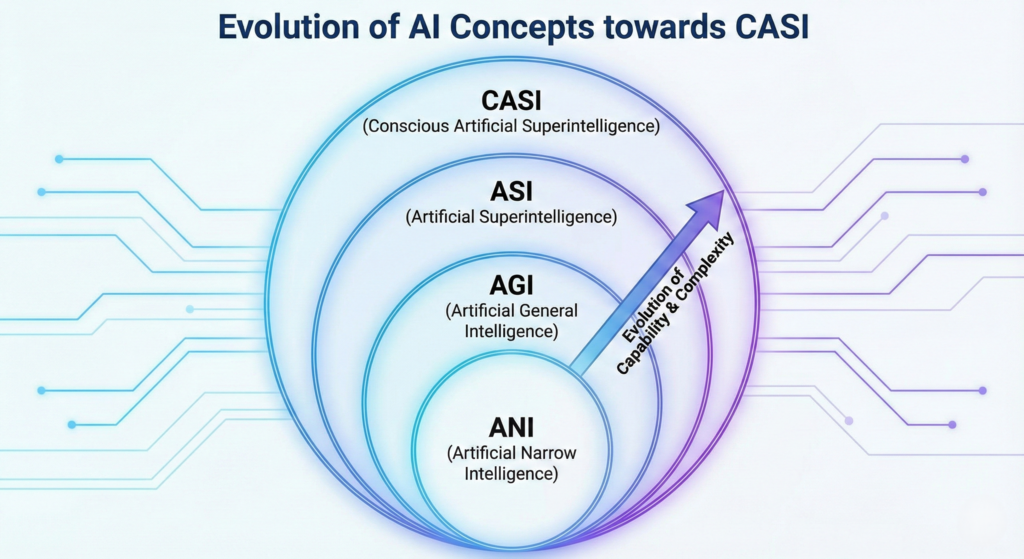
When people talk about AI, they are usually referring to one of two main types: Narrow AI or General AI.
Artificial Narrow Intelligence (ANI)
noun
Also known as Weak AI, this is the only type of AI we have successfully created so far. It is designed and trained for one particular task.
ANI is incredibly powerful for its specific purpose. A spam filter is great at catching junk mail but can't help you write an email. A chess-playing AI can defeat a grandmaster but can't play checkers.
The second type is still theoretical.
Artificial General Intelligence (AGI)
noun
Also known as Strong AI, this is a type of artificial intelligence that can understand, learn, and apply its intelligence to solve any problem, much like a human being.
AGI would possess the flexibility and general problem-solving skills of a human. Beyond AGI is the concept of Artificial Superintelligence (ASI), an intellect that would be much smarter than the best human brains in practically every field. This progression represents an increasing level of capability and complexity.
Basic Components
At a high level, most AI systems have a few core components that allow them to function. They need a way to perceive the world, a way to process that information, and a way to act.
- Input (Perception): This is the data the AI system receives. It could be text from a user, an image from a camera, sound from a microphone, or data from sensors.
- Processing (Reasoning): This is the AI's "brain." An algorithm or model processes the input data, looks for patterns, and makes a decision or prediction about what to do next.
- Output (Action): Based on the processing, the AI system takes an action. This could be displaying an answer on a screen, synthesizing speech, or controlling a physical robot's movement.
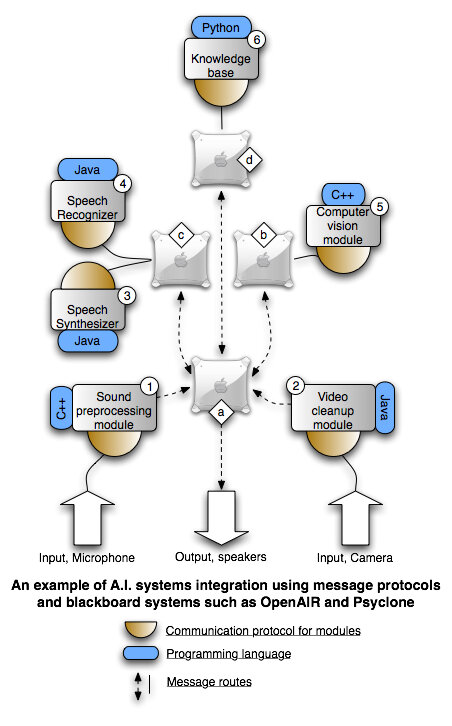
These components work together in a cycle. The output of an AI can change the environment, leading to new inputs, and the process repeats. This is how an AI learns and adapts over time.
Which statement best describes the relationship between AI, Machine Learning, and Deep Learning?
The term 'AI winters' refers to: