Artificial Intelligence Demystified
Introduction to AI
What Is AI Anyway?
At its core, Artificial Intelligence (AI) is the science of making machines smart. The goal is to build computer systems that can perform tasks that normally require human intelligence. This includes things like learning from experience, understanding language, recognizing objects in photos, and solving complex problems.
Think of it this way: a simple calculator can do math faster than any human, but it can't learn. It just follows pre-programmed rules. An AI, on the other hand, is designed to mimic the learning and problem-solving abilities of the human brain. It can adapt, reason, and improve over time.
AI isn't about replacing humans. It's about creating tools that can extend our own capabilities and help us tackle challenges we couldn't solve on our own.
A Quick Trip Through Time
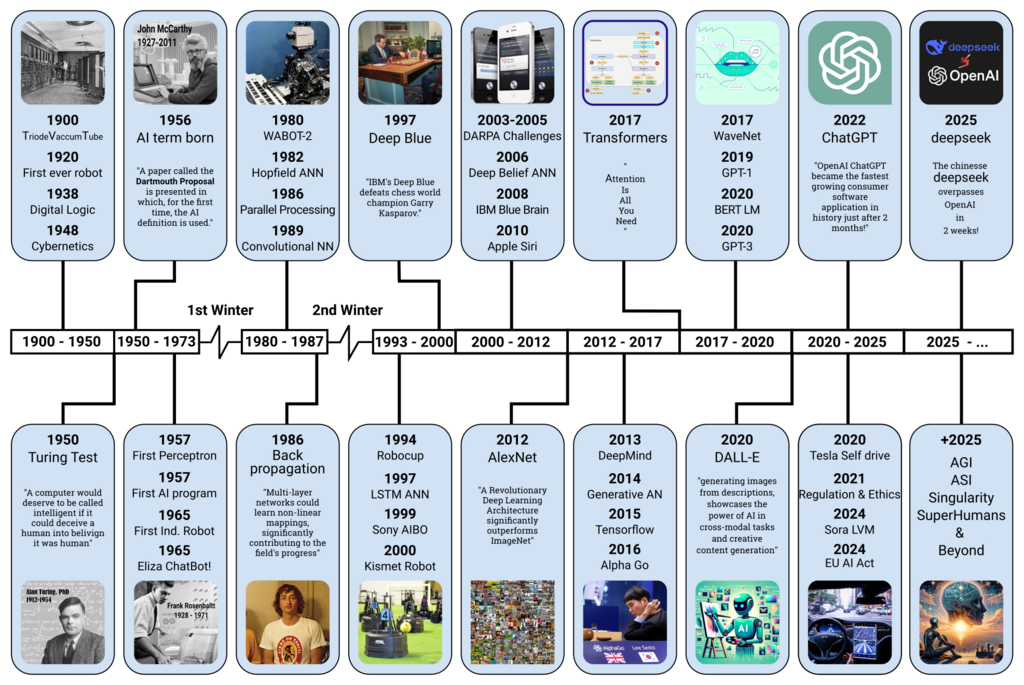
The idea of artificial beings with intelligence is ancient, appearing in myths and stories for centuries. But the scientific journey of AI began in the mid-20th century. The term "Artificial Intelligence" was first coined at a conference at Dartmouth College in 1956. Early researchers were optimistic, believing they could create a machine with human-like intelligence within a generation.
Progress wasn't always a straight line. There were periods of excitement followed by "AI winters," when funding dried up and progress slowed. But breakthroughs in computing power and the availability of massive amounts of data eventually fueled a resurgence. Key moments, like a computer defeating a world chess champion in the 1990s, showed the world what was possible.
The Different Flavors of AI
Not all AI is created equal. We can generally group AI into three categories based on its capabilities.
Artificial Narrow Intelligence (ANI)
noun
This is the AI we see all around us today. It's designed to perform a specific, or 'narrow,' task. Think of the AI that powers your spam filter, a language translation app, or a self-driving car. It might be incredibly good at its one job, but it can't operate outside of that specific domain.
Artificial General Intelligence (AGI)
noun
This is the next step, and it's still theoretical. AGI refers to an AI with the ability to understand, learn, and apply its intelligence to solve any problem, much like a human being. An AGI could switch from writing a poem to performing surgery to composing music without being retrained. This is the type of AI often depicted in science fiction.
Artificial Superintelligence (ASI)
noun
This is an intellect that is much smarter than the best human brains in practically every field, including scientific creativity, general wisdom, and social skills. Like AGI, superintelligence is currently hypothetical, but it represents the ultimate potential—and potential risk—of artificial intelligence.
AI, ML, and DL
You'll often hear the terms AI, Machine Learning (ML), and Deep Learning (DL) used together, sometimes interchangeably. While they're related, they aren't the same thing. It's best to think of them as nested concepts, like Russian dolls.
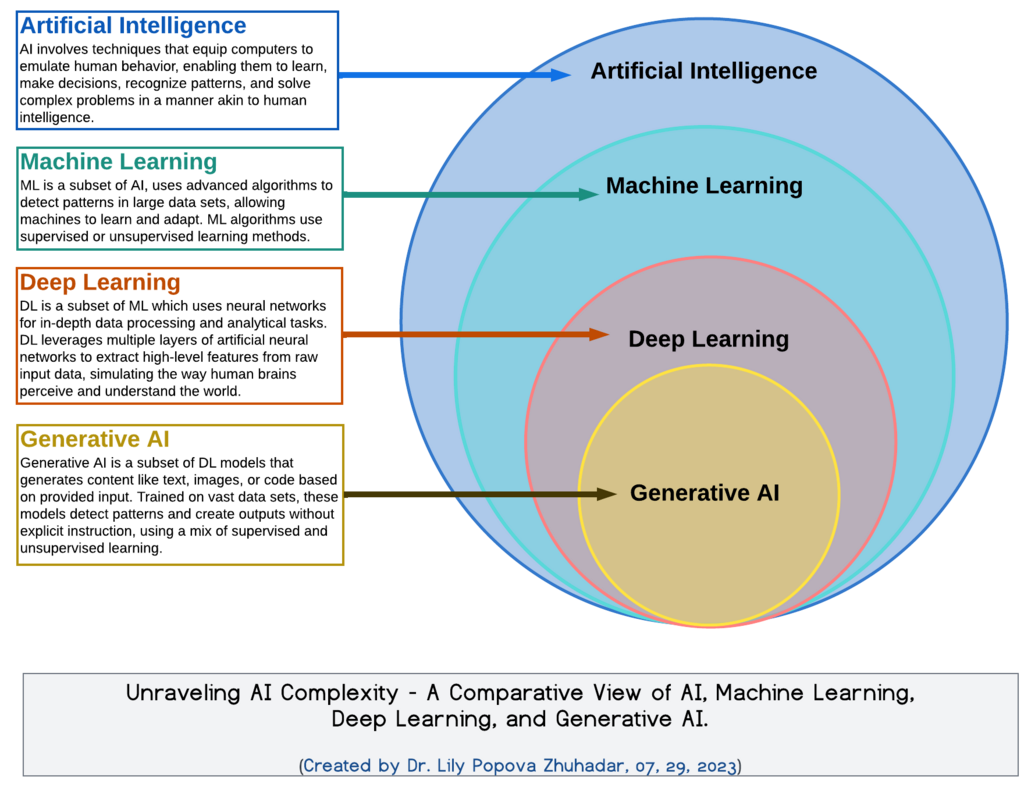
Artificial Intelligence (AI) is the all-encompassing concept of creating intelligent machines.
Machine Learning (ML) is a subset of AI. It's an approach to achieving AI that involves training a machine with large amounts of data. Instead of being programmed with explicit rules, the machine 'learns' patterns from the data to make predictions or decisions.
Deep Learning (DL) is a subset of Machine Learning. It uses complex structures called neural networks, which are inspired by the human brain. Deep learning is the powerhouse behind many recent AI advancements, like advanced image recognition and natural language processing.
AI in the Real World
AI is no longer just a concept from science fiction; it's a part of our daily lives. Here are just a few examples of how AI is being used across different industries:
| Industry | AI Application |
|---|---|
| Healthcare | Analyzing medical images like X-rays to detect diseases earlier. |
| Finance | Detecting fraudulent transactions in real-time. |
| Transportation | Powering navigation apps to find the fastest route and enabling self-driving cars. |
| Entertainment | Recommending movies and music based on your viewing and listening history. |
| Retail | Personalizing the online shopping experience and managing inventory. |
| Agriculture | Using drones and sensors to monitor crop health and optimize yields. |
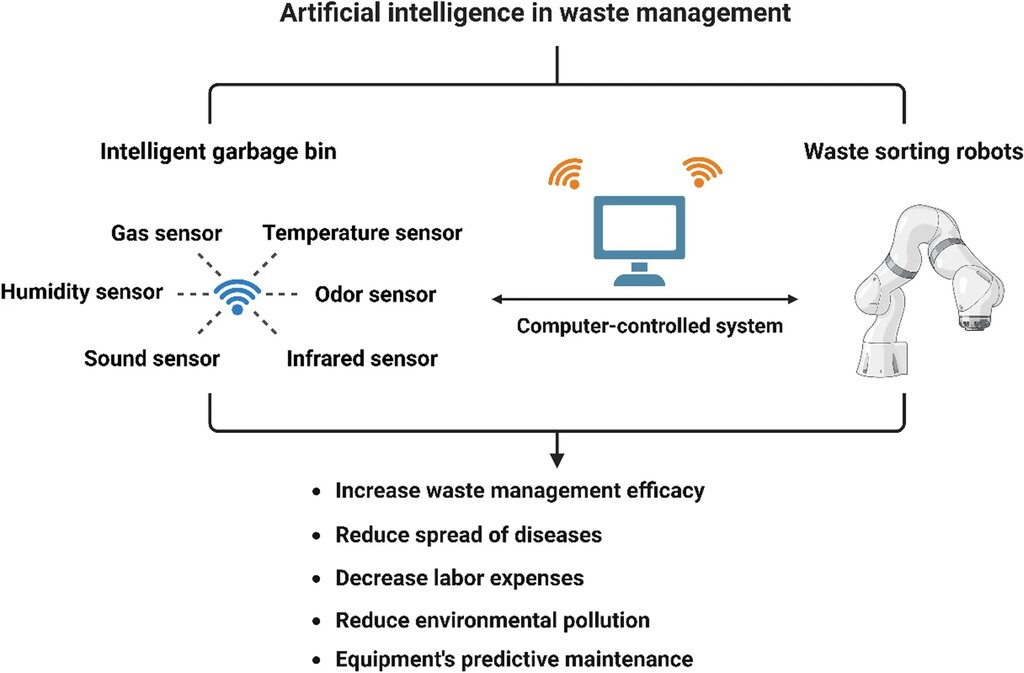
From the simple act of unlocking your phone with your face to complex systems that help scientists discover new medicines, AI is quietly reshaping our world. Understanding its basic principles is the first step to navigating this exciting technological frontier.
Ready to check your understanding?
What is the primary goal of Artificial Intelligence (AI)?
Which statement best describes the relationship between AI, Machine Learning (ML), and Deep Learning (DL)?