Armenian Academic Humor Poetry
Armenian Poetic Forms
The Hayren
Armenian poetry has a rich history, with unique forms that have been passed down for centuries. One of the most beloved and enduring is the hayren (հայրեն). These short poems, dating back to the medieval period, are deeply woven into the cultural fabric of Armenia, originally sung by traveling minstrels known as gusans.
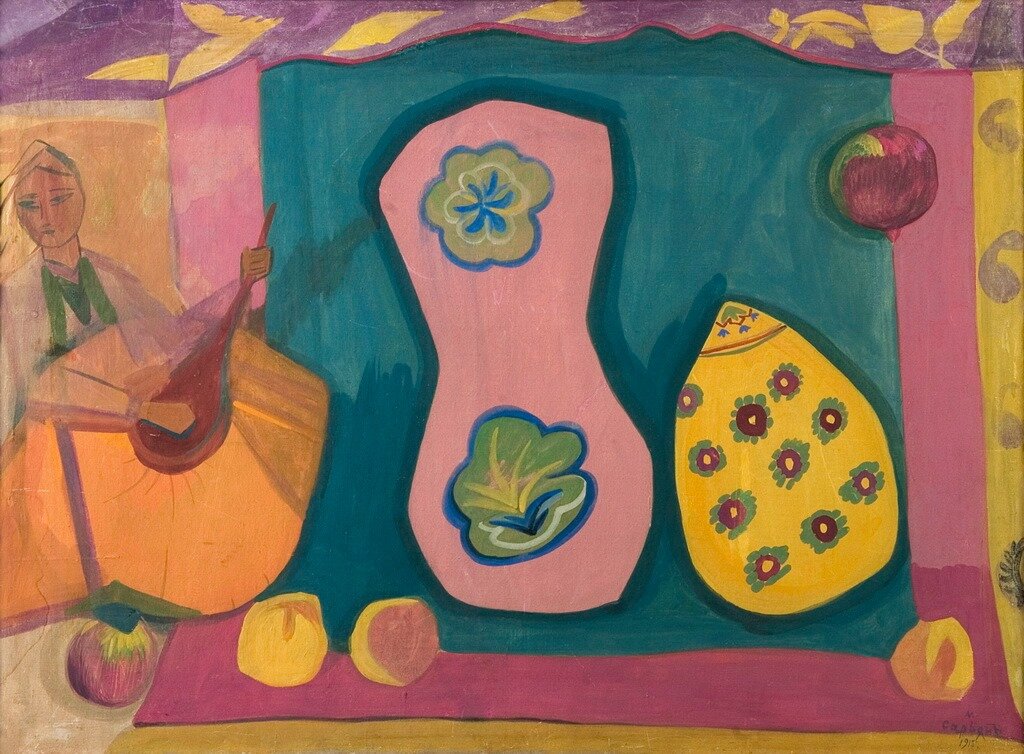
What makes a hayren distinct is its rigid structure. It’s a precisely crafted miniature, designed to convey deep emotion in a compact space. The rules are simple but strict.
A hayren is a quatrain, a poem of four lines. Each line must contain exactly 15 syllables, broken into two distinct half-lines of seven and eight syllables (7+8).
This 7+8 split is the heartbeat of the hayren. It creates a specific cadence, a rhythmic pause that gives the poem its characteristic musicality. The themes of hayrens are often intensely personal, touching on love, loss, longing, and philosophical reflection. They capture a single, powerful moment or feeling.
A Classic Example
The most famous master of the hayren is the 16th-century poet Nahapet Kuchak. His works are considered the pinnacle of the form. His poems feel both ancient and strikingly modern in their emotional honesty. Let's look at one of his well-known hayrens.
The following poem is presented in Armenian, followed by a phonetic transliteration and an English translation. Notice how each line adheres to the 7+8 syllable structure.
Your eyes are seas, your eyebrows—clouds drawn over them, When you open them—stars pour down, the light of your eyes becomes treasure, I look at you, my longing is not sated, oh how I love your eyes, It seems to me—I should take out my heart, and place it as a jewel upon your eyes.
Kuchak’s poem uses the natural world—seas, clouds, stars—to describe the depth of his beloved's eyes. The final line, a dramatic offering of his own heart, is a powerful declaration of love, made all the more impactful by the poem's concise structure.
What is the defining syllabic structure of a traditional hayren?
According to tradition, who were the original performers of hayrens?