ARM Embedded C Memory Barriers
Memory Models
What is a Memory Model?
Think of a shared digital whiteboard used by a team. A memory model is the set of rules that governs how updates to that whiteboard appear to everyone. It answers questions like: If one person writes something, when are the others guaranteed to see it? If two people write on the same spot at the same time, whose change sticks?
In computing, the "whiteboard" is the system's memory (RAM), and the "team members" are the different parts of the processor, often called cores or threads, that need to read from and write to it.
Memory Model
noun
A specification that defines the rules for how different threads or processor cores interact through memory. It determines the order in which memory operations (reads and writes) appear to be executed and when the effects of one thread's operations are visible to others.
Without these rules, a processor might reorder instructions to run faster, causing one core to see events in a different sequence than the core that initiated them. A memory model provides a contract between the hardware and the software, ensuring that despite these optimizations, the program behaves predictably.
Why It Matters for Concurrency
Concurrency is when multiple tasks execute at the same time, a standard feature in modern multi-core processors. When these tasks need to share information, they do so by reading and writing to the same memory locations. This is where the memory model becomes critical.
Imagine two programmers, Alice and Bob, working on a shared codebase. Alice writes a new function and then updates a status flag to signal that the function is ready. Bob's code is designed to wait for that flag and then call the new function. What happens if, due to some optimization, Bob sees the updated flag before he sees the new function code? His program would crash.
This exact problem, known as a race condition, is what memory models prevent. They provide guarantees about the visibility and ordering of memory writes. For example, a "sequentially consistent" model, the strictest kind, guarantees that all operations will appear to execute in some single global order, and the operations of any individual processor will appear in the order specified by its program.
Most modern processors, however, use more relaxed memory models for better performance. This means programmers must sometimes use special instructions to enforce order when it's absolutely necessary, like in Alice and Bob's scenario.
Impact on Embedded Systems
Embedded systems programming is filled with scenarios where memory ordering is vital. These systems often interact directly with hardware, where the sequence of operations is not just about correctness but also about physical function.
Consider controlling a motor. You might write a value to a hardware register to set its speed, then write to a different register to turn it on. If the processor reorders these operations, the motor could start spinning at an old, incorrect speed.
In embedded systems, it’s common for the main processor to communicate with peripheral devices (like sensors or network controllers) through shared memory. The processor writes a command to memory, and the device reads it. The device performs a task, then writes a result back to memory for the processor to read.
The memory model dictates the rules of this conversation. It ensures that the device doesn’t read a command before it's fully written, and the processor doesn't read a result before the device has finished its work. Understanding the memory model of your specific architecture, like ARM, is fundamental to writing reliable embedded software that won't fail due to unexpected timing or data visibility issues.
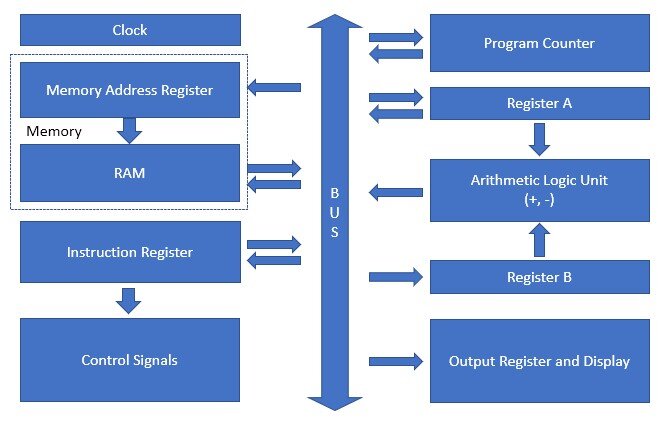
Ultimately, a memory model is the foundational agreement that allows software and hardware to cooperate, especially when many things are happening at once. For an embedded developer, it's a key piece of knowledge for building robust and predictable systems.
What is the primary function of a memory model in a multi-core computing system?
A developer writes a value to a memory address and then sets a flag at another address to signal 'ready'. Another thread, running on a different core, sees the 'ready' flag but reads the old, incorrect value from the first address. This scenario is a classic example of a ___.