Aristotle and the Path to Flourishing
Teleology and Ergon
The Purpose of Everything
Aristotle believed everything has a purpose. An acorn’s purpose is to become an oak tree. A knife’s purpose is to cut. This idea, that everything has an ultimate end or goal, is the core of a teleological worldview. For Aristotle, this wasn't just true for objects and plants; it was true for human actions, too.
Every action we take aims at some good. You study to pass an exam. You pass the exam to get a degree. You get a degree to find a good job. You get the job to earn money, and so on. This creates a hierarchy of goods, where some activities are just means to other, more important ends. But this chain can't go on forever. There must be a final, ultimate good—something we desire for its own sake. Aristotle called this highest good Eudaimonia
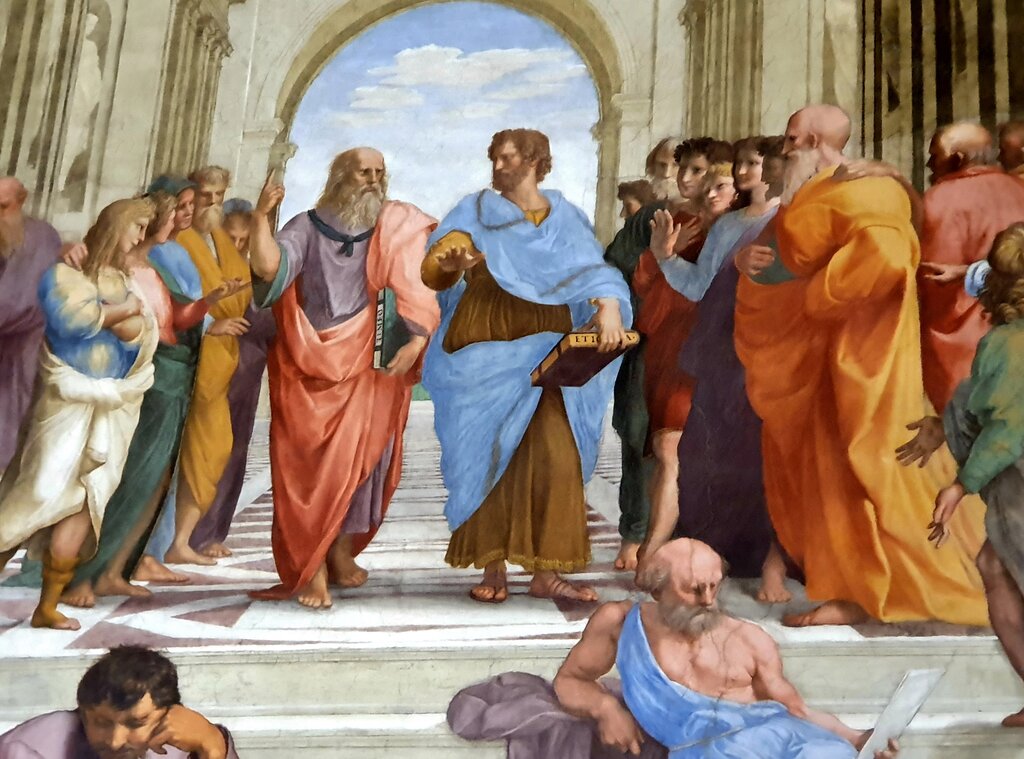
Translating as simply 'happiness' is misleading. It’s not a fleeting emotion or a temporary state of pleasure. It's a richer concept, better understood as 'flourishing,' 'living well,' or 'a life well-lived.' It’s the ultimate prize that all our other actions are trying to win. But how do we achieve it? For Aristotle, the answer lies in understanding our unique function.
The Function Argument
To figure out what a 'good' human life is, Aristotle first asked: what is the function (ergon) of a human being? What do we do that nothing else does? It can't be just living and growing, because plants do that. It can't be perception and movement, because animals do that, too.
Aristotle concluded that our unique function is our capacity to reason—our logos. We are the rational animal. Therefore, a good human life, or Eudaimonia, must involve exercising this capacity for reason excellently. It's not a passive state but an active one: an 'activity of the soul in accordance with virtue.' To flourish is to live a life guided by reason, and to do so consistently and well.
Telos
noun
The ultimate object or aim. In Aristotelian ethics, it's the inherent purpose or end goal of a thing.
This is the essence of the Function Argument if a thing has a function, its 'goodness' is found in performing that function well. A good knife cuts well. A good eye sees well. A good human, therefore, reasons well. This connects the abstract idea of a 'highest good' directly to our daily lives and choices. Flourishing isn't something that just happens to you; it's something you achieve through deliberate, rational action.
From Ancient Greece to Modern Psychology
Aristotle's ideas resonate with modern psychological concepts. The idea of being so engrossed in a challenging activity that you lose track of time is known as a 'flow state.' This state often arises when we use our skills to their utmost limit, much like Aristotle's 'activity of the soul in accordance with virtue.'
Similarly, the concept of 'self-actualisation,' popularised by psychologist Abraham Maslow, describes the drive to realise one's full potential. Both concepts echo the Aristotelian idea of striving towards a goal of human excellence. However, there's a key distinction. For Aristotle, flourishing is tied specifically to our unique of reason. It's not just about pursuing any fulfilling activity or achieving personal goals. It is about excelling in the one capacity that separates us from all other living things.
Before we wrap up, let's review the key terms we've covered.
Now, let's check your understanding of these core ideas.
What is the central idea of Aristotle's teleological worldview?
Which of the following is the best translation for the Greek term 'Eudaimonia' in the context of Aristotle's philosophy?
Understanding our purpose is the first step toward living a flourishing life. By grounding happiness in the rational, active pursuit of excellence, Aristotle provides a framework for thinking about not just what feels good, but what is good.