Aristotelian-Thomist Philosophy of Nature
Introduction to Aristotelian-Thomistic Philosophy
A Meeting of Minds
Aristotle, a Greek philosopher from the 4th century BCE, was a keen observer of the natural world. He wanted to understand how things worked, from the smallest seed to the stars in the sky. He developed a framework for studying nature based on observation and logical reasoning. His ideas were incredibly influential, shaping Western thought for centuries.
Over 1,500 years later, in the 13th century, an Italian theologian named Thomas Aquinas came along. At the time, many Christian thinkers were wary of pre-Christian Greek philosophy. But Aquinas saw immense value in Aristotle's work. He believed that reason and faith were not enemies, but two different paths to the same truth. Aquinas painstakingly integrated Aristotle's logical, observation-based philosophy of nature into his own Christian theology. This powerful blend is now known as Aristotelian-Thomistic philosophy.
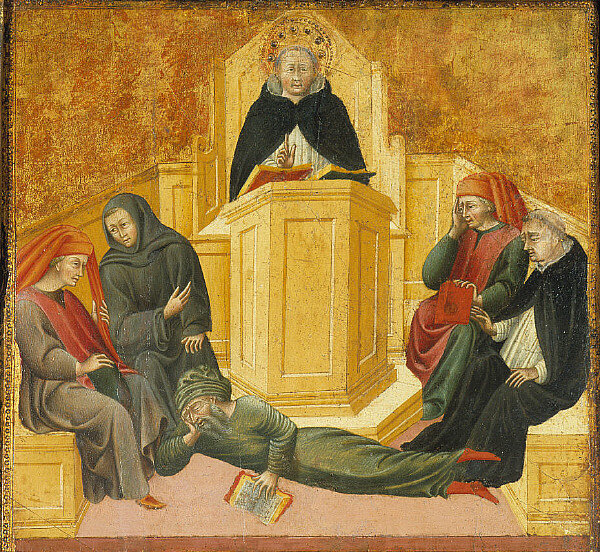
This synthesis created a comprehensive worldview that sought to explain everything from the physical composition of objects to their ultimate purpose. It provided a framework where the study of the natural world could complement, rather than contradict, spiritual understanding.
The Stuff of Reality
At the core of this philosophy is a concept called hylomorphism. It sounds complex, but the idea is straightforward. Every physical thing that exists is a composite of two principles: matter and form.
Matter (from the Greek hyle) is the raw, underlying stuff an object is made of. It's the potential to be something. Think of a lump of bronze. On its own, it's just bronze, without any specific identity.
Form (from the Greek morphe) is what gives that matter its specific identity and structure. It's the arrangement, the shape, the essence that makes a thing what it is. When the bronze is melted and cast into a statue of a horse, the 'horseness' is its form.
Neither can exist on its own in the physical world. You never find pure, formless matter just lying around, nor do you encounter a form without any matter. The two are always united to make a complete substance.
hylomorphism
noun
The doctrine that physical objects result from the combination of matter and form.
Purpose and Cause
To truly understand something in the Aristotelian-Thomistic view, you need to know what causes it to be the way it is. Aristotle identified four different kinds of causes that work together to explain any given thing. We won't dive deep into all four right now, but the key takeaway is that this philosophy looks for a complete explanation, not just a single, simple answer.
This leads to another foundational idea: teleology. This is the concept that all natural things have an intrinsic purpose or end-goal—a telos.
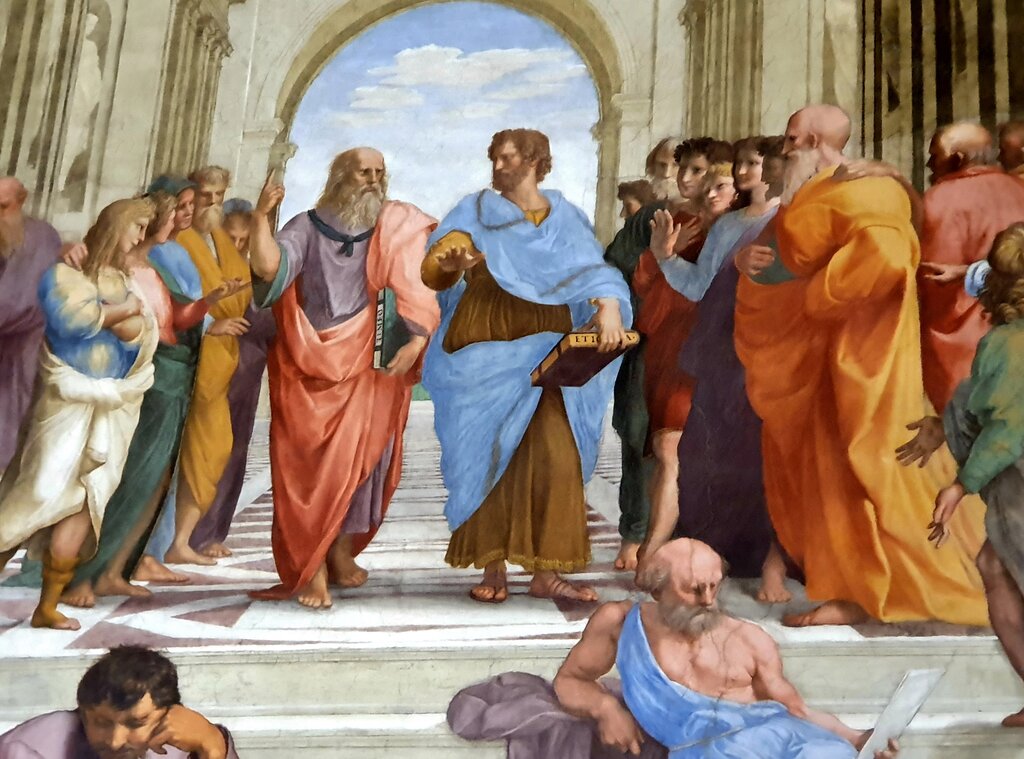
This isn't about conscious desire, like a person wanting to become a doctor. It's about an inherent directionality built into nature. An acorn's purpose is to become an oak tree. A heart's purpose is to pump blood. The entire natural world is seen as an ordered system where everything has a function and is moving toward the fulfillment of its own nature.
Teleology suggests that everything in nature has an end goal it strives toward, giving the universe an inherent order and purpose.
These three pillars—hylomorphism, causality, and teleology—form the basis of the Aristotelian-Thomistic philosophy of nature. They offer a framework for seeing the world not as a collection of random parts, but as a meaningful, interconnected whole.
Let's check your understanding of these foundational ideas.
Which thinker is credited with integrating Aristotle's philosophy of nature into Christian theology during the 13th century?
According to the principle of hylomorphism, every physical object is a composite of ______ and ______.
Understanding these core principles is the first step in exploring this rich philosophical tradition's approach to the natural world.