Argentine Tango Fundamentals
Posture and Balance
Finding Your Foundation
Before you take a single step in tango, you need to find your stance. Everything in this dance—every turn, every pause, every connection with your partner—is built on a foundation of good posture and solid balance.
Good posture is the foundation of tango.
Think of your body as a tall, stable building. Your spine is the central column, and it needs to be long and straight, not slumped or overly arched. Start by standing with your feet together. Roll your shoulders up towards your ears, then let them drop back and down. This opens up your chest and aligns your upper body.
Now, engage your core muscles. This doesn't mean sucking in your stomach, but rather gently tightening the muscles around your abdomen as if you're bracing for a light push. This creates stability from your center.
Finally, the most unique part of tango posture is the forward lean. This isn't a bend from the waist. Instead, keeping your body in a straight line from head to heels, shift your weight slightly forward onto the balls of your feet. It should feel like you're about to walk, a state of perpetual readiness. Your heels should remain on the floor, but with very little pressure on them.
Finding Your Balance
This specific posture is your key to balance. With your weight forward and your core engaged, you are always ready to move. Balance in tango isn't static; it's a dynamic state of control as you shift your weight from one foot to the other.
Here are a few solo exercises to practice. Find a clear space and try them barefoot or in socks first to really feel the connection with the floor.
Weight Transfers: Stand in your tango posture. Slowly transfer all your weight to your right foot, lifting your left heel and then the toe. Hold for five seconds, feeling the stability in your standing leg. Then, smoothly transfer your weight to the left foot. Repeat this ten times.
Single-Leg Balance: Once you're comfortable with weight transfers, try lifting your non-weight-bearing foot completely off the floor. Hold the position for 10-15 seconds on each leg. Your goal is to stand tall without wobbling. If you feel unsteady, focus on a fixed point in front of you.
Walking the Line: Imagine a straight line on the floor. Walk forward along the line, placing one foot directly in front of the other. Maintain your tango posture and forward intention with each step. Then, try walking backward along the same line. This is much harder and is crucial for tango.
Connecting with a Partner
Once you can maintain your own balance, you need to learn how to share it with a partner. In tango, two individuals move as one, and their balance is interconnected through the embrace, or abrazo.
When you connect with a partner, you both maintain your own axis and posture. You don't lean on each other for support; rather, you create a shared space between you. The contact points—typically the leader's right hand on the follower's back and the follower's left hand on the leader's shoulder—are for communication, not for bracing.
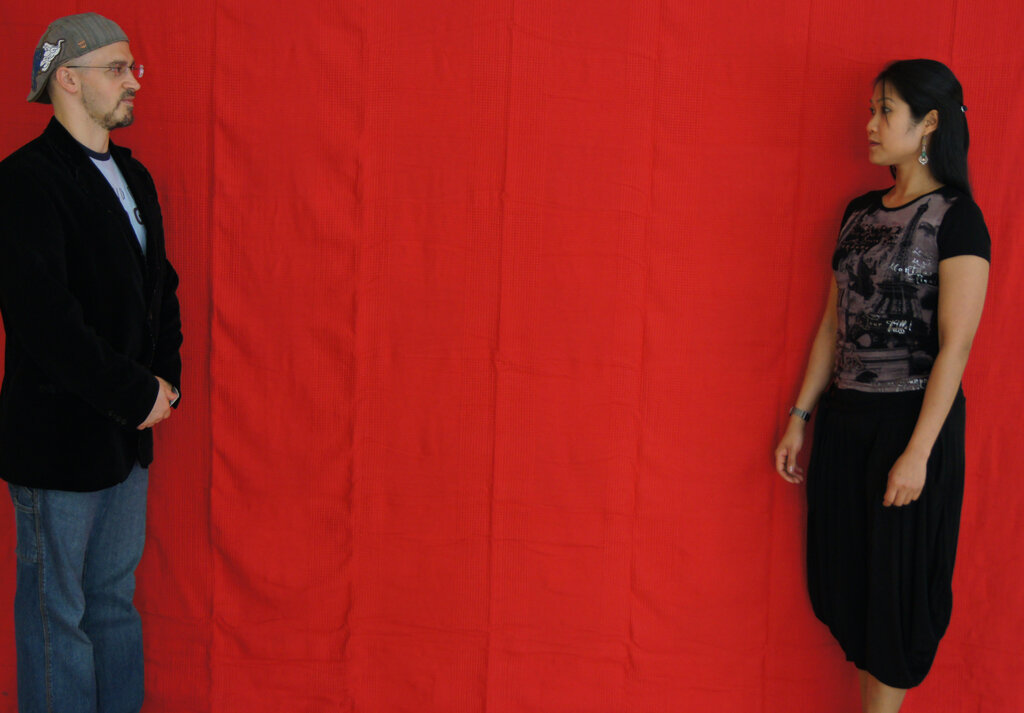
A simple partnered drill is to stand in the embrace and practice the weight transfer exercise together. One partner mirrors the other. As the leader shifts weight to their right foot, the follower shifts to their left. The goal is to feel the subtle shift in your partner's body and respond instantly. This creates a synchronized rhythm and a stable, moving connection.
From there, you can try walking together. The leader initiates the step by shifting their weight and moving their torso, and the follower responds. The focus isn't on the feet, but on maintaining a constant distance and shared balance throughout the movement.
Ready to check your understanding?
What is the primary purpose of the contact points in the tango embrace (abrazo)?
Which part of the body initiates the tango forward lean?
Mastering posture and balance takes time and consistent practice. By focusing on these fundamentals, you're building the skills needed for every complex move you'll learn later.