Are Sharks Fish
Introduction to Biological Classification
A Place for Everything
The natural world is incredibly diverse, with millions of species of plants, animals, fungi, and microbes. To make sense of it all, biologists use a system of classification, organizing living things into groups based on their shared characteristics. Think of it like a massive library where every book has a specific spot on a shelf, making it easy to find and understand its relationship to other books.
This system, largely developed by the Swedish botanist Carolus Linnaeus in the 18th century, gives us a framework for studying life. It’s not just about putting things in boxes; it’s about understanding the deep history that connects every living organism on Earth.
Taxonomy
noun
The science of naming, defining, and classifying groups of biological organisms on the basis of shared characteristics.
The Taxonomic Ranks
Biological classification uses a hierarchy of levels, called taxonomic ranks. Each level is more specific than the one before it. The main ranks, from broadest to most specific, are Domain, Kingdom, Phylum, Class, Order, Family, Genus, and Species.
A handy mnemonic to remember the order is: Dear King Philip Came Over For Good Soup.
As you move down the hierarchy, from domain to species, the groups become smaller and the organisms within them become more and more similar. A domain is the highest level, separating life into three main groups: Bacteria, Archaea, and Eukarya (which includes all plants, animals, and fungi). A species, on the other hand, is the most specific rank, typically defined as a group of organisms that can successfully interbreed.
Linnaeus also gave us binomial nomenclature, a two-part naming system. The scientific name of every organism consists of its genus name (capitalized) followed by its species name (lowercase), both written in italics. For example, humans are Homo sapiens, and the gray wolf is Canis lupus. This system ensures every scientist in the world is talking about the same organism, avoiding confusion from common names that vary by region and language.
How We Classify
Early classification was based mostly on morphology, or the physical traits of an organism. If it had feathers and a beak, it was a bird. If it had scales and fins, it was a fish. This is still important, but it can sometimes be misleading. Some species look similar but are distantly related (like dolphins and sharks), while others in the same group can look very different.
Today, genetics plays the starring role. By comparing the DNA of different organisms, scientists can determine how closely related they are. The more similar their genetic sequences, the more recently they shared a common ancestor. This approach, called phylogenetics, helps us build evolutionary trees that map the relationships between species, revealing the branching history of life.
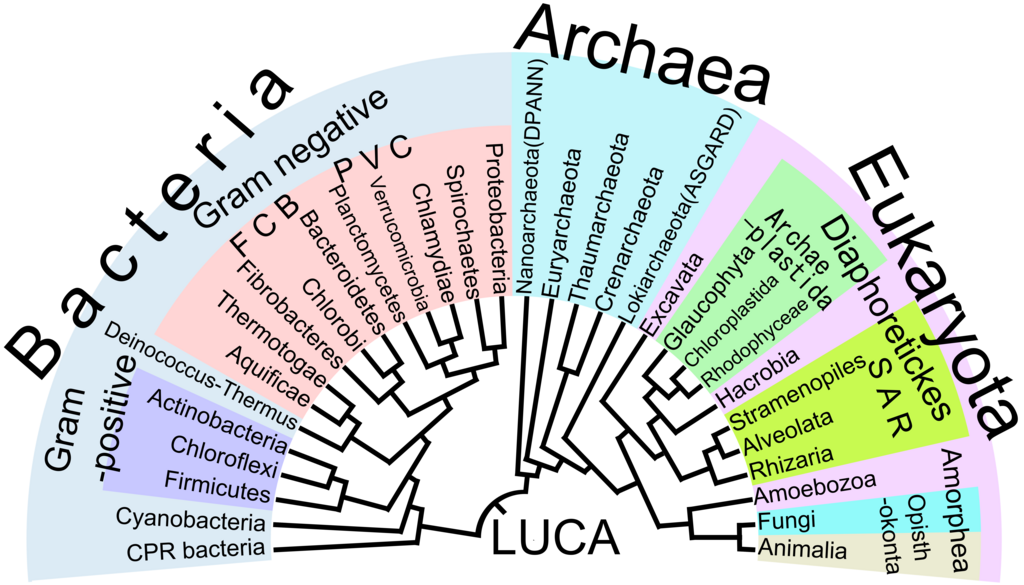
Modern classification isn't just a list of traits. It's a map of evolutionary history.
Why Taxonomy Matters
So, why do we put all this effort into classifying life? First, it creates a universal language that allows scientists from different countries to communicate clearly about their research. When a biologist in Japan studies Escherichia coli, a researcher in Brazil knows exactly which bacterium they're talking about.
Second, taxonomy illuminates the evolutionary pathways that have led to the diversity we see today. It helps us answer fundamental questions about how life on Earth evolved and adapted. Finally, classification is vital for conservation. To protect biodiversity, we first need to know what's out there. By identifying and naming species, we can track their populations, assess their risk of extinction, and develop strategies to preserve them.
Time to check what you've learned about how we organize the living world.
Which of the following taxonomic ranks is the most inclusive or broadest?
How is the scientific name of an organism correctly written according to binomial nomenclature?
Understanding how life is organized is the first step to appreciating the incredible connections that link every living thing, from the smallest bacterium to the largest whale.