Architectures of the Human Mind
The Architecture of Mind
The Mind's Blueprint
How is the mind organized? Cognitive science approaches this question by thinking about its 'cognitive architecture'—the functional layout of the systems that allow us to think, perceive, and act. This isn't about the physical brain tissue itself, but the underlying design of the mind as an information-processing system.
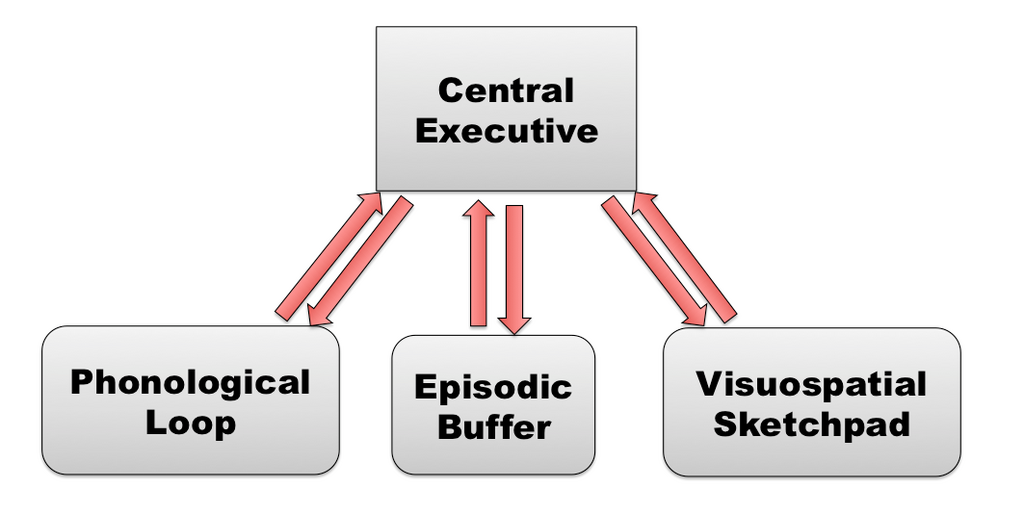
One key idea is modularity. This theory suggests the mind isn't a single, general-purpose processor. Instead, it's composed of numerous specialized modules, each evolved to handle a specific task, like understanding language, recognizing faces, or processing visual information. These modules work together, passing information back and forth to produce coherent thought and behavior.
Thinking with Representations
A cornerstone of cognitive science is the Representational Theory of Mind (RTM). It proposes that thinking is, fundamentally, the manipulation of internal mental representations. These aren't just pictures in your head; they can be concepts, propositions, or symbols that stand for things in the world. When you think, "The cat is on the mat," your mind is processing representations for 'cat,' 'mat,' and the spatial relationship 'on.'
This framework allows us to treat thinking as a computational process. The mind takes these representations as input, applies rules or procedures to them, and generates new representations as output, which might translate into beliefs, decisions, or actions.
The fundamental concept of cognitive science is that "thinking can best be understood in terms of representational structures in the mind and computational procedures that operate on those structures."
This leads directly to the Language of Thought hypothesis, most famously argued by philosopher Jerry Fodor. He suggested that our thoughts are structured like a language, with a syntax (rules for combining symbols) and semantics (meaning). This 'mentalese' would explain the systematicity of thought. If you can think "The dog chased the squirrel," you can also think "The squirrel chased the dog." The same components can be rearranged into new, meaningful thoughts, just like words in a sentence.
This view, often called Computationalism, sees the mind as a kind of biological computer, operating on a symbolic language of thought.
A Different Architecture
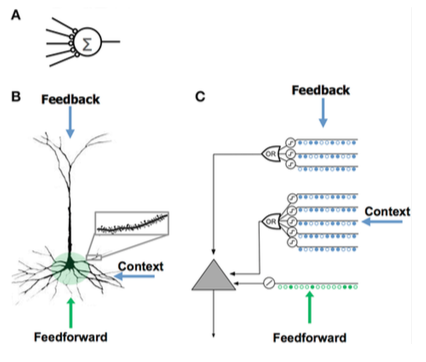
An alternative to the neat, symbolic world of Computationalism is Connectionism. Inspired by the brain's structure, connectionist models view the mind as a vast network of simple, interconnected units, much like neurons. In these networks, often called artificial neural networks, there are no explicit symbols or rules.
Instead, knowledge is stored in the connections between units. A concept isn't located in one spot but is a pattern of activation distributed across the entire network. Learning happens by gradually adjusting the strength of these connections based on experience. This approach excels at tasks that are difficult for symbolic models, like pattern recognition and learning from noisy or incomplete data.
The debate isn't about which model is right, but which best explains different aspects of cognition. Computationalism provides a powerful explanation for the logical, systematic nature of language and reasoning. Connectionism offers a compelling account of learning, perception, and intuition, where the brain seems to handle massive amounts of parallel information gracefully.
Modern cognitive science often uses hybrid models that combine both approaches, suggesting the mind might use different architectures for different jobs. A rule-based system might handle your grammatical thoughts, while a connectionist network recognizes the face of a friend in a crowd. Understanding these foundational architectures provides a blueprint for exploring the complex machinery of the mind.
Let's test your understanding of these core concepts.
What is the core idea behind the theory of modularity in cognitive science?
According to the Representational Theory of Mind, what is the fundamental nature of thinking?
These architectural models provide the framework we need to explore how the mind works.