Architectures of Philosophical Thought
Epistemological Trade-offs
The Price of Certainty
Every approach to building knowledge comes with a cost. The central tension in epistemology isn't just about where knowledge comes from, but about what we're willing to trade for it. Do we prioritize absolute, unshakable certainty, or do we value a system that can adapt and grow with new evidence, even if it means nothing is ever 100% settled?
This is the core trade-off between rationalism and empiricism. Rationalists build from a priori truths, ideas we can know through pure reason without needing to check the outside world. Think of mathematical truths like $2+2=4$. It's a closed system, perfect and certain. Empiricists, on the other hand, build from a posteriori observations, knowledge gained from experience. It’s grounded in reality but is always provisional. Tomorrow, a new observation could force us to rethink everything.
The rationalist seeks a perfect foundation. René Descartes famously tried to achieve this by doubting everything until he found one belief he couldn't possibly doubt: his own existence as a thinking thing. From this single, certain point, he attempted to deduce the rest of reality. This approach is called foundationalism, where knowledge is a structure built on a base of infallible beliefs.
The appeal is obvious: absolute certainty. But the cost is significant. A rationalist framework can become a brittle echo chamber, disconnected from the messy reality of the world. If your foundational premise is wrong, the entire structure collapses.
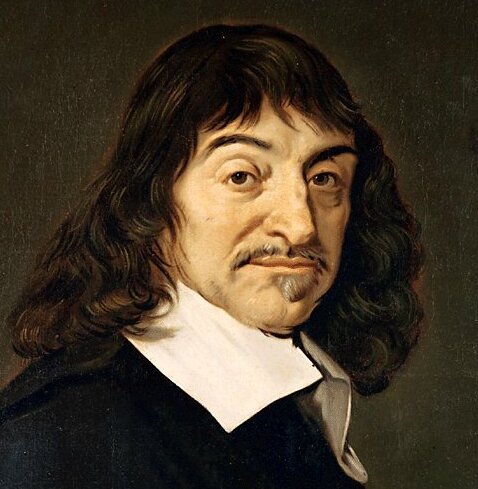
Empiricists like David Hume offer a different deal. They argue that all knowledge begins with sensory experience. There is no bedrock of pure reason, only a constantly shifting web of observations. Knowledge isn't built, it's woven. This makes the system incredibly flexible and self-correcting. When a new observation contradicts an old belief, you don't tear down the whole structure; you just re-weave a part of the web.
The trade-off here is the abandonment of certainty. For an empiricist, no belief is completely safe from future revision. This leads directly to the Problem of Induction.
The Problem of Induction states that no matter how many times we observe a pattern, we can never be logically certain that the pattern will continue in the future.
Just because the sun has risen every day of your life doesn't provide logical proof it will rise tomorrow. We have a very strong expectation, but it's a belief based on past evidence, not a deductive certainty. This is the epistemic cost of empiricism: we trade absolute proof for practical, workable knowledge about the world.
Modeling the World
This philosophical tension isn't just a historical debate; it defines how we create knowledge today, especially in science. A purely rationalist approach to science would involve creating elegant mathematical models that logically must be true. A purely empiricist approach would be to just collect data without any guiding theory.
Neither works alone. Scientific modeling is a constant dialogue between the two. We start with a theory, a rationalist structure. Then we test it against a posteriori observations. When the data doesn't fit the model (which it almost never does perfectly), we have a choice. Do we trust the model and dismiss the data as an anomaly, or do we trust the data and revise the model?
The answer is almost always to revise the model. Empiricism provides the flexibility, the built-in error correction, that allows scientific knowledge to advance. The certainty of a purely rational model is seductive, but its inability to adapt to new evidence is a fatal flaw.
This doesn't mean foundationalism is dead. Some modern philosophers advocate for a different structure, coherentism. In this view, a belief is justified if it fits into a coherent web of other beliefs. There is no single foundation, only the overall integrity of the system. Think of a crossword puzzle: a word is correct if it fits with all the intersecting words. It's an attempt to find a middle ground, but it also has its own trade-offs, namely the risk of an entire system of beliefs being internally consistent but completely wrong about the external world.
Ultimately, building a knowledge system requires choosing your epistemic priorities. The rationalist pays for certainty by risking disconnection from reality. The empiricist pays for relevance and flexibility by sacrificing the dream of absolute, final proof.
What is the central trade-off between rationalism and empiricism?
The idea that knowledge is a structure built on a base of infallible beliefs, like René Descartes's "I think, therefore I am," is known as what?