Architectural Patterns Compared
Introduction to Software Architecture
The Blueprint for Code
Imagine building a house without a blueprint. You could start laying bricks and putting up walls, but you'd quickly run into problems. Where do the pipes go? Is this wall strong enough to hold up the roof? How will people move from room to room? The final result would likely be a chaotic, unstable mess.
Software architecture is the blueprint for a software system. It’s the high-level plan that dictates how all the major pieces fit and work together. It’s not about the specific code in one small function, but about the overall structure. This structure helps manage complexity, plan for future growth, and allow teams of developers to work together effectively without stepping on each other's toes.
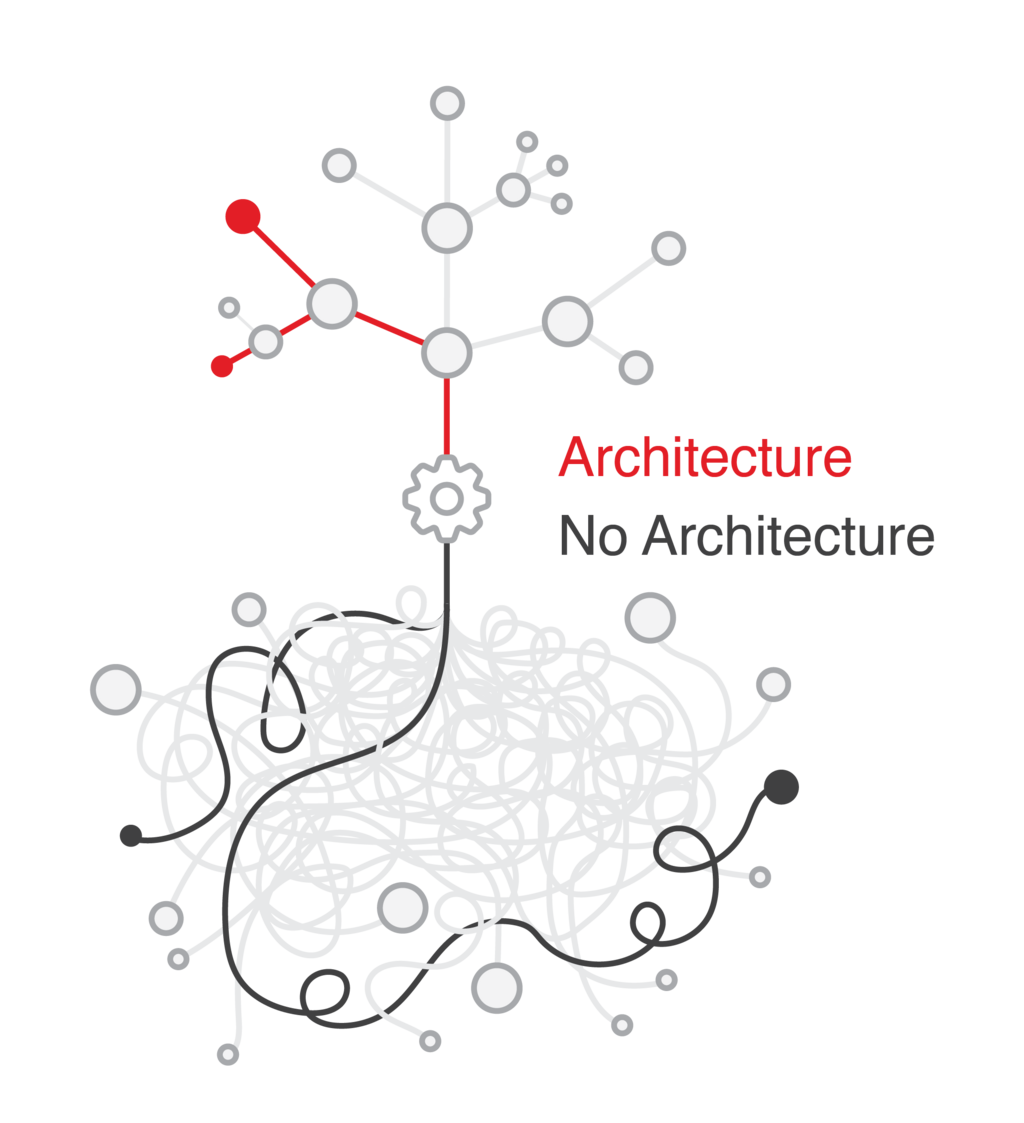
Good architecture isn't about choosing a trendy technology. It's about making deliberate decisions that will support the system's goals for years to come.
Core Principles
Solid architectures are built on a few timeless principles. These aren't strict rules, but rather guiding ideas that help create systems that are robust, flexible, and easy to work with.
Separation of Concerns
other
The principle of breaking a system into distinct sections, where each section addresses a separate concern or responsibility.
Think of a restaurant. The chef cooks the food, the waiter takes orders and serves, and the host manages seating. Each person has a clear, separate job. They don't all try to do everything at once. This separation makes the whole operation efficient. In software, this means that the code for handling the user interface shouldn't be mixed with the code for saving data to a database. When concerns are separated, the system is easier to understand and change.
A place for everything, and everything in its place. That's the essence of separation of concerns.
This leads directly to the next principle: modularity.
Modularity
noun
Designing a system as a collection of independent, interchangeable modules. Each module encapsulates a specific piece of functionality.
If separation of concerns is the idea, modularity is the physical implementation. It’s like building with LEGO bricks instead of clay. LEGO bricks are standard and self-contained. You can build a car, take it apart, and use the same bricks to build a spaceship. Similarly, a modular software system is composed of well-defined components. You can work on, test, or even replace one module without breaking the entire system.
Planning for the Future
A good blueprint doesn't just work for today; it anticipates the needs of tomorrow. Two key principles guide this forward-thinking approach: scalability and maintainability.
Scalability
noun
A system's ability to handle a growing amount of work or its potential to be enlarged to accommodate that growth.
Scalability is about handling more. More users, more data, more transactions. A lemonade stand can serve a few dozen people a day. To serve thousands, you need a different system—a bottling plant, distribution trucks, and retail stores. You need an architecture that can scale. In software, this might mean designing a system that can run across multiple servers, so you can just add more machines as traffic increases.
Maintainability
noun
The ease with which a software system or component can be modified to correct faults, improve performance, or adapt to a changed environment.
Finally, there's maintainability. The vast majority of a software's cost comes after it's first released. Developers will spend years fixing bugs, adding features, and adapting to new technologies. A maintainable architecture makes this work easier, faster, and less risky. All the principles we've discussed—separation of concerns, modularity, and scalability—contribute to creating a system that is easy to maintain and evolve over time.
Common Architectural Patterns
Over time, developers have recognized common problems and created standard blueprints, or patterns, to solve them. These patterns provide a shared language and a starting point for designing a system's architecture. They are reusable solutions that embody the principles we've discussed.
| Pattern | Description | Best For... |
|---|---|---|
| Client-Server | A central server provides data and services to multiple clients (like a web browser or mobile app). | Most web and mobile applications. |
| Monolithic | The entire application is built as a single, unified unit. | Simple applications, small teams, or early-stage startups. |
| Microservices | The application is broken down into a collection of small, independent services that communicate with each other. | Large, complex applications that require high scalability and team autonomy. |
| Event-Driven | Components communicate by sending and receiving messages (events) without being directly linked. | Systems that need to react to changes in real-time, like in finance or IoT. |
These are just a few examples. Choosing the right pattern depends on many factors, including the size of the team, the complexity of the problem, and the future goals of the project. Understanding these foundational concepts is the first step toward making those decisions wisely.