Architects of Time and Power
Silk Road Networks
The First Global Network
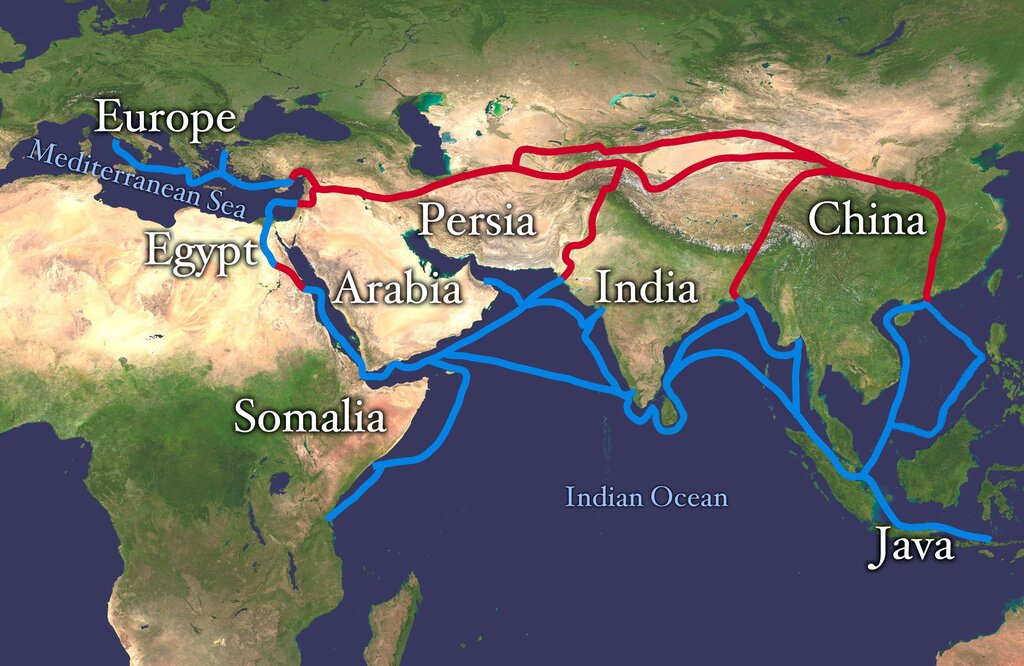
The Silk Road was never a single road. It was a sprawling, dynamic network of trade routes, the world's first true global infrastructure. For centuries, this web of caravan trails and sea lanes connected the great empires of the classical and post-classical world, from the in China to the Roman Empire in the West, and later, the powerful Islamic Caliphates that rose in the middle.
This wasn't just about moving luxury goods like silk. It was the central nervous system of Eurasia, transmitting ideas, technologies, and beliefs across vast distances. The stability provided by these large empires created a fertile ground for long-distance trade to flourish. They built roads, protected caravans, and minted reliable currency, reducing the risks and costs of doing business across continents.
The Flow of Innovation
More valuable than silk were the technologies that travelled in the minds of merchants and craftsmen. Paper-making, a Chinese invention, moved west along the Silk Road. Its arrival in the Islamic world in the 8th century CE transformed administration, scholarship, and culture before it eventually reached Europe.
Imagine the shift from cumbersome parchment to cheap, easy-to-produce paper. It democratised knowledge. Libraries expanded, and complex ideas could be recorded and shared with unprecedented ease.
Gunpowder followed a similar path centuries later. Originally developed by Daoist alchemists in China, its military applications were slowly realised. Through the Mongols, who controlled the entirety of the Silk Road in the 13th century, this transformative technology was introduced to the Islamic world and Europe, where it would fundamentally change the nature of warfare.
Conduits of Faith
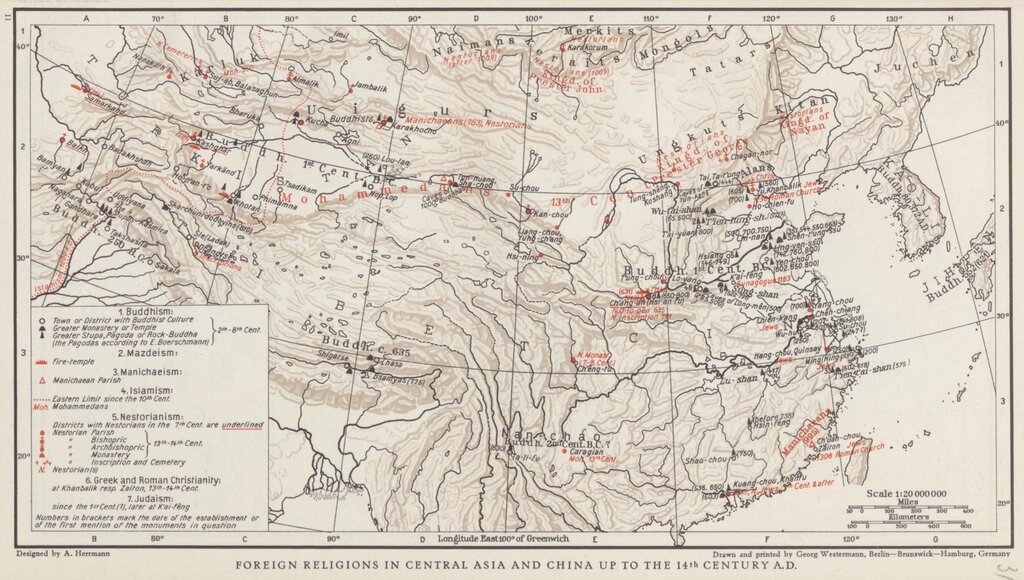
The same routes that carried goods and technologies also served as conduits for beliefs. Buddhism, originating in India, travelled eastwards along the Silk Road, carried by merchants and monks. It found fertile ground in China, transforming from a foreign curiosity into a major religious and cultural force, adapting as it spread through Central Asia.
Similarly, following the Arab conquests of the 7th century, Islam spread eastwards. Merchants, missionaries, and soldiers brought their faith into Central Asia, a region that became a heartland of Islamic scholarship and culture. The not only facilitated this spread but also absorbed and built upon the knowledge they encountered, from Greek philosophy preserved in Persian libraries to Indian mathematics.
The Business of Empire
Managing these vast trade networks was a core function of imperial statecraft. It wasn't enough to simply let merchants travel; empires had to create a secure and predictable environment for commerce. This involved establishing and garrisoning forts along dangerous stretches of the route to protect against bandits.
Governments also built and maintained caravanserais—fortified roadside inns—that provided travellers with a safe place to rest, resupply, and exchange goods. These became miniature hubs of commerce and cultural exchange in their own right.
Crucially, empires understood the economic power of these routes. They levied taxes and customs duties on the goods that passed through their territory. This taxation was a major source of state revenue, funding armies, bureaucracies, and public works. In effect, the Silk Road provided a historical blueprint for global supply chains, demonstrating how state power could be used to foster and profit from international trade.
Time to test your knowledge on how these ancient networks functioned.
Which statement best describes the nature of the Silk Road?
Besides luxury goods, what were some of the most significant things transmitted along the Silk Road?
The Silk Road was far more than a path for trading silk. It was the world's first great experiment in globalisation, a complex system where the movement of goods powered the exchange of technologies, ideas, and cultures, fundamentally shaping empires and the course of history.