Architects of Time and Civilization
Imperial Structural Foundations
From Fields to Empires
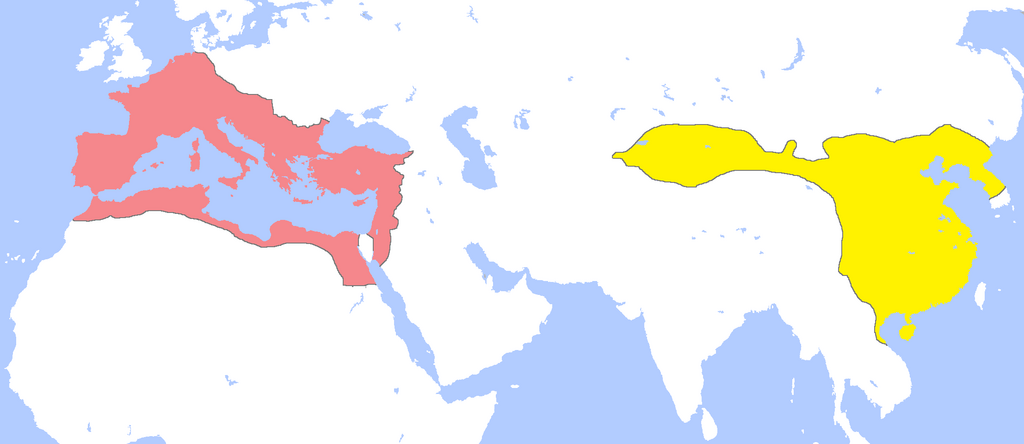
An empire doesn’t just happen. It’s built on a foundation of food. For early agrarian societies like Rome, Han China, and the Mauryan Empire in India, the journey from a collection of farms to a sprawling political entity began with a fundamental challenge: how to feed more than just the farmers.
The solution was a powerful, self-reinforcing loop known as the military-agrarian complex. It worked like this: a growing army needed a consistent food supply, which pushed the state to secure more farmland through conquest. This newly acquired land produced more food, which could then support an even larger army and a growing class of non-farmers, like administrators and artisans. The military protected the farms, and the farms fed the military.
This cycle of conquest and cultivation was the engine of imperial expansion. More land meant more grain, and more grain meant more power.
This system required a massive surplus of food. This surplus didn't just prevent famine; it was the currency that bought the state its most valuable assets: a professional army and a centralized bureaucracy. Every soldier in the field and every clerk in a provincial capital was fed by grain they did not grow. This specialisation of labour was the first critical step in building a complex state.
The Imperial Machine
Managing a vast, agricultural empire required more than just soldiers. It demanded a sophisticated administrative machine. Empires needed to count people, measure land, and collect taxes with ruthless efficiency. This led to the rise of centralized bureaucracies, a hallmark of states like Han China and Mauryan India.
Employing a carefully organized bureaucratic system, the Maurya Empire was able to maintain security and political unity across large parts of western and southern Asia.
Standardisation was key. Rulers imposed uniform systems of currency, weights, and measures. A bushel of wheat in one province had to be the same as a bushel a thousand kilometres away. This didn't just simplify tax collection; it also greased the wheels of long-distance trade, binding the empire's economy together. A single currency meant a merchant from one end of the empire could do business at the other without a hassle, creating economic interdependencies that reinforced political unity.
Infrastructure was the physical manifestation of this standardisation. The famous Roman roads weren't just for moving legions; they were commercial arteries. They allowed grain from Egypt, olive oil from Spain, and wine from Gaul to move quickly and safely to markets across the empire. These networks turned scattered local economies into a single, integrated imperial one. In this way, a road or a canal was as much a tool of political control as a sword.
The Price of Power
This new scale of agriculture and governance came with significant trade-offs. Centralised power often came at the expense of regional autonomy. A distant emperor's decree could override local customs and needs, sometimes with disastrous results. Governors appointed by the capital might have little understanding of the provinces they ruled, leading to resentment and rebellion.
The environmental impact was also immense. Supporting massive urban populations and armies required intensive farming that could lead to deforestation, soil erosion, and the depletion of water sources. The demand for timber to build cities and fleets, and for fuel to fire kilns and forges, reshaped landscapes across the ancient world. The short-term needs of the empire often overshadowed long-term ecological stability.
Ultimately, the structures that allowed these empires to rise also contained the seeds of their decline. A bureaucracy could become bloated and corrupt. An over-extended military could drain the treasury. An over-exploited landscape could fail to produce the necessary surplus. The story of early empires is a story of this constant, delicate balance.
Time to check what you've learned about how early empires were built.
What was the primary function of the "military-agrarian complex" in early empires like Rome and Han China?
Why was standardisation of currency, weights, and measures crucial for an empire's success?