Architects of the Animal Kingdom
Metazoan Origins and Tissues
The Animal Family Tree
The story of the first animals begins with a single-celled ancestor. To find our closest living relatives, we look not to other animals, but to a group of microscopic aquatic organisms called choanoflagellates. These tiny protists are masters of transformation. They can live as individuals, swimming with a single whip-like tail, or they can band together to form simple colonies.
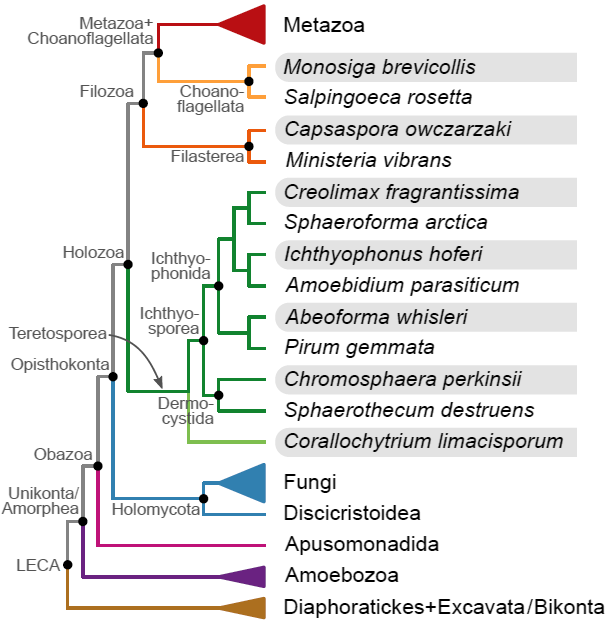
This colonial behavior is a key clue. It represents a crucial step on the path to multicellular life. By living together, these cells could begin to coordinate their actions, a precursor to the complex cooperation seen in animal bodies. DNA analysis confirms this close relationship, showing that choanoflagellates and animals share genes involved in cell adhesion and signaling—the very tools needed to build a multicellular organism.
The First Great Split
The earliest divergence in the animal kingdom created two major lineages: the Parazoa and the Eumetazoa. The name Parazoa means "beside the animals," which hints at their unique body plan. This group is primarily represented by sponges (phylum Porifera).
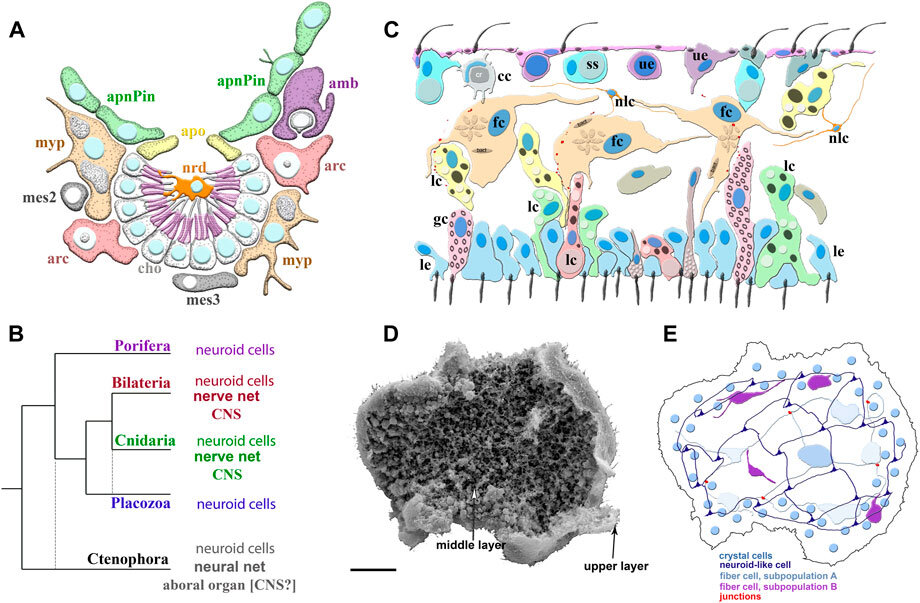
Sponges are multicellular, but they lack the true, organized tissues that characterize most animals. Their bodies are more like a loose confederation of specialized cells. Different cell types perform specific jobs—like creating water currents or digesting food—but they aren't arranged into coordinated layers with a basement membrane. You can even pass a sponge through a sieve, and the separated cells will often reaggregate and form a new, functional sponge.
The Eumetazoa, or "true animals," are defined by the presence of organized tissues. This fundamental innovation allowed for the development of organs and complex body systems.
The Glue of Life
For cells to form a stable, multicellular organism, they need to stick together and communicate. This is the job of the extracellular matrix (ECM), a network of proteins and carbohydrates secreted by the cells themselves. It acts as a scaffold, providing structural support and anchoring cells in place.
One of the most important proteins in the animal ECM is . This tough, fibrous protein is unique to the animal kingdom and provides immense tensile strength to tissues like skin, bone, and cartilage. The evolution of the ECM, particularly collagen, was a watershed moment. It provided the physical framework necessary for cells to organize into the complex, three-dimensional structures we see in all Eumetazoans.
Building with Layers
Eumetazoans take cellular organization a step further by forming distinct germ layers during embryonic development. These are the foundational tissue layers from which all other organs and tissues arise. The simplest Eumetazoans are the diploblasts, which develop two germ layers.
| Germ Layer | Develops Into |
|---|---|
| Ectoderm | Outer layer (skin, nervous system) |
| Endoderm | Inner layer (digestive tract lining) |
Animals in the phylum Cnidaria, which includes jellyfish, corals, and sea anemones, are classic examples of diploblasts. Their bodies consist of an outer ectoderm and an inner endoderm, separated by a non-cellular, jelly-like substance called the mesoglea. The ectoderm handles interaction with the outside world, containing nerve cells and stinging cells (cnidocytes). The endoderm lines the gut and is responsible for digestion. This two-layered construction is a simple but effective body plan that has been successful for over 500 million years.
This early split between animals without true tissues (Parazoa) and those with two germ layers (diploblastic Eumetazoa) set the stage for all future animal evolution. The development of coordinated tissues was the first step toward building the complex bodies we see throughout the animal kingdom.
Ready to check your understanding?
According to genetic and behavioral evidence, which group of single-celled organisms represents the closest living relatives to all animals?
What is the primary function of the extracellular matrix (ECM) in animals?
This foundational split between sponges and true-tissued animals represents the first major branching point in our exploration of the animal kingdom. Next, we'll see how the addition of a third germ layer opened up a whole new world of biological possibilities.