Architects of Liberty Freemasonry and the American Founding
Enlightenment Roots
From Building Stones to Building Men
In the early 18th century, something curious happened in the lodges of Britain's stonemasons. For centuries, these guilds, known as operative masons, had been guardians of practical, architectural secrets. They knew how to cut stone, lay a foundation, and raise a cathedral. But as the need for cathedral-builders waned, the lodges began admitting men who had never touched a chisel. These were gentlemen, merchants, and intellectuals, known as “speculative” Masons.
This wasn't just about keeping the clubs alive. It was a transformation. The new members weren't interested in building physical structures. They adopted the tools, symbols, and language of stonemasonry as allegories for moral and ethical self-improvement. The square taught them to be square with their neighbors. The compass taught them to circumscribe their desires. The guild of builders became a fraternity dedicated to building better men, and by extension, a better society.
A New Blueprint for Society
The Masonic lodge of the 1700s became a private laboratory for the radical ideas of the Enlightenment. Chief among these was a new approach to religion. In a Europe torn apart by sectarian conflict, the lodge required only that a man believe in a Supreme Being. It didn't matter if he was Anglican, Catholic, or Dissenter. This broad-minded approach was rooted in , the belief in a rational, creator God who set the universe in motion and then stepped back, leaving humanity to run things according to natural law.
This religious tolerance was revolutionary. It allowed men who were socially and religiously divided in the outside world to meet as equals. Inside the lodge, a commoner could stand on equal footing with a nobleman. Status was determined not by birth or wealth, but by merit and character. The lodge became a microcosm of a new kind of civil society, one governed by reason, mutual respect, and a shared moral code.
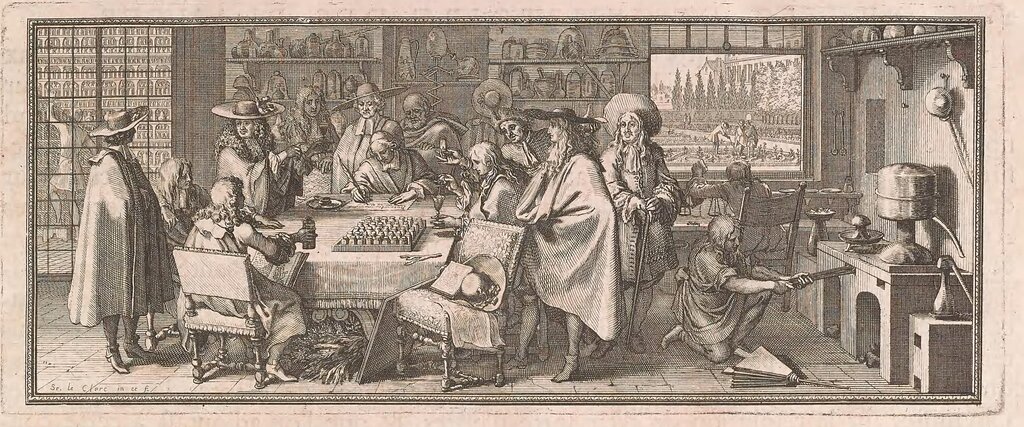
This focus on meritocracy was a direct challenge to the hereditary aristocracy that structured European society. It was a practical application of Enlightenment ideals, suggesting that a person's worth was inherent and could be cultivated, rather than inherited. For the ambitious and educated men of the rising middle class, including many future American revolutionaries, this idea was profoundly attractive.
Reason, Order, and the Great Architect
The scientific revolution of the 17th century provided the intellectual scaffolding for the Enlightenment, and no figure was more important than . His discovery of universal physical laws suggested that the universe was not a chaotic, mysterious place, but a rational, orderly system—a grand machine operating on predictable principles. This idea had a massive impact on philosophy and religion.
This Newtonian worldview fit perfectly with Masonic philosophy. Masons began to refer to God as the “Great Architect of the Universe,” a nod to the Deist concept of a divine creator who designed the world with geometric precision and rational laws. The pursuit of knowledge, both scientific and moral, was seen as a way to better understand the Architect's grand design. The lodge, with its emphasis on geometry, order, and reason, became a space to contemplate this new, enlightened vision of the cosmos and humanity's place within it.
It’s no surprise, then, that so many of America's founders were drawn to the fraternity. Men like George Washington, Benjamin Franklin, and Paul Revere were steeped in Enlightenment thought. The Masonic lodge provided them with more than just a social club. It offered an ideological framework that championed liberty, equality, and self-governance—the very principles they would soon fight for.
Influenced by Enlightenment ideals like liberty, natural rights, and the social contract, people across the world began to challenge monarchies, colonial rule, and social hierarchies.
Now let's review the key concepts we've covered.
Ready to test your knowledge?
What was the primary shift that occurred when "speculative" Masons began joining "operative" Masonic lodges in the 18th century?
The Masonic concept of God as the “Great Architect of the Universe” reflects the influence of which major intellectual movement?
The blend of Enlightenment philosophy with the traditions of stonemasonry created a powerful new force in the 18th-century intellectual world, setting the stage for revolutions in both thought and government.