Architecting the Modern Data Pipeline
Modern Architecture Patterns
The Modern Data Stack
Data engineering has moved beyond simple scripts and monolithic systems. Today, it’s about assembling a powerful, flexible system from specialized tools. This collection of cloud-native technologies is called the Modern Data Stack, or MDS.
A modern data stack is a thoughtfully assembled collection of cloud-native tools, processes, and architecture that enables enterprises to ingest, store, transform, and analyse data with agility, scale, and governance.
Instead of one tool trying to do everything, the MDS uses best-in-class components for each stage of the data lifecycle. A typical production-ready pipeline includes distinct tools for:
- Ingestion: Moving raw data from sources like application databases, APIs, and event streams.
- Storage: Storing that data in a central, scalable repository, like a data warehouse or data lake.
- Transformation: Cleaning, modeling, and preparing the raw data for analysis.
- Orchestration: Scheduling and managing the dependencies between all the different jobs in the pipeline.
- Observability: Monitoring the health, performance, and quality of the data and pipelines.
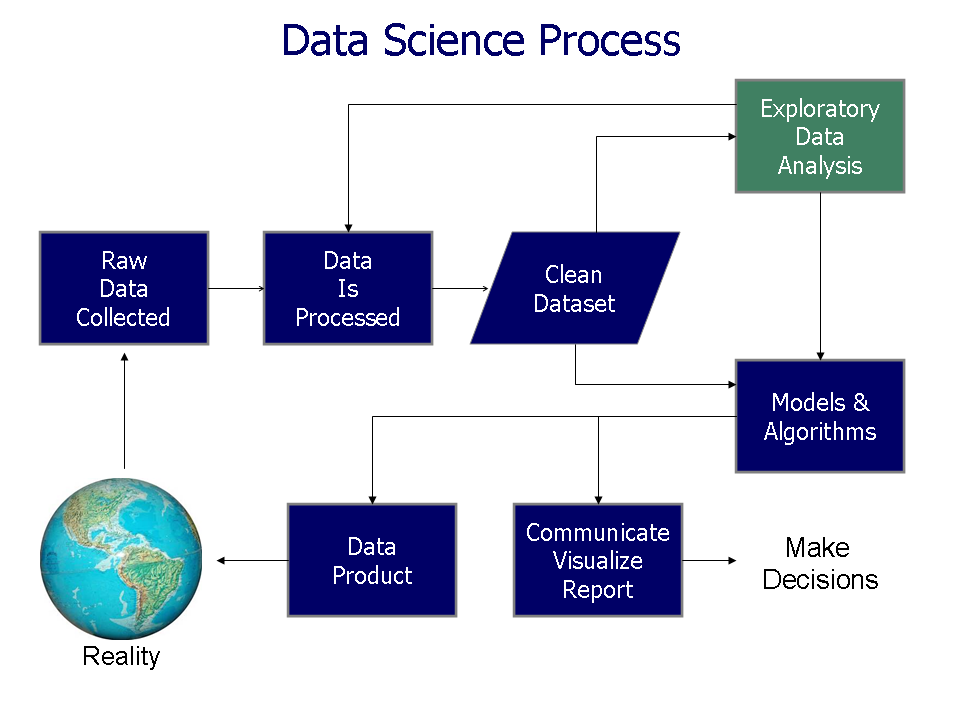
This modular approach allows teams to build systems that are not only powerful but also adaptable, swapping components as needs and technologies evolve.
ETL vs. ELT The Big Shift
For decades, the standard for moving data was ETL (Extract, Transform, Load). Raw data was extracted from a source, transformed on a separate processing server, and then loaded into a data warehouse for analysis. This was necessary because traditional data warehouses had limited processing power; they were built for storage and querying, not for heavy-duty transformations.
The cloud changed everything. With the rise of powerful, scalable cloud data warehouses, a new pattern emerged: ELT (Extract, Load, Transform). In this model, you extract raw data and load it directly into the warehouse. All the transformation logic happens inside the warehouse, using its immense processing power.
ELT is the modern cloud-native approach. You extract data and immediately load it in a scalable cloud data warehouse. The transformation logic is then done in the warehouse via tools like SQL.
Decoupled Compute and Storage
The magic behind ELT is an architectural principle called decoupled compute and storage. In traditional systems, the processing power (compute) and the data storage were tightly bundled together on the same machines. If you needed more processing power to run complex queries, you had to buy more storage, and vice versa. It was inefficient and expensive.
Modern cloud data warehouses like Snowflake, BigQuery, and Redshift separate these two layers. Your data lives in a highly-available, relatively inexpensive cloud storage service. When you need to run a query or a transformation, the warehouse spins up compute clusters to do the work. Once the job is done, the clusters can be shut down.
This separation provides huge advantages:
- Scalability: The data analytics team can run massive transformations at the same time the marketing team is running business intelligence queries, each using their own dedicated compute resources without interfering with each other.
- Flexibility: You can load raw, semi-structured data (like JSON) directly into the warehouse without needing a predefined schema. The structure is applied later during the transformation stage.
- Cost Savings: You pay for compute only when you're using it. This model can lead to a 15-20% lower total cost of ownership (TCO) compared to traditional, on-premise systems where servers are running 24/7.
Choosing the Right Pattern
While ELT is the dominant pattern today, ETL still has its place. The choice depends on your specific needs, particularly around data privacy, legacy systems, and real-time requirements. Thinking through the trade-offs is a core part of a data architect's job.
| Consideration | Use ETL When... | Use ELT When... |
|---|---|---|
| Data Privacy | You need to hash, mask, or remove Personally Identifiable Information (PII) before it lands in the warehouse. | Data privacy can be managed with access controls within the warehouse. |
| Data Structure | You're working with rigid legacy systems that require data to fit a strict, predefined schema upon loading. | You're handling diverse, semi-structured data (e.g., JSON, Avro) and want flexibility. |
| Scalability | Your data volumes are predictable and your transformation logic is complex and better handled by specialized servers. | You need to scale to handle massive, fluctuating data volumes and want to leverage the warehouse's power. |
| Speed | Transformation logic is extremely processor-intensive and not well-suited for SQL. | You need near real-time ingestion and want raw data available for analysis immediately after it's extracted. |
In practice, many organizations use a hybrid approach. For example, an initial, light transformation might happen before loading (like removing sensitive data), with the bulk of the business logic applied inside the warehouse. This combines the security of ETL with the flexibility of ELT.
What is the core principle behind the Modern Data Stack (MDS)?
In the modern ELT (Extract, Load, Transform) paradigm, where does the bulk of data transformation occur?
Modern data architecture is about building modular, scalable systems. By understanding the shift from ETL to ELT and the power of decoupled architecture, you can design pipelines that are both efficient and adaptable to future needs.