Architecting the Future of AI Driven Products
Scalable Systems Architecture
The Scaling Challenge
When a product succeeds, it grows. More users sign up, more data is generated, and the demands on your system increase. Without a plan, this success can lead to slowdowns, crashes, and frustrated customers. This is the core challenge of scalability: ensuring your system can handle growth gracefully.
For a product leader, this isn't just a technical problem. It's about balancing user experience with cost and development speed. To navigate these conversations, you need to understand a few key system qualities, often called the "ilities."
| Quality | What It Means for Users | What It Means for the Business |
|---|---|---|
| Scalability | The app is fast and responsive, even during peak traffic. | We can add new users and features without performance degrading. |
| Availability | The service is online and accessible when I need it. | The product has high uptime, building user trust and preventing revenue loss. |
| Reliability | The service behaves predictably and performs its functions correctly every time. | The system consistently delivers on its promises, reducing errors and support costs. |
These qualities are intertwined. A system that isn't scalable will eventually become unavailable under load. A system that is unreliable is, for all practical purposes, unavailable to the user trying to complete a task. As a leader, your job is to prioritize which of these is most critical at each stage of your product's life.
Two Paths to Growth
How you structure your system fundamentally impacts its ability to scale. The two dominant architectural patterns are monolithic and microservices. The best choice is not a technical absolute, but a strategic decision based on your product's maturity.
A monolithic architecture is like a single, large factory where every function of the business happens under one roof. The code for user profiles, payments, and notifications all lives in one large, interconnected application.
This approach is fantastic for early-stage products. It's simpler to build, test, and deploy, allowing a small team to move quickly and validate an idea. However, as the factory grows, it becomes unwieldy. A bug in the notification system could crash the entire application. Scaling means scaling the entire factory, even if only the payments section is busy.
A microservices architecture is like a business park with many smaller, specialized workshops. One workshop handles user profiles, another handles payments, and a third handles notifications. They are independent but communicate with each other over a network.
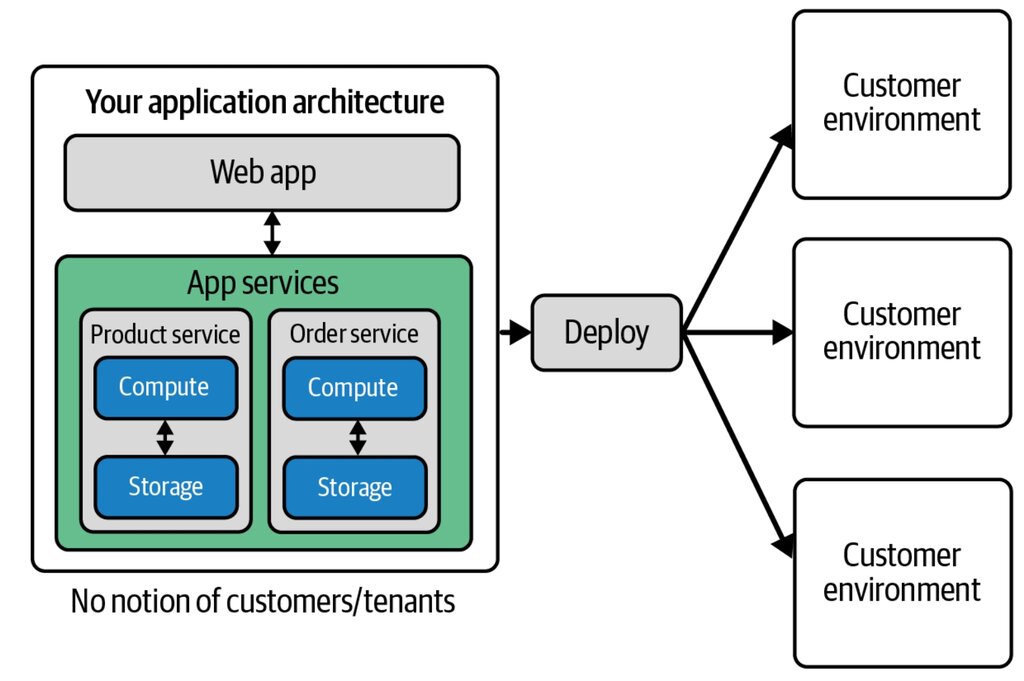
This structure is more complex to set up initially, but it offers immense flexibility as you grow. If the payment service gets a surge of traffic, you can scale just that workshop without touching the others. A failure in one service doesn't bring down the entire system. Different teams can work on different services independently, increasing development speed in larger organizations.
Move from monolithic architecture vs microservices as you scale up.
The common journey is to start with a monolith to achieve product-market fit, then strategically break off pieces into microservices as the team and traffic grow.
How to Add Capacity
Once you have an architecture, you need a strategy for adding more resources to handle increased load. This is done in two primary ways: scaling up or scaling out.
Vertical Scaling
noun
Increasing the resources of a single server, such as adding more CPU, RAM, or faster storage.
Think of this as making a single server more powerful. It's simple to implement, but you eventually hit a physical limit, and the cost of high-end hardware can become prohibitive. It's a great short-term solution but not a long-term strategy for massive growth.
Horizontal Scaling
noun
Adding more servers to a pool of resources, distributing the load among them.
This is the foundation of modern cloud computing. Instead of one giant server, you have many smaller, commodity servers working together. This approach has a much higher ceiling for growth and is more resilient. If one server fails, the others can pick up the slack.
To make horizontal scaling work, you need a traffic cop. A load balancer sits in front of your servers and intelligently distributes incoming requests across the group, ensuring no single server gets overwhelmed.
Cloud platforms like AWS, Azure, and Google Cloud have perfected this. Elasticity is the concept of automatically adding or removing servers in a horizontally scaled system based on real-time demand. This ensures you have just enough capacity to deliver a great experience without paying for idle servers during quiet periods.
The Inevitable Trade-offs
In a perfect world, a distributed system would always be available, always give the correct and most up-to-date data, and continue working even if parts of it fail. In reality, you can't have all three at once. This is the central idea behind the CAP Theorem.
The CAP Theorem states that a distributed system can only guarantee two of the following three properties at the same time:
| Property | Description |
|---|---|
| Consistency (C) | Every read receives the most recent write or an error. All servers have the same data at the same time. |
| Availability (A) | Every request receives a (non-error) response, without the guarantee that it contains the most recent write. |
| Partition Tolerance (P) | The system continues to operate despite an arbitrary number of messages being dropped (or delayed) by the network between nodes. |
In modern systems that are distributed across a network, network failures (partitions) are a fact of life. You must design for them. Therefore, Partition Tolerance (P) is effectively non-negotiable. The real choice for a product leader is between Consistency and Availability.
-
Choose Availability (AP System): If a social media user sees a slightly outdated 'like' count for a few seconds, it's not a disaster. The priority is keeping the service up and responsive. The system is available even if some data is temporarily inconsistent across servers. Examples: Instagram, Twitter.
-
Choose Consistency (CP System): If a banking customer transfers money, it's critical that every part of the system sees the new, correct balance immediately. The priority is data accuracy. If a network partition makes consistency impossible, the system might return an error (become unavailable) rather than show stale data. Examples: Banking systems, e-commerce inventory management.
There is no 'right' answer. The correct trade-off depends entirely on your business goals and user expectations.
Understanding these principles—from architectural patterns and scaling methods to the fundamental trade-offs defined by CAP—allows you to guide technical discussions and make strategic decisions that ensure your product doesn't just grow, but thrives.
A small startup is building its first product to quickly test a new idea with minimal initial complexity and a small team. Which architectural pattern is generally the most suitable starting point?
Your e-commerce site is preparing for a massive holiday sale. To handle the expected surge in traffic, you decide to add more, smaller servers and distribute requests among them. What is this strategy called?