Architecting the Digital Ecosystem
Hardware Software Synergy
The Hardware-Software Contract
Software and hardware are not two separate worlds. They are partners in a tightly choreographed dance, and their point of interaction is the critical interface where abstract commands become physical actions. This interface is formalized as the (ISA), which acts as a strict contract defining exactly what the hardware can do and how the software can ask it to do it.
The ISA dictates the primitive operations available: adding numbers, moving data from memory to a register, or comparing two values. High-level programming languages like Python or Java are abstract and human-readable, but a CPU understands none of it. A compiler or interpreter acts as a translator, breaking down complex software logic into a long sequence of these simple, ISA-defined instructions that the hardware can execute.
Every line of code you write, no matter how complex, is ultimately translated into a series of basic operations defined by the processor's ISA.
Building on Abstraction
To manage this complexity, modern computing is built on layers of abstraction. An application doesn't talk directly to the hardware. Instead, it interacts with the operating system (OS), which in turn manages the hardware. The OS kernel is the core of this system, acting as a resource manager.
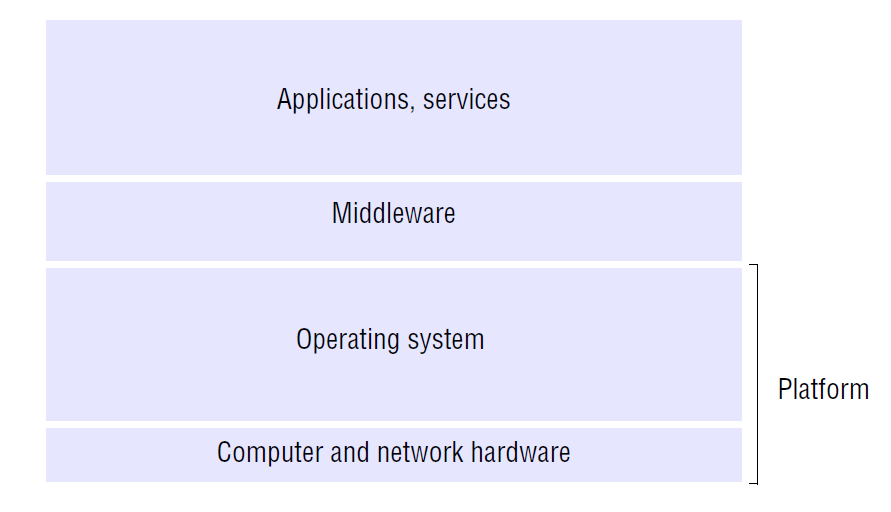
Think of the kernel as a meticulous librarian in a vast library. An application (a researcher) doesn't need to know where every book (data) is physically located or how the shelving system (file system) is organized. The researcher simply requests a book by its title (a file path), and the librarian (kernel) retrieves it, handling all the low-level details of navigating the stacks (accessing the hard drive).
This abstraction is powerful. It allows software developers to write applications that can run on a wide variety of hardware without being rewritten for each specific configuration. The kernel provides a stable, consistent API (Application Programming Interface) that hides the messy, device-specific details.
When Hardware Interrupts
Communication isn't a one-way street. Hardware needs a way to get the CPU's attention immediately. When you press a key, move your mouse, or receive a packet from the network, the corresponding hardware device sends a signal to the processor. This signal is a an urgent tap on the shoulder that says, "Stop what you're doing, I need you now!"
When an interrupt occurs, the CPU immediately saves its current state—what it was working on and where it was—and executes a special function called an interrupt handler to service the device. Once the handler finishes, the CPU restores its previous state and resumes its work as if nothing happened. This process happens thousands of times per second and is fundamental to how interactive systems work.
Design Philosophies and Physical Limits
Not all ISAs are created equal. Two competing philosophies have shaped processor design: CISC and RISC.
| Philosophy | Approach | Goal | Typical Use Case |
|---|---|---|---|
| CISC (Complex Instruction Set Computer) | Use powerful, complex instructions that can perform multiple steps. | Make the compiler's job simpler and reduce the number of instructions per program. | Desktops, Laptops (e.g., Intel x86) |
| RISC (Reduced Instruction Set Computer) | Use a small set of simple, fast, fixed-length instructions. | Execute one instruction per clock cycle for higher efficiency and lower power use. | Mobile Phones, Embedded Systems (e.g., ARM) |
The choice between involves trade-offs between hardware complexity, compiler complexity, power consumption, and performance. Modern processors often blur the lines, with CISC chips like Intel's breaking down complex instructions into simpler, RISC-like micro-operations internally.
Ultimately, the dance between hardware and software is constrained by physics. Every operation generates heat. Processors have a thermal budget, and if they get too hot, they must slow down to prevent damage. This is known as —a direct intervention where the hardware limits its own performance, impacting software execution.
Power consumption and the speed of light also impose hard limits. The clock cycle—the fundamental tick that drives a processor—can only be so fast. This synergy is a constant balancing act between writing clever software and designing efficient hardware, all while respecting the laws of physics.
What is the primary role of the Instruction Set Architecture (ISA)?
Using the analogy from the text, the operating system kernel is most like a:
This intricate relationship, from the abstract logic of an application down to the physical constraints of silicon, is what makes modern computing possible.