Architecting the AI Technology Stack
Hardware and Compute Layer
The Engine Room of AI
Artificial intelligence isn't just code; it's a physical process demanding immense computational power. While CPUs are the versatile brains of general computing, training and running large AI models require specialized hardware. These systems are designed to handle one specific type of task with brutal efficiency: parallel computation.
The Graphics Processing Unit (GPU), originally designed to render pixels on your screen, became the accidental workhorse of the AI revolution. A GPU contains thousands of smaller, simpler cores compared to a CPU's handful of powerful ones. This architecture is perfect for tasks that can be broken into many identical, simultaneous calculations, like shading a million pixels at once.
It turns out that training a neural network—which largely consists of performing millions of matrix multiplications over and over—is structurally similar to graphics rendering. Both are embarrassingly parallel tasks, making GPUs a natural fit.
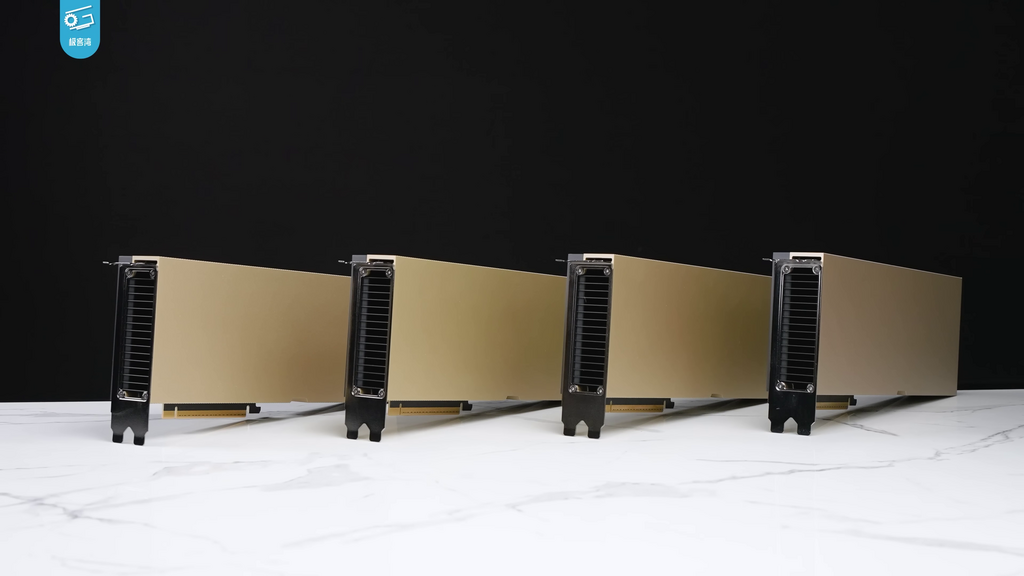
NVIDIA capitalized on this with products like the A100 and H100 GPUs, which now dominate data centers. The key was creating a software layer to make these graphics chips useful for scientists and engineers. This layer is , a platform that allows developers to program the GPU's parallel cores directly for general-purpose tasks, abstracting away the complex hardware details.
Purpose-Built for AI
As effective as GPUs are, their flexibility comes with overhead. This led to the creation of hardware designed from the ground up for AI workloads. Google's Tensor Processing Unit (TPU) is the most prominent example. Instead of thousands of general-purpose parallel cores, a TPU's architecture is centered around a —a physical grid of multipliers and adders optimized for one thing: matrix multiplication.
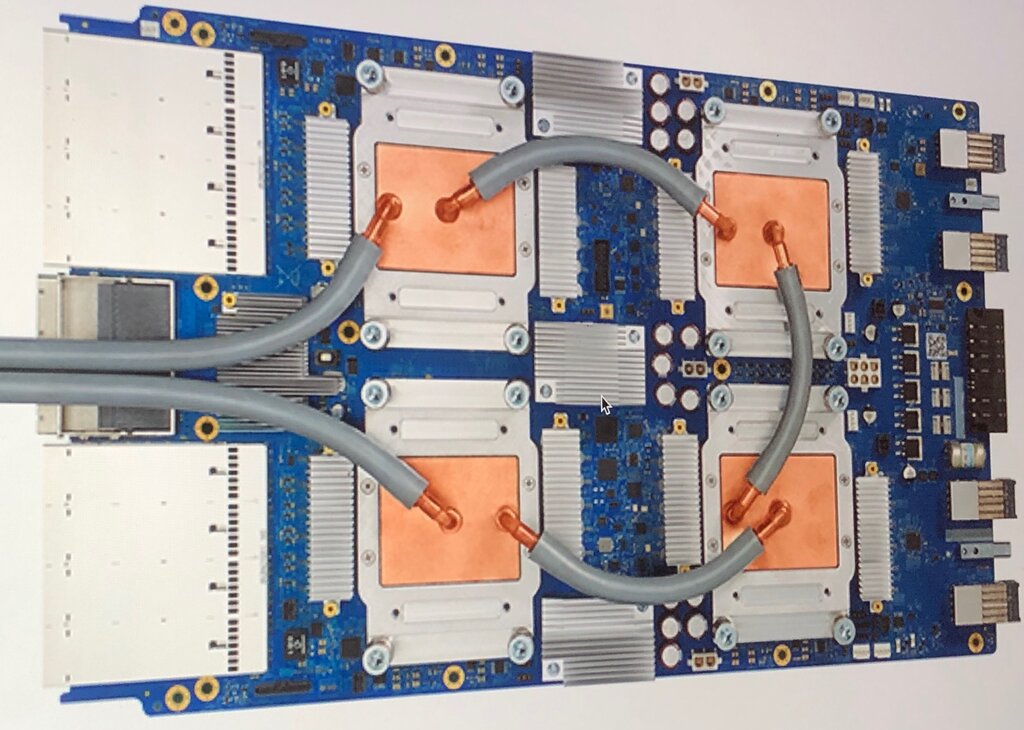
This makes TPUs incredibly fast and power-efficient for training and running the neural networks used in Google's services. The trade-off is a loss of flexibility. A GPU can run a wider variety of algorithms, while a TPU excels at the specific tensor math AI relies on. More recently, Neural Processing Units (NPUs) have emerged, which are smaller, power-efficient AI accelerators often integrated directly into CPUs for laptops and phones, bringing AI inference to edge devices.
Connecting the Power
A single processor is never enough for today's massive models. The real challenge is making thousands of them work together as one cohesive system. This introduces two critical bottlenecks: memory bandwidth and the interconnect speed between processors.
An operation can be compute-bound, meaning the processor is waiting for calculations to finish, or memory-bound, meaning the processor is waiting for data to be fetched from memory. For large AI models, the bottleneck is almost always memory.
To solve this, modern AI accelerators use (HBM). HBM stacks DRAM chips vertically and connects them through a very wide interface, creating a superhighway for data to travel between the memory and the processor. This is essential for keeping the thousands of cores fed with the data they need to stay busy.
The next challenge is communication between GPUs. Standard connections are too slow. NVIDIA developed NVLink as a high-speed, direct interconnect that allows multiple GPUs in a server to share memory and communicate as if they were a single, massive GPU. This technology is fundamental to building the huge GPU clusters required to train models with trillions of parameters.
Choosing the right hardware is the first and most critical decision in scaling an AI application. The architecture of the processors, the amount and type of memory, and the speed of the interconnects create a physical foundation that dictates the ultimate performance and cost of any AI system.
What is the primary architectural feature of a Google TPU that makes it highly efficient for AI-specific tasks like matrix multiplication?
The primary advantage of a GPU over a CPU for training large AI models is its massive number of simple cores designed for parallel processing.