Architecting the AI Augmented Marketing Enterprise
Architectural Trade-offs
Redesigning the Marketing Organisation
The integration of AI into marketing isn't a tooling problem; it's an architectural one. Traditional functional or divisional structures are ill-equipped to manage the velocity and complexity of AI-driven content supply chains. To navigate this redesign, we can apply , examining the interlocking components that define an organisation's effectiveness.
Let's deconstruct the model through the lens of an AI-augmented marketing function:
- Strategy: Shifts from annual brand planning to dynamic, algorithmically-informed market response. The objective becomes optimising for probabilistic outcomes rather than executing deterministic campaigns.
- Structure: This is the core tension. Do you centralise AI talent in a Centre of Excellence or embed it within decentralised marketing hubs?
- Processes: The linear content supply chain (brief -> create -> approve -> publish) is replaced by a continuous, iterative loop fed by real-time analytics. AI workflows for content generation, media buying, and performance analysis must be integrated, not bolted on.
- Rewards: Incentives must shift from rewarding campaign execution to rewarding experimental velocity, model accuracy, and the successful scaling of learnings across markets.
- People: The talent mix changes. Demand for prompt engineers, data scientists, and marketing technologists rises, while traditional roles must evolve to incorporate AI co-pilots. This necessitates a move from fixed headcount models to elastic, AI-augmented capability models.
Centralise or Decentralise?
The most significant structural trade-off is where to locate your data science and AI expertise. A centralised Centre of Excellence (CoE) offers governance, standardisation, and the ability to attract top-tier talent who want to work with peers. It can build and maintain foundational models, manage data infrastructure, and ensure ethical guidelines are followed across the enterprise.
However, a purely centralised model risks becoming an ivory tower, disconnected from market realities. The CoE may optimise for elegant models over effective campaigns. Decentralised hubs, embedded in regional or product teams, offer agility and local relevance. They can rapidly prototype campaigns, leverage unique market insights, and foster creative execution that feels authentic.
The challenge is that full decentralisation leads to fragmented tooling, inconsistent data practices, and duplicated effort. A hybrid model is often the most effective structure, where a central CoE provides the platforms, foundational models, and governance, while empowering decentralised hubs to innovate on top of that shared infrastructure.
Specialisation vs. Integration
AI reconfigures the content supply chain. It creates a tension between the need for deep specialisation and the value of tight integration. On one hand, effective AI requires specialists: prompt engineers who understand how to query LLMs, data scientists who can fine-tune models, and analysts who can interpret probabilistic outputs. These roles are distinct from traditional copywriters or art directors.
On the other hand, speed and relevance demand integration. A model that generates copy in a vacuum, without input from the designer using the visual or the media buyer placing the ad, is inefficient. The rise of real-time predictive analytics means insights must flow instantly from analytics platforms to creative teams to media channels. This breaks traditional, siloed hand-offs. The solution lies in forming cross-functional pods or squads, where specialists work in a tightly integrated fashion, guided by shared metrics. Formal structure (reporting lines) may remain specialised, but informal power (decision-making) shifts to these integrated teams.
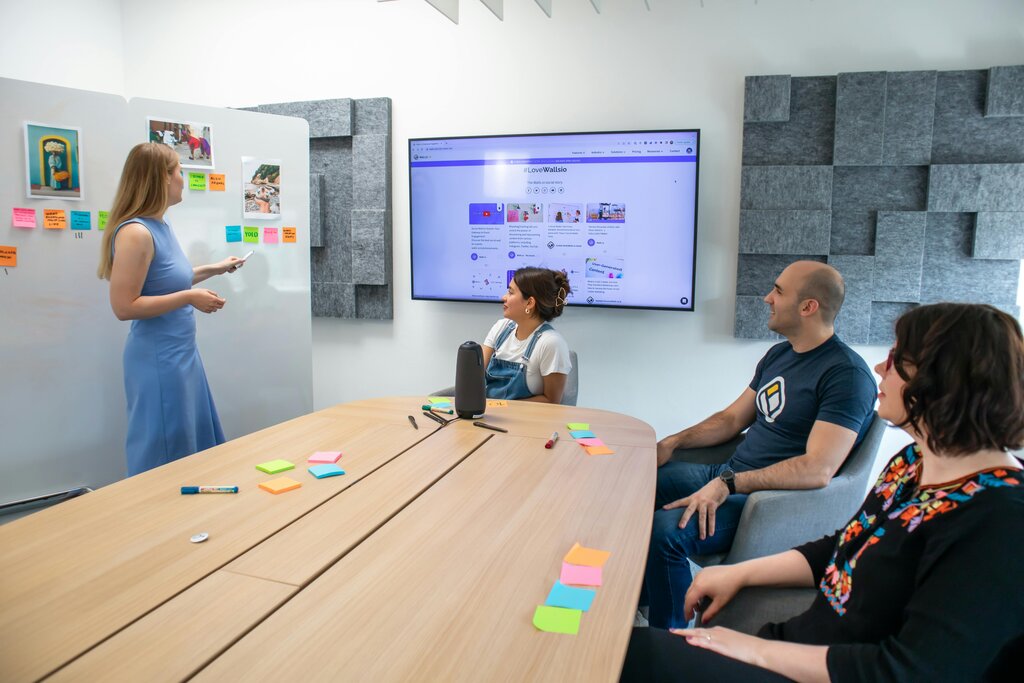
This shift has profound implications. Moving to an means the organisation thinks less about filling a fixed number of 'seats' and more about dynamically accessing skills. A project might require 40 hours of a prompt engineer's time and 10 hours of a data ethicist's, rather than hiring one of each full-time. This model values agility over organisational tidiness, forcing a redesign of HR and finance processes that are built around fixed headcount.
As AI takes on more linear elements of the marketing equation, human talent can shift upstream to higher-value work such as strategy, partnerships, business planning, and true creativity.
Ultimately, there is no single correct structure. The optimal design depends on the company's maturity, culture, and strategic goals. The key is to recognise that organisational structure is not a static chart but a dynamic system of trade-offs that must be constantly evaluated and adjusted as AI capabilities evolve.
According to the text, what is the most significant structural challenge when integrating AI into a marketing organisation?
What is the primary risk of a purely centralised AI Centre of Excellence (CoE) in marketing?