Architecting Self Discipline
Neurobiology of Habits
From Thought to Action
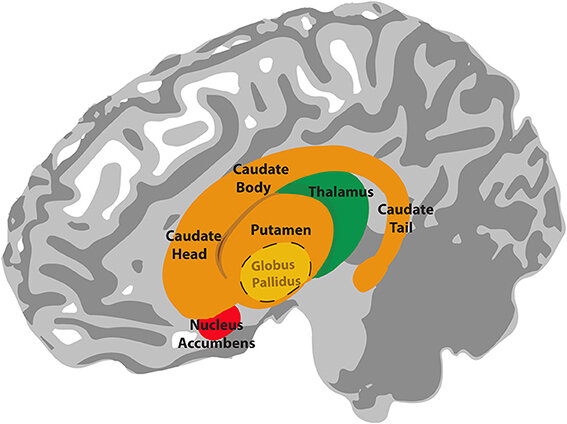
When you first learn a new skill, like driving a car, your prefrontal cortex is working overtime. You consciously think about every move: check the mirror, signal, turn the wheel. This part of your brain handles deliberate, goal-directed action. But after thousands of repetitions, the task becomes automatic. You just drive. This shift happens when the behaviour is handed off to a different brain region: the s.
This transition from conscious effort to automatic habit isn't just a mental trick; it's a physical rewiring. The brain dedicates neural pathways to the routine, making it the path of least resistance. The more you perform the habit, the stronger and more efficient that pathway becomes.
The Real Role of Dopamine
Dopamine is often called the "pleasure chemical," but that's a misleading simplification. Its primary role in habit formation is to signal a prediction error. Your brain is constantly making predictions about the world. When an outcome is better than expected, your brain releases a burst of dopamine. This isn't just a fleeting good feeling; it's a powerful signal that says, "Pay attention! Whatever you just did, do it again."
This system is driven by two types of dopamine release. There's a constant, low-level release called tonic dopamine, which helps regulate general motivation and mood. But the key to learning is — a sharp spike that occurs in response to unexpected rewards.
If you expect a reward and it doesn't arrive, dopamine levels dip below their baseline. This negative prediction error teaches your brain to avoid the action that led to the disappointing outcome. Over time, these dopamine-driven signals sculpt your behaviour, reinforcing actions that lead to positive surprises and pruning those that don't.
The Brain's Control Tower
Self-discipline is essentially a battle between two key brain regions: the prefrontal cortex (PFC) and the amygdala. The PFC is your brain's CEO. It handles planning, complex decision-making, and long-term consequences. The amygdala, on the other hand, is part of the limbic system and is wired for immediate, emotional reactions — think fight, flight, or seeking instant gratification.
When you're tempted to skip a workout for an extra hour of sleep, that's your amygdala demanding immediate comfort. Your PFC is what steps in to say, "No, our long-term health goal is more important." It does this by sending inhibitory signals, actively tamping down the amygdala's impulsive urges. This is a real, measurable neural process.
The strength of your self-discipline is directly related to the PFC's ability to override the amygdala.
However, the PFC's inhibitory power is a finite resource. This leads to a phenomenon known as decision fatigue. Every choice you make, from what to wear to how to respond to an email, depletes your PFC's energy. By the end of a long day, your PFC is tired. This weakened state makes it much harder to inhibit the amygdala's impulses, which is why you're more likely to give in to cravings late at night. Willpower isn't just a matter of character; it's constrained by neurobiology.
Hardwiring the Habit
How do these dopamine signals and PFC battles translate into a durable habit? The mechanism is a process called (LTP). Think of it as the cellular basis for learning and memory. When two neurons fire together repeatedly, the connection, or synapse, between them becomes stronger and more efficient.
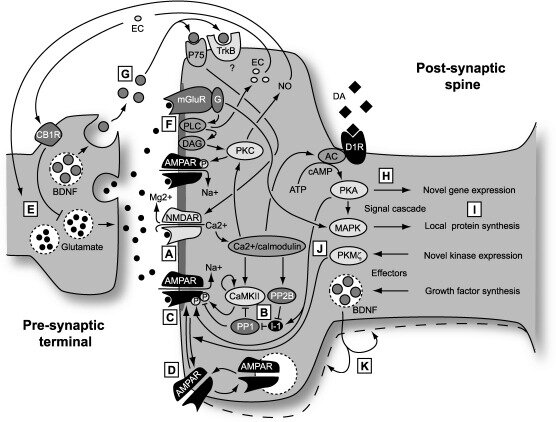
Each time you complete your habit loop—cue, routine, reward—the corresponding dopamine spike helps trigger LTP in the neural circuits within the basal ganglia. The synaptic connections responsible for that behaviour get stronger. Eventually, the connection becomes so robust that the cue alone is enough to trigger the routine automatically, with little to no conscious involvement from your PFC. The habit is now neurologically ingrained.
Now let's test your understanding of these neural mechanisms.
When you are first learning a complex new skill, like playing a musical instrument, which part of your brain is most active in processing the deliberate, conscious actions required?
What is the primary role of a 'phasic dopamine' spike in the process of forming a habit?
Understanding these biological underpinnings is the first step. By knowing how your brain's circuits for self-control and automaticity work, you can design systems that work with your biology, not against it.