Architecting Modern Data Pipelines
Modern Architecture Trade-offs
The Great Flip: ETL to ELT
For decades, the path for data was clear: Extract, Transform, then Load. Data was pulled from sources like sales systems, cleaned and structured on a separate server, and finally loaded into a data warehouse for analysis. This ETL process was a product of its time. On-premise databases had expensive storage and limited processing power. Transforming data before loading it was a practical necessity to save precious space and manage computational resources.
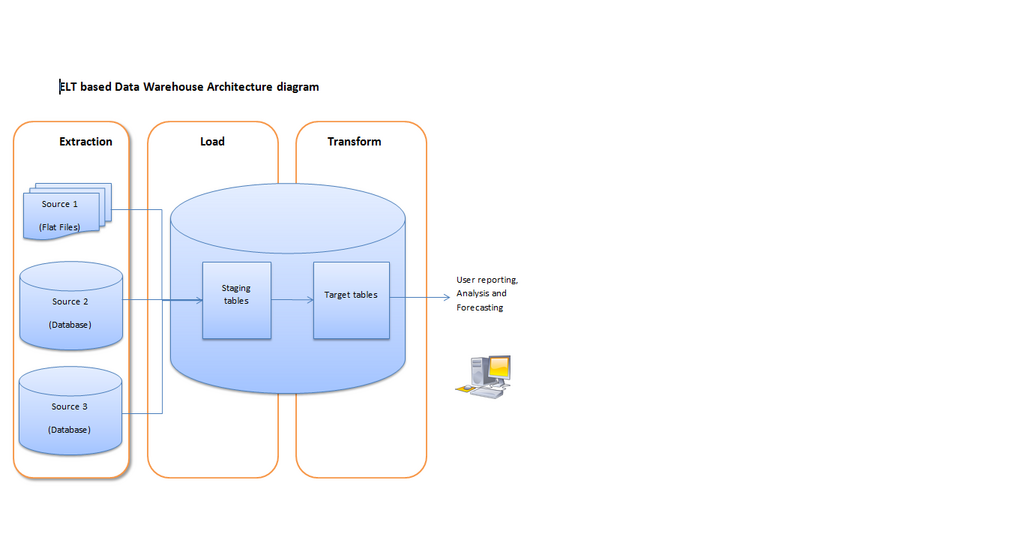
The rise of cloud-native data warehouses like Snowflake, Google BigQuery, and Amazon Redshift changed everything. These platforms flipped the script by offering two key advantages: nearly infinite, low-cost storage and massively scalable, on-demand compute. Suddenly, the old constraints disappeared.
This shift gave rise to ELT: Extract, Load, Transform. Now, you can extract raw data from any source and load it directly into the cloud warehouse. The transformation happens later, inside the warehouse itself, using its powerful processing engine. This approach allows for much greater flexibility. Since you store the raw data, you can run different transformations on it for various purposes without having to re-extract it from the source. This flexibility is often described as a , where the structure is applied at the time of analysis, not at the time of loading.
The Modern Data Stack
This new ELT paradigm is the engine of the (MDS). Unlike older, monolithic systems where one vendor provided a single, all-in-one solution, the MDS is a modular ecosystem. It's built by combining specialized, best-in-class tools for each stage of the data pipeline.
A typical stack might use one tool for data ingestion (like Fivetran or Airbyte), a cloud warehouse for storage and processing (like Snowflake), a dedicated tool for transformation (like dbt), and another for business intelligence and visualization (like Tableau or Looker). This plug-and-play architecture means companies can swap components in and out as their needs or the technology landscape changes, avoiding vendor lock-in and fostering innovation.
Latency, Cost, and Scalability
Choosing the right architecture involves balancing trade-offs, primarily around latency and cost.
Latency: How quickly do you need answers from your data? This determines whether you use batch processing or real-time streaming. Batch processing collects and processes data in groups, or batches, on a schedule (e.g., once a day). It's efficient and cost-effective for things like weekly sales reports. Real-time streaming processes data as it arrives, which is critical for use cases like fraud detection or live inventory tracking, but it's more complex and expensive to implement.
Cost and Flexibility: The ELT model offers incredible flexibility. Analysts can access raw data and experiment freely. The pay-per-use models of cloud warehouses mean you only pay for the compute you use for these transformations. The danger is that unoptimized queries can lead to surprisingly high bills. The transformation logic itself is often managed with a tool like (data build tool), which brings software engineering best practices like version control and testing to data transformation code.
A key trade-off remains privacy and governance. With ETL, sensitive data can be cleaned, masked, or anonymized before it's loaded into a central warehouse. In an ELT world, raw, potentially sensitive data lands in the warehouse first, requiring robust access controls and governance policies to be applied within the warehouse itself.
| Feature | ETL (Extract, Transform, Load) | ELT (Extract, Load, Transform) |
|---|---|---|
| Transformation Point | On a separate, intermediate server | Inside the target data warehouse |
| Data Schema | Schema-on-write (structure defined before loading) | Schema-on-read (structure applied during analysis) |
| Cost Model | High upfront hardware/software cost | Pay-as-you-go for storage and compute |
| Flexibility | Rigid; changes require re-engineering the pipeline | Highly flexible; can re-transform raw data easily |
| Best For | On-premise systems, strict compliance needs, stable data structures | Cloud-native systems, agile analytics, evolving data needs |
Understanding these architectural patterns and trade-offs is the first step in designing data systems that are not only powerful but also efficient and aligned with business goals. Now, let's test your understanding.
What was the primary technological shift that enabled the move from ETL to ELT architecture?
In the context of the Modern Data Stack, what does the term "late-binding schema" refer to?
As you can see, the choice between ETL and ELT isn't just a technical detail. It reflects a fundamental shift in how we approach data, prioritizing flexibility and scalability in a cloud-first world.